


Why Choose Concrete Fire Pits? Durability & Design Advantages for Hardscape Professionals
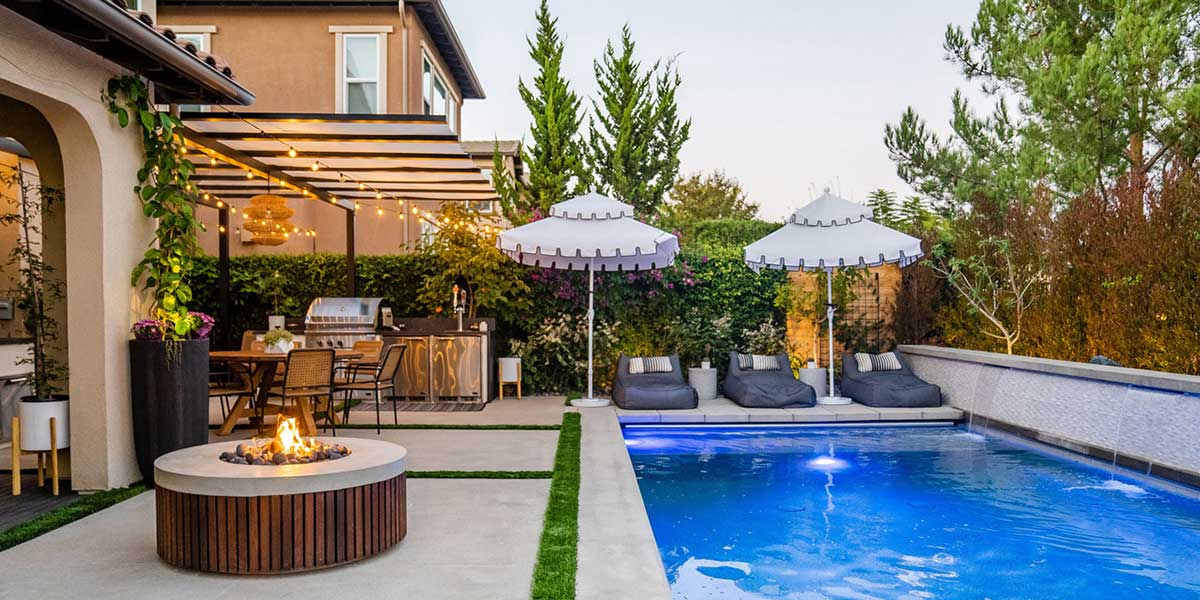
Key Takeaways:
- GFRC delivers superior longevity: With a 10/10 durability rating and 30-50+ year lifespan, GFRC outperforms all fire pit materials while requiring very low maintenance—the lowest rating among all options.
- Concrete strengthens over time: Unlike metal and wood that degrade with exposure, concrete gains strength through continued curing, making it the only material that improves rather than deteriorates.
- Homes with fire pits sell 2.8 days faster: Fire pit installations provide measurable ROI through accelerated property sales, justifying premium pricing for permanent concrete installations.
- Cost advantage over natural stone: Concrete ranges $500-1,500 versus natural stone's $3,000+, delivering comparable aesthetics with superior design flexibility and excellent durability ratings.
- Market growth supports concrete specifications: The $6.8 billion global fire pit market projects 6.5% CAGR through 2030, with propane-fueled units (ideal for concrete installations) growing fastest at 9.4%.
Concrete fire pits dominate luxury outdoor living installations for measurable reasons: superior durability, design flexibility, and minimal maintenance requirements. GFRC achieves a 10/10 durability rating with 30-50+ year lifespans while accommodating the geometric shapes trending in 2026 luxury markets.
For hardscape professionals, concrete fire pit tables deliver reduced callbacks, premium pricing justification, and seamless integration with existing hardscape elements. The same durability advantages apply across product lines—including upscale table for pools options when projects combine water features with outdoor living spaces. This article examines concrete fire pits' performance advantages over metal and stone, explores key design features, and provides maintenance guidance for coastal and high-wind environments.
With the global fire pit market projected at 6.5% CAGR through 2030, understanding concrete fire pits' advantages positions contractors to capture this growing segment.
What Makes Concrete Fire Pits a Durable, Design-Forward Option for Hardscapes?
Concrete fire pits deliver superior performance across two critical metrics: structural longevity and design adaptability. This combination positions concrete—particularly GFRC—as the material of choice for hardscape professionals working on high-end installations.
Concrete's Ability to Withstand Harsh Outdoor Conditions
Concrete earns a 9/10 durability rating with a 20-30+ year lifespan. GFRC tops all materials at 10/10, lasting 30-50+ years. Both achieve excellent weather resistance ratings and share a unique characteristic: they strengthen over time through continued curing. This sets concrete apart from metal and wood, which degrade with exposure.
GFRC adds fiber reinforcement to standard concrete, delivering exceptional durability without the weight penalties of traditional cast concrete. This makes it ideal for large-format installations where structural integrity cannot be compromised.
How Concrete Fire Pits Enhance Aesthetic Appeal in Hardscape Design
Geometric shapes—linear and hexagonal designs—dominate 2026 luxury installations as architectural centerpieces. Concrete accommodates these trending forms through custom molds. GFRC's moldability meets rising demand for premium materials that deliver both aesthetic sophistication and structural performance.
Custom molds enable integrated features like seating walls, built-in planters, and material transitions. This design latitude supports cohesive hardscape narratives that unify fire features with broader landscape architecture.
The Role of Concrete in Customization and Versatility
Concrete's excellent design flexibility rating stems from its ability to integrate seamlessly with existing hardscape elements. It bonds directly to flagstone, concrete pavers, and natural stone, creating unified installations without material conflicts.
This compatibility eliminates the common limitation of prefabricated units: forced design compromises. Contractors can match textures, colors, and finishes to client specifications while maintaining the structural advantages of poured-in-place or precast construction.
How Do Concrete Fire Pits Compare to Other Materials in Terms of Durability and Design?
Concrete outperforms both metal and natural stone in long-term value metrics. Direct comparisons reveal concrete's advantages in lifespan, maintenance requirements, and cost-efficiency for permanent installations.
Concrete vs. Metal: The Long-Term Benefits of Concrete Fire Pits
Concrete delivers 20-30+ years of service versus metal's 10-20 years—double the functional lifespan. Durability ratings reflect this gap: concrete scores 9/10 while steel rates 7/10. Metal requires the most frequent maintenance among all fire pit materials, demanding regular treatments for rust prevention and structural integrity.
Concrete's low-maintenance profile eliminates the seasonal refinishing, repainting, and corrosion management that steel installations require. This translates to lower lifetime ownership costs and reduced callback rates for contractors. Metal's heat conductivity also creates safety concerns in high-traffic areas where concrete's thermal mass provides a buffer.
Concrete vs. Stone: Durability and Design Flexibility in Outdoor Spaces
GFRC achieves 10/10 durability versus natural stone's 8/10, with concrete rating 9/10. Lifespan comparisons favor GFRC at 30-50+ years, followed by natural stone at 25-40 years and standard concrete at 20-30+ years. However, cost differences are substantial: concrete ranges $500-1,500 while natural stone commands $3,000+.
Concrete offers excellent design flexibility against stone's good rating. Natural stone limits shapes to stackable forms and requires skilled masons for complex installations. Concrete achieves any geometry through formwork, enabling the linear and hexagonal designs trending in luxury markets. GFRC delivers best overall performance by combining stone's aesthetic appeal with concrete's moldability at mid-range pricing.
What Are the Key Design Features of Concrete Fire Pits?
Concrete fire pits excel in three design areas: geometric versatility, multifunctional integration, and spatial cohesion with existing hardscape. These features address current market demands for architectural fire features that serve multiple purposes.
Customization Options: Shape, Size, and Finish Variability
Concrete's inherent design flexibility supports multifunctional applications like fire tables that double as dining surfaces. This aligns with luxury market expectations where outdoor features must justify their footprint through layered functionality. Linear and hexagonal shapes—the fastest-growing segments in 2026—require concrete's moldability to achieve clean lines and precise angles that prefabricated metal units cannot match.
Finish variability extends from smooth troweled surfaces to textured stone appearances. Integral color, acid staining, and exposed aggregate techniques allow contractors to match existing hardscape palettes without material transitions. This eliminates the aesthetic compromises inherent in catalog-based selections.
Integration of Concrete Fire Pits with Existing Hardscape Elements
Built-in hardscape integration defines luxury outdoor living standards. Concrete fire pits anchor spaces through permanent connections with retaining walls, seat walls, and paver systems. These integrated designs create defined zones without introducing visual barriers or material conflicts.
Optimal seating placement requires 3 feet from fire pit edge for comfortable foot propping, expanding to 4 feet for walking clearance. Concrete's formwork flexibility accommodates these dimensional requirements while incorporating built-in seating directly into the fire pit structure. This eliminates furniture gaps and creates continuous hardscape planes that unify the installation.
How Do Concrete Fire Pits Improve Outdoor Functionality and Safety?
Concrete fire pits enhance installation safety through incombustible construction while supporting efficient heat delivery systems. These functional advantages reduce liability exposure and improve client satisfaction in residential and commercial applications.
Heat Distribution: How Concrete Promotes Efficient Fire Pit Performance
High-efficiency burner technology mimics natural flames with improved fuel efficiency, and concrete construction accommodates these systems without compromising structural integrity. Concrete's thermal mass absorbs and radiates heat gradually, extending warmth beyond active burn periods. This matters in colder climates where heat output justifies the installation cost.
Local weather conditions dictate burner sizing and fuel type selection. Concrete's design flexibility allows contractors to specify appropriate burner systems—from natural gas to propane—without material limitations. The material's heat resistance enables direct contact with burner assemblies, eliminating the air gaps and insulation layers required by combustible surrounds.
Concrete's Safety Features: Minimizing Risk in Outdoor Settings
Concrete earns an incombustible fire resistance rating, as does GFRC. This classification provides significant safety advantages over wood surrounds and reduces clearance requirements compared to combustible materials. Standard clearances require 15 to 25 feet from structures and 10 feet from property lines, though local codes vary.
Steel liners are highly recommended for custom-built concrete fire pits to contain fuel systems and direct heat away from the concrete shell. This double-barrier approach—incombustible concrete exterior with steel liner interior—minimizes cracking from thermal stress and extends installation lifespan. The combination addresses both immediate fire safety and long-term structural integrity in high-use installations.
Why Are Concrete Fire Pits a Smart Investment for Commercial and Residential Projects?
Concrete fire pits deliver measurable ROI through accelerated property sales and reduced maintenance costs. Market growth data confirms increasing demand, particularly in luxury segments where concrete installations dominate specifications.
How Concrete Fire Pits Enhance Property Value and Appeal
Homes featuring fire pits sell 2.8 days faster on average, demonstrating direct market impact. Concrete's stain resistance and minimal upkeep requirements reduce long-term ownership costs while maintaining visual appeal. This combination addresses buyer preferences for low-maintenance outdoor features that enhance livability.
Covers extend fire pit lifespan by 40-60% through weather protection. Well-made covers last 3-5 years, representing minimal investment against the 20-30+ year lifespan of concrete installations. For contractors, this maintenance profile reduces callbacks and warranty claims while supporting premium pricing justified by durability.
The Increasing Demand for Concrete Fire Pits in Luxury Landscaping Projects
The global fire pit market reached $6.8 billion in 2022 and projects 6.5% CAGR through 2030. North America represents $3.09 billion in 2024, with concrete capturing the largest share of permanent installations. This growth reflects consumer shift from portable units to integrated hardscape features.
Propane-fueled fire pits show 9.4% growth between 2023 and 2030—the fastest expansion among traditional fuels. Concrete construction accommodates gas infrastructure seamlessly, positioning contractors to capture this high-growth segment across product categories, from traditional fire pits to modern retangular fire pit installations where durability meets water-adjacent demands. The convergence of fuel preference trends and material performance makes concrete fire features the default specification for luxury outdoor living projects.
What Are the Maintenance Requirements for Concrete Fire Pits?
Concrete fire pits require minimal ongoing maintenance compared to metal and wood alternatives. GFRC achieves the lowest maintenance rating among all fire pit materials, reducing long-term service costs for both residential and commercial installations.
Easy Upkeep: Preventing Damage from Weather and Wear
Concrete rates low maintenance while GFRC achieves very low—the lowest among all materials. Routine care involves removing ash, occasional washing, and seasonal inspection of gas connections. No refinishing, resealing, or rust treatment is required, eliminating the recurring costs that burden metal installations.
78% of homeowners use fire pit accessories for improved safety, function, and comfort, with 78% prioritizing safety accessories like spark screens and covers. Premium spark screens at $389 offer 2x lifespan compared to $99 basic models, justified by superior materials and construction. For contractors, recommending quality accessories reduces liability exposure and positions the installation as a complete system rather than a standalone feature.
How Concrete Fire Pits Hold Up in Coastal and High-Wind Environments
Concrete earns excellent weather resistance ratings across all climate zones. Salt air, freeze-thaw cycles, and UV exposure cause minimal degradation compared to metal corrosion and wood rot. GFRC's fiber reinforcement prevents the surface spalling that affects standard concrete in extreme conditions.
Wind patterns must be considered during design to avoid smoke issues, particularly with wood-burning units. Designing for local weather conditions—prevailing winds, temperature ranges, precipitation levels—ensures optimal performance. Concrete's mass provides stability in high-wind environments where lightweight metal units require anchoring systems. This inherent stability simplifies installation and eliminates the ground anchor hardware that creates trip hazards in hardscape applications.
Why Concrete Fire Pits Are the Ideal Choice for Hardscape Professionals
Concrete fire pits deliver unmatched performance across durability, design flexibility, and maintenance metrics. For hardscape professionals, this translates to reduced callbacks, premium pricing justification, and client satisfaction through installations that perform for decades.
The Perfect Balance of Function, Durability, and Design in Concrete Fire Pits
GFRC achieves 10/10 durability with a 30-50+ year lifespan—the highest rating and longest service life among all materials. Concrete's unique characteristic of strengthening over time ensures installations improve rather than degrade. This incombustible, weather-resistant material requires very low maintenance while offering excellent design flexibility for custom applications.
Fire pits have evolved from backyard accessories to critical components of luxury outdoor living. The $6.8 billion global market and 6.5% projected growth confirm this shift. Concrete captures this demand through permanent installations that integrate seamlessly with hardscape systems, accommodate trending geometric designs, and support multifunctional applications. For contractors specifying materials that balance client expectations with long-term performance, concrete fire pits represent the optimal choice across residential and commercial projects.
Ready to Specify Concrete Fire Pits for Your Next Project?
So-Cal Fire Pits specializes in custom concrete and GFRC fire pit installations for hardscape professionals throughout Southern California. Our team delivers the geometric designs, integrated hardscape solutions, and durable construction detailed in this guide.
Whether you're specifying linear fire features for luxury residential projects, considering a luxury fire coffee table for intimate lounge settings, or designing commercial outdoor living spaces, we provide the technical expertise and material quality your clients expect. Contact SoCal Fire Pits today to discuss your project requirements, review design options, and receive professional-grade specifications.
Let us help you deliver fire pit installations that enhance property value, reduce maintenance callbacks, and position your firm as the preferred choice for premium outdoor living projects.
You may also like
View all

