
Key Takeaways:
- Never operate fire pits during Santa Ana winds or Red Flag Warnings. Wind speeds exceeding 25 mph combined with humidity below 10% create extreme fire danger that no equipment can safely manage, and violations carry fines up to $10,000.
- Tempered glass wind guards and wind-resistant burners are essential for coastal installations, glass barriers contain embers while baffled burner ports maintain stable flames, and both features dramatically improve safety in persistent wind conditions.
- Marine-grade 316 stainless steel outperforms standard materials in salt air, the 2% molybdenum content prevents corrosion from coastal winds, justifying the 20-30% cost premium through extended lifespan and reduced maintenance within five miles of the ocean.
- Proper clearances provide critical safety buffers against wind-driven embers, maintain 15 feet minimum from structures for portable units, 25 feet for recreational fires, and 15 feet of overhead clearance to prevent ignition of combustible materials.
- Secure anchoring with 316 stainless steel hardware prevents tipping in high winds—fire features on decks and elevated structures require bolt-down brackets at multiple points, with all fasteners rated for marine environments to maintain holding strength as conditions deteriorate.
Southern California's wind conditions demand fire pit solutions that prioritize safety without sacrificing style. A fire pit wind guard transforms exposed flames into a controlled ambiance, while wind wind-resistant fire pit design incorporates baffled burners and strategic placement to maintain stability during gusts.
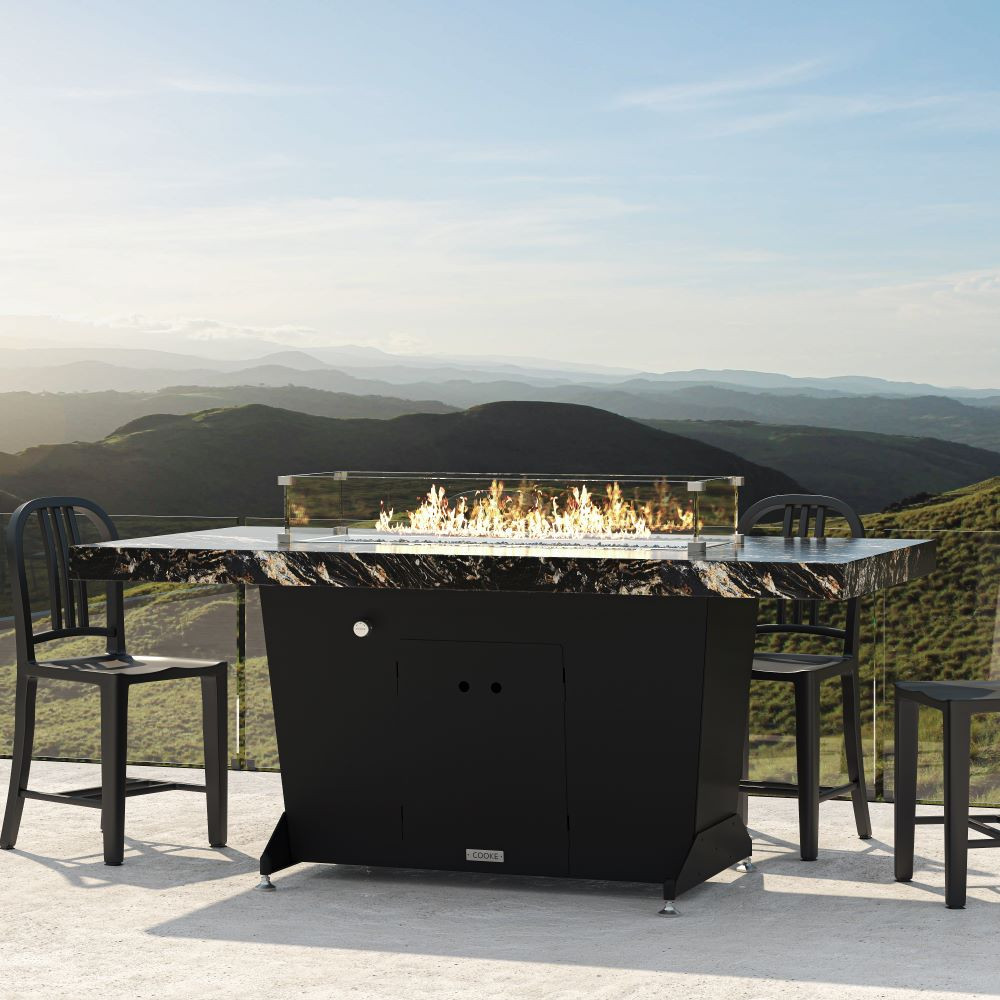
High end Fire pit tables combine enclosed construction with tempered glass tops, offering superior wind protection compared to open bowls. Santa Ana winds—reaching 70 mph with humidity below 10%—create extreme fire danger that standard installations can't handle.
This guide covers material selection, anchoring techniques, and operational protocols that keep your outdoor fire feature safe when coastal breezes turn into dangerous wind events.
What Risks Do Winds Pose to Fire Pits?
Wind transforms a controlled fire into a potential hazard. Understanding these risks helps you prevent accidents and property damage before they occur.
How Can Wind Affect the Stability and Safety of Fire Pits?
Wind disrupts flame patterns, reduces heat output, and creates immediate safety hazards. Strong gusts can lift embers from your fire pit and carry them to combustible materials nearby. The flames themselves become unpredictable, reaching beyond the pit's containment area and potentially igniting clothing, furniture, or landscaping. Coastal winds present particularly challenging conditions that require specific design strategies to maintain safe operation.
Why Wind is Especially Hazardous for Outdoor Fires in Santa Ana Conditions
Santa Ana winds pose a unique and dangerous risk to outdoor fires due to their extreme speed, dryness, and unpredictability. Here’s why these winds make fire safety especially critical in areas affected by Santa Ana conditions:
- Wind Speed: Winds can reach 40–70 mph, with gusts exceeding 100 mph.
- Dryness: Low humidity levels (often below 10%) dry out vegetation quickly, turning your yard into potential fuel.
- Unpredictability: Santa Ana winds shift direction suddenly, making it difficult to place your fire pit in a "safe" orientation.
- Fire Risk: Even a single ember can travel over a mile, potentially igniting a wildfire.
When Santa Ana winds are in effect, outdoor fire safety becomes a top priority. Always ensure that fire pits and custom luxury fire pit tables are positioned safely and equipped with proper wind guards to mitigate risks in these hazardous conditions.
What Fire Pit Hazards Are Caused by Santa Ana Winds?
Santa Ana winds amplify every fire pit risk. Flames shoot horizontally instead of rising vertically, extending far beyond normal safety zones. The intense winds can topple unsecured fire pits, spilling burning materials across your patio or yard. Embers multiply exponentially as the wind pulls them from the fire, creating a shower of ignition sources.
Gas flames can blow out completely, allowing unburned gas to accumulate and potentially re-ignite explosively. The combination of extreme wind speed and critically low humidity means any escaped ember has maximum ignition potential with minimal moisture to impede combustion.
How Can You Protect Your Fire Pit from Wind?
Strategic wind protection keeps flames controlled and embers contained. The right combination of shields, design features, and barriers creates a safer fire experience in challenging conditions.
Effective Wind Shields for Fire Pits
Tempered glass wind guards are the most effective solution for protecting your fire pit from wind while preserving visibility and aesthetics. Here’s why they’re ideal for both gas and gel fuel fire features:
- Wind Protection: Glass wind guards surround the fire pit, deflecting wind and preventing disruptions in the flame pattern.
- Visibility: These panels maintain an unobstructed view of the flames, keeping the aesthetic appeal intact.
- Temperature Resistance: Tempered glass withstands high heat without cracking and stays cool enough to touch on the exterior.
How Wind Shields Enhance Fire Pit Safety
- Ember Containment: Wind guards create a physical barrier that stops embers from escaping, reducing the risk of fire hazards.
- Heat Distribution: While they block wind, the glass still allows heat to radiate outward, ensuring warmth reaches guests.
- Coastal Protection: For coastal installations, tempered glass wind guards are essential for maintaining fire safety and stability in harsh conditions.
Tempered glass wind guards are an excellent choice for maintaining both safety and aesthetics in your fire pit tables or standalone installations, especially in areas prone to high winds or coastal conditions.
Can Fire Pit Design Help Minimize Wind Impact?
Design choices directly impact wind resistance. Lower-profile fire pits expose less surface area to wind, keeping flames stable. Deeper bowls protect the fire by sitting below ground level, where wind speed decreases significantly.
What Are the Best Fire Pit Designs for Wind Resistance?
Wind-resistant burners feature baffled ports and lower profiles that shield flames from gusts. These specialized designs maintain consistent flame height and pattern even in moderate winds. Coastal areas require burners specifically engineered for persistent wind exposure, with reinforced construction and optimized port placement. Circular or curved designs deflect wind better than square corners, which create turbulence. Built-in fire pits outperform portable units by eliminating the tipping risk and providing structural wind breaks.
Should You Use Wind Barriers or Screens Around Your Fire Pit?
Permanent or temporary barriers provide additional wind protection beyond the fire pit itself. Natural barriers like stone walls, hedges, or privacy screens reduce wind speed before it reaches your fire. Position these barriers 6-10 feet upwind, allowing enough space for proper ventilation while blocking direct gusts.
Avoid creating enclosed spaces that trap smoke or restrict airflow. Mesh screens work for wood-burning fire pits, catching sparks while allowing heat to escape, but they're unnecessary for gas installations with glass wind guards. Strategic landscaping—dense shrubs or decorative walls—serves double duty as wind blocks and design features.
Which Materials Are Most Effective at Withstanding Wind?
Material choice determines how well your fire pit survives coastal wind and salt exposure. The right materials prevent corrosion, maintain structural integrity, and resist wind-driven wear.
Most Wind-Resistant Fire Pit Materials
When selecting materials for wind-resistant fire pits, durability against coastal conditions and salt air is essential. The right material choice ensures longevity and maintains performance in harsh environments. Here’s how 316 stainless steel outperforms other options:
- 316 Stainless Steel:
- Contains 2% molybdenum, which protects against pitting and crevice corrosion from salt air chlorides.
- Ideal for coastal environments and installations within five miles of the ocean.
- Provides superior durability and resistance to wind, salt, and moisture.
- 20–30% price premium over 304 stainless, but offers better ROI through extended lifespan and reduced maintenance.
- 304 Stainless Steel:
- Lacks molybdenum and is more susceptible to degradation in coastal areas.
- Suitable for inland installations but not recommended for coastal applications.
For luxury coastal fire pit installations, 316 stainless steel is the best choice for wind-resistant fire pit tables and components, ensuring long-term performance and minimal upkeep despite exposure to harsh conditions.
How Does the Fuel You Use Affect the Fire Pit's Wind Resistance?
Fuel type impacts flame stability and operating costs, not wind resistance itself. Natural gas maintains steadier pressure through fixed lines, providing consistent flame height in wind at $0.12 per 1,000 BTU. A 65,000 BTU unit costs $0.80/hour on natural gas versus $4.23/hour on propane. Scale that to a 125,000 BTU unit: $1.53/hour for natural gas, $8.14/hour for propane.
Propane's higher cost ($0.65 per 1,000 BTU) and tank-dependent pressure make it less reliable in sustained wind conditions. Natural gas eliminates the risk of running out mid-use and delivers more predictable performance when gusts challenge flame stability.
Can Certain Materials Make Your Fire Pit Safer in High Winds?
Fire media choice affects ember production and heat distribution. Fire glass—tempered glass in various colors and sizes—stays in place better than loose materials, reducing windborne debris. The smooth, dense pieces don't produce embers and reflect heat efficiently.
Lava rock offers a lightweight, porous alternative with a rustic appearance at a lower cost, ideal for covering large burner areas while allowing proper gas flow. Ceramic logs and shapes withstand high temperatures while creating realistic flame patterns, but their irregular surfaces can catch the wind and disrupt flames.
In high-wind areas, fire glass provides the safest option by eliminating loose particles that wind can carry away.
How Do You Secure Your Fire Pit in High Winds?
Proper anchoring prevents tipping and keeps your rectangular fire pit stationary during severe wind events. Unsecured fire pits become dangerous projectiles that spread flames and damage property.
What Are the Best Anchoring Techniques for Outdoor Fire Pits?
Fire features on decks or elevated structures require secure anchoring to resist wind loads, especially in coastal areas. Use 316 stainless steel hardware for all anchoring components to prevent corrosion from salt air. Bolt-down brackets attach directly to concrete pads or deck framing, creating permanent installations that withstand high winds.
For ground-level installations, embed anchor points in a concrete foundation at least 4 inches thick. L-brackets or mounting plates should connect at multiple points around the fire pit's base—minimum four anchor points for round pits, six for larger rectangular designs. Coastal installations demand marine-grade fasteners throughout to maintain holding strength as standard hardware corrodes.
How Can You Safely Anchor Your Fire Pit to Prevent Tipping Over?
Weight and low center of gravity provide the first line of defense against tipping. Built-in fire pits surrounded by stone or concrete eliminate tipping risk entirely. For freestanding units, add ballast weight to the base before securing with anchors—sand-filled bases or weighted rings increase stability.
Mount anchoring hardware through the fire pit's structural frame, not decorative panels that may tear away. On decks, lag bolts into joists provide a stronger hold than surface-mounted anchors. Test your installation by applying lateral pressure from multiple angles—a properly anchored fire pit shouldn't shift or rock.
Inspect anchor points seasonally, tightening hardware and checking for corrosion damage. Replace any compromised fasteners immediately, as a single failed anchor point reduces overall stability by 25% or more.
What Are Santa Ana Winds and How Do They Affect Outdoor Fires?
Santa Ana winds create California's most dangerous fire conditions. Understanding these weather events helps you decide when fire pit use becomes unacceptably risky.
What Causes Santa Ana Winds and Why Are They Dangerous for Fire Pits?
Santa Ana winds are a natural phenomenon that poses significant risks for outdoor fires, including fire pit tables. These winds are caused by high-pressure systems over the Great Basin that push air toward the coast. Here’s how these winds form and why they’re particularly hazardous for fire pit installations:
- Formation:
- High-pressure systems over the Great Basin push air toward the coast.
- As air descends through mountain passes and canyons, it compresses and heats, increasing by 5°F for every 1,000 feet of elevation drop.
- Wind Speed:
- Winds reach 40–70 mph, with gusts exceeding 100 mph.
- These winds are hot and dry, with relative humidity dropping below 10%, which dries out vegetation rapidly, turning landscapes into potential fuel.
- Unique Nature of Santa Ana Winds:
- Unlike coastal breezes, Santa Ana winds blow from inland deserts, reversing typical wind patterns and catching people off guard.
- These winds are most common from October to March, peaking in December.
- Fire Pit Risk:
- Fire pits become dangerous ignition sources during Santa Ana conditions.
- A single ember can travel over a mile, sparking wildfires in sustained Santa Ana winds.
During Santa Ana wind events, fire pit tables and outdoor features must be carefully monitored. Wind-resistant designs and proper placement can help mitigate risks, keeping your outdoor space safe during these hazardous conditions.
How Do Santa Ana Winds Influence Outdoor Fire Safety?
Santa Ana winds eliminate the margin for error with outdoor fires. Wind speeds above 25 mph make fire pit operation dangerous; Santa Anas routinely exceed this threshold. The extreme dryness accelerates ignition—materials that normally resist fire combust within seconds.
Embers stay airborne longer and travel farther, landing on roofs, in gutters, and against fences far from the source. Shifting wind direction means flames blow unpredictably, making it impossible to position yourself or combustibles safely. Most California counties issue burn bans during Red Flag Warnings, which accompany Santa Ana events.
Violating these bans carries fines up to $10,000 and potential liability for any resulting fires. When Santa Ana winds are forecast, extinguish all outdoor fires and secure loose fire pit components that could become wind-driven projectiles.
What Are the Best Fire Pit Safety Practices in Windy Conditions?
Wind demands heightened vigilance and preparation. Following established safety protocols reduces risk when you choose to operate your fire pit in marginal conditions.
How Do You Manage Fire Safety During Windy Weather?
Never leave fires unattended—constant supervision is required from ignition until complete extinguishment. Keep a fire extinguisher with a minimum 4-A rating within immediate reach, or maintain alternative suppression equipment: dirt, sand, water barrel, garden hose, or dedicated water supply. Inspect and clear the area before lighting—eliminate conditions that could spread fire within the required distances from structures.
Remove dead leaves, dry grass, and combustible debris. Wet down the surrounding areas in sustained wind. Monitor flame behavior continuously; if flames extend beyond normal height or lean significantly, reduce fuel or extinguish immediately. Check for airborne embers every few minutes, scanning downwind areas for spot fires.
Wind above 15 mph requires extra caution; above 25 mph, postpone fire pit use. Always check local fire weather warnings before igniting—Red Flag conditions mandate complete fire bans regardless of your equipment or precautions.
What Causes Santa Ana Winds and Why Are They Dangerous for Fire Pits?
Santa Ana winds are a natural phenomenon that poses significant risks for outdoor fires, including fire pit tables. These winds are caused by high-pressure systems over the Great Basin that push air toward the coast. Here’s how these winds form and why they’re particularly hazardous for fire pit installations:
- Formation:
- High-pressure systems over the Great Basin push air toward the coast.
- As air descends through mountain passes and canyons, it compresses and heats, increasing by 5°F for every 1,000 feet of elevation drop.
- Wind Speed:
- Winds reach 40–70 mph, with gusts exceeding 100 mph.
- These winds are hot and dry, with relative humidity dropping below 10%, which dries out vegetation rapidly, turning landscapes into potential fuel.
- Unique Nature of Santa Ana Winds:
- Unlike coastal breezes, Santa Ana winds blow from inland deserts, reversing typical wind patterns and catching people off guard.
- These winds are most common from October to March, peaking in December.
- Fire Pit Risk:
- Fire pits become dangerous ignition sources during Santa Ana conditions.
- A single ember can travel over a mile, sparking wildfires in sustained Santa Ana winds.
During Santa Ana wind events, fire pit tables and outdoor features must be carefully monitored. Wind-resistant designs and proper placement can help mitigate risks, keeping your outdoor space safe during these hazardous conditions.
What Are Alternative Solutions to Fire Pits in High Winds?
When wind makes outdoor fire pits unsafe, alternative heating and ambiance options maintain comfort without the risk. Smart substitutions let you enjoy your outdoor space year-round.
Can You Use an Indoor Fireplace Safely Instead of an Outdoor Fire Pit?
Indoor fireplaces eliminate wind concerns but face regulatory restrictions in California. Wood-burning fireplaces are prohibited under SCAQMD Rule #445 due to air quality concerns—this ban covers most of Southern California's urban areas. Gas fireplaces remain legal and provide safe indoor ambiance during wind events.
Direct-vent gas units exhaust outside and don't compromise indoor air quality. Electric fireplaces offer the simplest alternative: realistic flame effects without combustion, venting requirements, or wind vulnerability.
For areas outside SCAQMD jurisdiction, EPA-certified wood stoves meet emissions standards, but check local ordinances—many communities ban wood burning during poor air quality days that often coincide with high wind events.
Ready to Build a Wind-Resistant Fire Pit That's Safe in Any Conditions?
Don't let windy conditions or fire pit concerns keep you from enjoying your outdoor space. SoCal Fire Pits specializes in installations engineered for California's challenging wind environments—from coastal breezes to Santa Ana events. Our team provides comprehensive fire pit wind solutions, including marine-grade 316 stainless steel construction, tempered glass wind guards, and secure anchoring systems that meet California Fire Code requirements.
We assess your property's microclimate, prevailing wind patterns, and proximity to the coast to design fire features that perform safely year-round. Schedule your consultation today and discover how proper planning, quality materials, and expert installation create wind-resistant fire pits that deliver ambiance without compromise. Contact SoCal Fire Pits for coastal-tested solutions.