
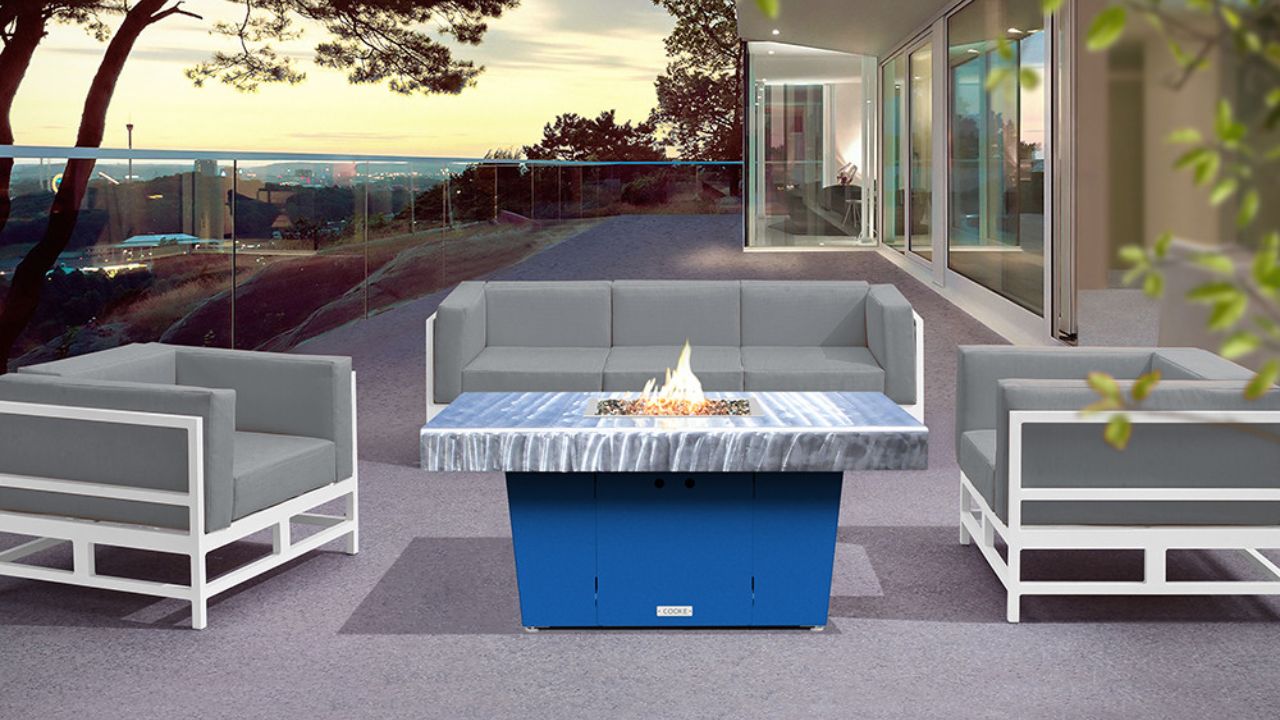
The fire pit market enters 2026 with momentum fueled by permanent outdoor living shifts, accelerating gas-fuel adoption, and smart technology integration. Products like the modern fire table exemplify this evolution, combining clean gas operation with contemporary aesthetics that appeal to today's design-conscious buyers. For trade professionals navigating this $8.37 billion global category, understanding fuel-type transitions, regional growth variations, and compliance requirements separates profitable growth from margin-eroding inventory mistakes.
This trade professional guide provides decision-useful fire pit sales forecast data, SKU rationalization frameworks, and compliance scripting to align purchasing, fire pit installation, and sales strategies with measurable market drivers.
Key Takeaways
- Global fire pit market reaches $8.37B in 2025, projected to hit $13.37B by 2033 at 5.9% CAGR, with gas/propane fuels capturing 60-70% market share by 2026
- Propane grows fastest at 8.8% CAGR through 2030, driven by convenience and urban regulatory shifts away from wood-burning (declining from 48.8% to ~40% share)
- Smart technology adoption accelerates from 35% base, with app-controlled ignition commanding $1,500-$2,500 premiums in hospitality and luxury segments
- ANSI Z21.97/CSA 2.41 certification becomes mandatory for commercial installations as insurance carriers ban liquid-fuel tabletop products
- Margins face pressure from 12-15% damage rates and rising warranty costs, requiring supplier quality commitments and 35-45% attach-rate bundles
What Is the Fire Pit Market in 2026, and What Products Are Included in "Fire Pits" for Trade Planning?
The fire pit market encompasses outdoor heating products from portable bowls to engineered permanent installations requiring professional gas fitting and hardscape integration.
What Product Types Should Be Counted For Trade Planning?
- Portable fire bowls: freestanding units requiring no installation
- Table-height fire pits: elevated designs for dining or conversation settings
- Fire pit tables: multi-functional fire pit units serving as both heating elements and surfaces
- Built-in/burner kits: permanent installations requiring professional gas line work
- Outdoor decorative gas appliances: certified units meeting ANSI Z21.97/CSA 2.41 standards
- Category-driving accessories: fire media, protective covers, wind guards, replacement ignition components
Market reports vary significantly in category definitions, with some excluding portable units under $500 or including patio heaters, affecting reported market size by 15-20%.
What Buyer Contexts Should Be Separated When Interpreting Market Demand?
- DIY retail buyers: prioritize ease of assembly, clear instructions, all-in-one packaging
- Pro-install residential: value technical support, detailed clearance specs, reliable parts availability; typically specify gas models with 8-16 week custom timelines
- Hospitality: require commercial-grade durability, brand compliance documentation; trusted by Hilton, Waldorf Astoria, Ritz-Carlton properties
- Multifamily/HOA: demand certified models, insurance-friendly documentation, low-maintenance operation
- Light commercial venues: seek high-traffic durability, simplified operation, local compliance
- Specifier-led projects: require CAD files, installation instructions, customization flexibility
How Large Is The Global Fire Pit Market In 2026, And What Is The Most Decision-Useful Forecast?
Global market estimates for 2026 range from $8-9 billion, with steady growth expected through 2033. The most actionable fire pit sales forecast data comes from segmenting by geography, channel, and fuel type.
What Do The Latest Global Market Estimates And Growth Rates Indicate For 2026–2033 Planning?
|
Source |
Base Year & Value |
Forecast Year & Value |
CAGR |
What's Included |
|
Grand View Research |
2025: $8.37B |
2033: $13.37B |
5.9% |
Global; wood, gas, propane; residential/commercial |
|
Studio Nisho |
2023: $3.09B |
2032: $5.45B |
6.5% |
North American retail channels |
|
Grand View Research (NA) |
2024: $3.09B |
2030: ~$4.2B |
5.6% |
North America; B2C (65%), B2B (7.1% CAGR) |
The 5.9-6.5% CAGR range suggests gradual SKU expansion rather than aggressive inventory buildups. Custom/built-in segments (7.1% B2B CAGR) outpace portable retail products in the luxury fire pit market.
Why Do Market-Size Numbers Differ Across Reports, And How Should Trade Teams Normalize Them?
- Scope differences: Some include only permanent installations versus all outdoor fire products
- Geography coverage: Global versus North America-only creates 2-3x valuation gaps
- Channel coverage: B2C retail-focused reports miss contractor/hospitality procurement
- Accessory inclusion: Including fire media, covers, parts, inflates totals by $800M-$1.2B globally
- Normalization method: Align category definition, isolate North America B2B data when planning contractor inventory, and focus on fuel-type shifts (gas vs wood) and format trends (built-in vs portable).
Which Regions Are Growing Fastest, And How Should Trade Professionals Localize Assortment And Inventory?
North America maintains market leadership with $3.09 billion in 2024 revenue, while Asia Pacific shows the fastest growth at 7.6% CAGR.
What Regional Growth Signals Should Trade Professionals Use For 2026 Localization?
|
Region |
Market Size |
CAGR |
Trade Takeaway |
|
North America |
$3.09B (2024) |
5.6% |
Prioritize gas models; propane growing 8.8% CAGR through 2030 |
|
Western/Southern US |
Subset of NA |
Above avg |
Stock higher BTU (60K-150K+); wildfire rules require gas-only |
|
Asia Pacific |
Not quantified |
7.6% |
Price-sensitive; emphasize mid-tier ($2K-$5K) |
|
Global |
$7.67B (2024) |
6.3% |
Gas/propane expected 60-70% share by 2026 |
How Should You Adjust Assortment By Region?
- Core assortment: Maintain 3-5 hero SKUs across regions
- Fuel mix: Stock 70-80% gas/propane in wildfire-prone markets; wood options in rural areas
- BTU tuning: Southern California: 40K-60K BTU for ambiance; Pacific Northwest: 80K-150K+ BTU
- Compliance models: ANSI Z21.97/CSA 2.41 certified units default in hospitality/multifamily
- Premium vs mid-tier: Coastal luxury markets: $8K-$25K+; inland markets: $2K-$8K
What Is Driving Demand For Fire Pits In 2026 Across Residential And Commercial Buyers?
Outdoor living expansion continues as the primary driver, with buyers viewing fire features as essential year-round entertaining components.
Why Is Outdoor Living Still The Primary Demand Engine?
Post-pandemic lifestyle shifts have become permanent, with consumers viewing outdoor areas as essential living zones rather than seasonal amenities.
Top 3 purchase motivations:
- Ambiance creation: Fire features generate emotional engagement and social magnetism
- Seasonal comfort extension: Heat output extends the entertainment season by 2-4 months annually
- Property value enhancement: Permanent installations increase home value and serve as luxury real estate selling points
How Are Entertaining, Ambiance, And Shoulder-Season Comfort Changing Purchase Criteria?
- Ease of ignition: App-controlled ignition ($1,500-$2,500 upgrade) eliminates manual lighting barriers
- Flame control: Variable BTU settings (20,000-150,000+ range) adjust for weather conditions
- Wind performance: Engineered burner systems with optional wind guards
- Heat output expectations: Buyers specify BTU based on space size and climate
- Footprint constraints: Urban spaces drive linear and L-shaped designs over traditional round pits
- Aesthetic alignment: Modern linear designs gaining share; concrete and steel overtaking stone per design trend analysis
- Maintenance expectations: Gas-based pits are gaining preference due to reduced cleanup
- Safety perceptions: Shift toward certified gas models with automatic shut-off
These criteria move buyers toward gas/propane fuels (60-70% market share by 2026) and professionally installed formats.
Which Fuel Types And Formats Are Winning In 2026, And What Trade-Offs Drive The Mix?
Fuel preferences shift decisively toward gas-based options, with propane growing at 8.8% CAGR and natural gas dominating permanent installations.
How Are Buyers Choosing Between Fuel Types?
|
Fuel |
Best-Fit Use Cases |
Pros |
Cons |
Typical Objections |
|
Wood-burning |
Rural residential; traditional aesthetic |
Authentic flame; lowest fuel cost |
High maintenance; smoke; declining to ~40% share |
"Too much cleanup"; "Burn bans" |
|
Propane |
Portable needs; no natural gas access |
No installation; instant ignition; 8.8% CAGR |
Tank refills; visible tank |
"Tank runs out"; "Looks industrial" |
|
Natural Gas |
Permanent installations; luxury/commercial |
Unlimited fuel; clean burning |
Gas line install ($1,500-$3,500) |
"Installation cost"; "Permitting" |
|
Bioethanol |
Tabletop ambiance; ventless indoor |
No installation; no emissions |
Limited heat; safety incidents rising |
"Is this safe?"; "Insurance concerns" |
|
Electric |
Zero-emission requirements |
Safest; minimal maintenance |
Lower heat; less authentic |
"Doesn't look real"; "Not enough heat" |
What Is Pushing Specifiers Toward Gas?
- Risk perception: CPSC recalls create liability concerns for contractors and venues
- Venue restrictions: Hotels, restaurants, multifamily ban liquid-fuel tabletop units
- Insurance sensitivity: Property managers prohibit liquid-fuel products; gas models with auto shut-off gain preference
- Customer misuse risk: Simplified gas ignition reduces operator error
Which Features Are Becoming Table Stakes In 2026, And Which Differentiate Premium SKUs?
Electronic ignition, CSA-certified components, and wind-stable burner designs are now the baseline for gas models. Premium differentiation centers on smart controls, variable BTU output exceeding 80K, and integrated multi-functionality.
What Performance Specs Matter Most?
- BTUs/heat output: Entry: 20K-40K BTU; mid: 40K-80K BTU; premium: 80K-150K+ BTU
- Flame stability: Engineered burners maintain flame in 10-15 mph winds
- Ignition type: Manual (budget); push-button (standard); electronic (mid); app-controlled (premium $1,500-$2,500)
- Regulator quality: CSA-certified; brass fittings; documented part availability
- Warranty clarity: Burner (3-5 years), ignition (1-2 years), finish (1 year)
- Sales scripts: "BTUs measure heat output. You'll want 60,000+ BTUs for a 10x10 foot area." "The fire pit's physical size doesn't determine warmth, BTU rating does."
What Design Cues Are Shaping Sell-Through?
- Low-smoke positioning: Smokeless designs and gas models as neighbor-friendly
- Clean flame visuals: Glass media for refraction; linear burners for ribbon flames
- Modern finishes: Concrete aggregates; matte black, corten, brushed stainless steel
- Space-efficient profiles: Linear/L-shaped formats; compact footprints under 36 inches
- Hidden tanks: Enclosed cabinets concealing propane tanks
What Pricing And Margin Trends Should Trade Professionals Expect In 2026?
Margins face pressure from freight costs 20-30% above pre-pandemic levels and rising warranty costs. Return rates of 8-12% for self-assembly products compound erosion, with damage-in-transit hitting 12-15% for concrete/stone units.
What Is Happening To Landed Cost Drivers?
Where margins are lost: Damage in transit (12-15% for concrete/stone), missing parts ($25-$40 per incident), ignition failures ($60-$150 plus labor), unclear install guidance ($200-$500 contractor callbacks)
How Should Teams Build Good/Better/Best Ladders?
Define by use case + features: Good: portable propane, manual ignition, 35K-50K BTU ($800-$2,000); Better: built-in capable, electronic ignition, 50K-80K BTU ($2,000-$8,000); Best: custom dimensions, app control, 80K-150K+ BTU ($8,000-$100,000+)
Cap colorways: Limit to 3-4 finish options per SKU
Anchor to personas: Good: DIY homeowners; Better: design-focused; Best: luxury residential, hospitality
Which Add-Ons Drive Attach-Rate And Margin?
- Protection bundle (35-45% attach): Covers ($60-$180), tank covers ($40-$120), spark screens ($50-$150)
- Performance bundle (25-35% attach): Fire media ($80-$250), wind guards ($80-$350), heat deflectors ($60-$140)
- Service bundle (15-25% attach): Ignition kits ($60-$180), hoses/regulators ($40-$120), cleaning kits ($30-$70)
What Safety, Standards, And Compliance Topics Must Trade Professionals Address In 2026?
Compliance demands extend beyond product certification to siting clearances, air quality restrictions, and jurisdiction-specific permitting.
What Siting and Clearance Practices Should Be Standardized?
- Clearance distances: Minimum 10 feet from structures; 3 feet from walkways
- Non-combustible surfaces: Install on concrete, pavers, stone, brick; never wood decks
- Fire extinguisher access: Class ABC within 10 feet
- Local restrictions: Verify burn bans, air quality alerts before installation
- Children/pets buffer: Physical barriers creating 3+ foot buffer
Which Certification Standard Matters Most?
- ANSI Z21.97/CSA 2.41: Standard for outdoor decorative gas appliances covering construction, performance, safety
- Certification marks: CSA Group, Intertek (ETL), or UL marks on rating plate
- How to communicate: "ANSI Z21.97/CSA 2.41 certified for outdoor decorative gas use"
Certification does not override local burn bans; it addresses product safety only.
How Should Teams Discuss Air-Quality Rules?
What EPA covers: EPA regulates indoor wood stoves; outdoor fire pits are not subject to EPA emission standards
Safe phrasing: "This gas model produces minimal emissions"; avoid "EPA approved," "EPA certified," or "EPA compliant"
Sales script: "The EPA doesn't regulate outdoor fire pits. For air quality concerns, gas models produce virtually no smoke."
How Do Burn Bans Change What Can Be Used?
|
Scenario |
What's Restricted |
What to Recommend |
Sales Note |
|
Wildfire smoke conditions |
All outdoor burning |
Gas/propane models |
"Gas gives most flexibility during restrictions" |
|
Seasonal burn ban |
Wood-burning fires |
Gas or propane |
"Gas models aren't affected, verify with fire department" |
|
HOA restriction |
Varies by property |
Certified gas with enclosed tanks |
"Get written approval before ordering" |
|
City ordinance |
May prohibit wood city-wide |
Permitted gas installations |
"Your city requires permit for built-in gas" |
|
Venue insurance |
May prohibit wood |
ANSI-certified gas with auto shut-off |
"We'll provide documentation for your carrier" |
What Are The Key 2026 Takeaways For Trade Professionals, And What Should The Next 90 Days Look Like?
The fire pit market's 5.9-6.5% CAGR demands strategic alignment across purchasing, inventory, and customer education. Focus Q1 2026 on SKU rationalization, supplier quality commitments, and compliance standardization.
What Should Distributors Do Next?
- Consolidate regional plan: Align inventory: 70% gas/propane in urban zones, 30% wood in rural markets
- Rationalize SKUs: Maximum 3-4 finish options per model; one hero SKU per tier
- Commit to bundles: Pre-package at 10-15% discount
- Tighten supplier QA: Request <5% damage, <2% ignition failure at 12 months, 48-hour parts ship
- Create sales training: Develop BTU scripts, fuel comparison tables, EPA compliance response
- Set KPI dashboard: Track sell-through velocity, attach rate, damage rate, warranty claims, stockouts
What Should Installers And Specifiers Do Next?
- Standardize siting checklist: 12-point clearance checklist, including combustible distances, surfaces, wind exposure
- Document restriction checks: Dated records of burn ban status, ordinances, HOA approvals
- Prefer serviceable models: Gas models with accessible burners, removable ignition, documented parts
- Require complete docs: CAD files, clearance specs, permit-ready drawings
- Set client expectations: Communicate 8-16 week lead times before contract signature
- Build installer network: Establish relationships with ANSI Z21.97-familiar gas contractors
What Should Manufacturers Do Next?
- Documentation clarity: Photo-illustrated manuals, clearance diagrams, permit-ready CAD files
- Parts guarantees: 7+ year availability; 48-hour ship SLA
- Improved packaging: Reduce damage to <5%
- Faster claims: 5-business-day maximum warranty decisions
- Certification transparency: Display ANSI Z21.97/CSA 2.41 marks prominently
- Ignition reliability: Target <2% failure at 12 months
Executing Your 2026 Fire Pit Market Strategy
The fire pit market's shift toward gas-based fuels, smart controls, and compliance-forward fire pit designs rewards trade professionals who align inventory strategy with regional fuel preferences, tighten supplier quality standards, and master compliance scripting. Success in 2026 depends on SKU discipline, documentation rigor, and proactive customer education around BTU output, burn bans, and certification requirements.
Distributors, installers, and manufacturers who execute 90-day action plans, consolidating regional inventory, standardizing siting checklists, and improving parts availability, will capture growth while competitors struggle with damage rates, warranty callbacks, and regulatory confusion. These fire pit market trends 2026 industry insights provide the framework for profitable category expansion while protecting margin integrity through operational excellence.
Ready to specify commercial-grade fire features backed by California craftsmanship and technical support? Contact SoCal Fire Pits to discuss custom installations and trade professional pricing.