
Key Takeaways:
- BTU Output Determines Cooking Capability: Cooking applications require 90,000+ BTUs for effective performance. Small decorative fire pits (40,000-70,000 BTUs) lack sufficient heat for serious cooking. Medium to large units (90,000-250,000+ BTUs) provide the consistent output needed for grilling and searing applications.
- Natural Gas Costs 80% Less to Operate Than Propane: A 125,000 BTU fire pit costs $1.53/hour on natural gas versus $8.14/hour on propane. Annual costs (100 hours): $153 natural gas vs. $814 propane. Natural gas requires permanent line installation; propane offers portability without infrastructure.
- California Fire Code Mandates Minimum 10-Foot Setbacks: Portable outdoor fireplaces require 15-foot clearances from structures, though some jurisdictions allow 3 feet with spark arresters. Overhead clearance demands 15 feet minimum. Poolside installations require an additional 5-foot setback. Always verify local requirements before finalizing placement.
- Electronic Ignition Systems Provide Critical Safety Features: Electronic ignition with flame sensing automatically shuts off gas if flames extinguish—essential for cooking applications. Match-lit and spark ignition systems lack this protection. Specify electronic controls despite the higher cost for all cooking-focused installations.
- Proper Ventilation Prevents Gas Buildup in Enclosed Designs: NFPA requires two vents on opposing sides, each with 18 square inches minimum free area. Inadequate ventilation causes dangerous heat and gas accumulation. Gas line sizing depends on run length, BTU load, and fuel type—consult sizing charts for every installation.
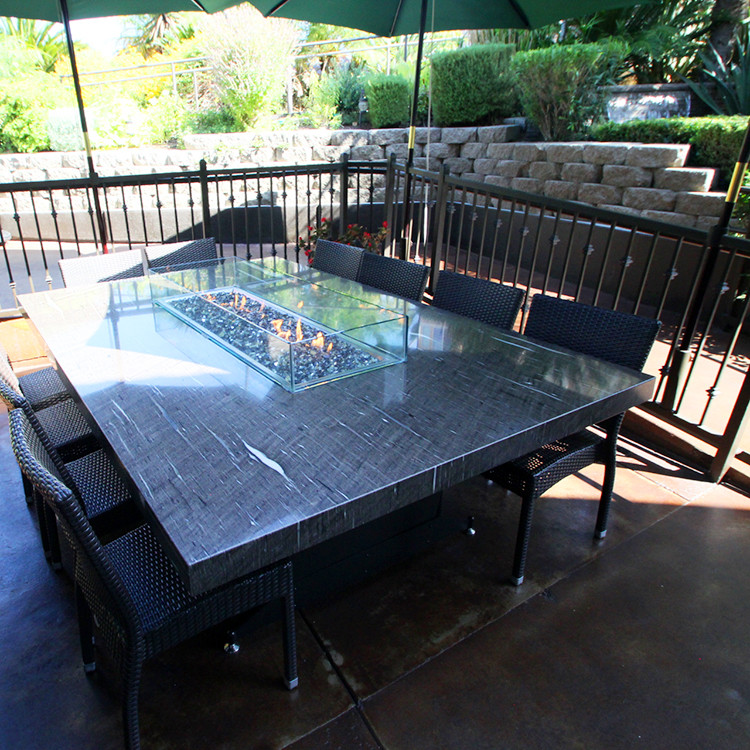
Cooking on gas fire pits transforms outdoor spaces into functional culinary venues, but not all fire features deliver safe, code-compliant cooking performance. High end fire pit tables and dedicated cooking installations require specific BTU outputs, proper ventilation, and fire pit cooking grate compatibility that standard decorative units lack.
California Fire Code establishes strict clearances and safety standards that outdoor kitchen designers must navigate. This guide addresses BTU sizing, fuel type selection, ignition systems, and placement strategies for fire pit tables and cooking applications.
Understanding these technical requirements ensures your installations meet regulatory standards while delivering the heat control and durability clients expect from luxury outdoor kitchens.
What Are the Key Considerations for Cooking on a Gas Fire Pit?
Not all gas fire pits are built for cooking. The right BTU output, flame control, and heat distribution separate functional cooking surfaces from decorative features. Understanding these specifications ensures your outdoor kitchen design delivers real performance.
What Are the Main Differences Between a Cooking Fire Pit and a Regular Fire Pit?
Cooking fire pits require higher BTU ratings and adjustable heat control. Most outdoor fire pits range from 40,000 to 200,000 BTUs. Small units (24"-30" diameter) produce 40,000-70,000 BTUs—sufficient for ambiance but marginal for cooking. Medium fire pits (36"-42") deliver 90,000-125,000 BTUs, while large installations (48"+) reach 150,000-250,000+ BTUs. Cooking applications demand the upper end of these ranges plus compatible accessories like grates and cooking trays.
What Are the Ideal Heat Levels Required for Cooking on a Gas Fire Pit?
Effective cooking requires 40,000+ BTUs minimum. Small patios (~150 sq ft) need at least 10,000 BTUs for basic heating. For actual cooking performance, 40,000-60,000 BTUs work for up to 150 square feet, while larger spaces demand 50,000-150,000 BTUs. Burner diameter matters: a 6" burner produces 80,000 BTUs, while a 12" ring generates 92,000 BTUs. Match BTU output to your cooking area size and intended use.
How Does the Flame Quality Impact Cooking Performance (Even Heat Distribution, Consistency)?
Proper gas pressure ensures consistent flame height and even heat. Natural gas requires 7-10" water column pressure; propane needs 11-13". Excessive pressure creates unwanted noise and a blowtorch effect. Insufficient pressure reduces flame height and heat output, compromising cooking performance. Crossfire burners operate efficiently even at 70% fuel capacity, maintaining consistent heat distribution across the cooking surface.
How Does Fuel Type (Natural Gas Vs. Propane) Affect Cooking Performance?
Fuel choice impacts operating costs, installation complexity, and flame characteristics. Natural gas offers lower fuel costs but requires permanent infrastructure. Propane provides portability at higher operating expense. Both deliver comparable cooking performance when properly configured.
How Do Natural Gas and Propane Differ in Terms of Heat Output and Flame Consistency?
Natural gas costs significantly less but propane delivers higher energy density. Natural gas runs approximately $0.12 per 1,000 BTU versus propane at $0.65 per 1,000 BTU. One cubic foot of propane contains 2,516 BTU. A 65,000 BTU unit costs $0.80/hour on natural gas versus $4.23/hour on propane. For a 125,000 BTU installation, expect $1.53/hour (natural gas) or $8.14/hour (propane). Natural gas operates at 1/4 PSI (7" water column) while propane requires 11" water column at the burner.
What Are the Installation Differences Between Propane and Natural Gas Fire Pits?
Natural gas demands permanent line installation; propane uses flexible connections. A 3/4" flex line carries up to 255,000 BTUs. Burners exceeding this require dual flex line kits. High-BTU applications (440,000 BTU over 20') need 1" lines. Calculate pipe length carefully—add approximately 5 feet per fitting. Each 90-degree fitting reduces available BTUs. Plumbing permits cost $150-$400, plus $100-$200 per inspection. Natural gas connections tie into existing home supply; propane installations simply connect to tank regulators.
Why Is Propane Often the Preferred Choice for Cooking Fire Pits in Remote or Mobile Locations?
Propane requires no permanent infrastructure. A standard 20-lb tank (15 lbs usable) contains 320,600 BTUs. A 65,000 BTU fire pit runs 4.9 hours per tank; a 125,000 BTU unit operates 2.6 hours. Tank refills cost $15-25. Annual operating costs (100 hours): natural gas runs $80/year (65K BTU) or $153/year (125K BTU). Propane costs $423/year (65K BTU) or $814/year (125K BTU). For locations without gas service or temporary installations, propane's portability outweighs its higher fuel cost.
What Are the Safety Standards for Cooking on a Gas Fire Pit?
California Fire Code Section 307 establishes strict clearances and safety requirements for outdoor fire features. Compliance protects occupants and property while ensuring code approval. Setback distances vary by fire pit type and local jurisdiction.
What Is the Recommended Clearance from Combustibles (Walls, Furniture, Plants) When Cooking on a Gas Fire Pit?
Minimum 10-foot setbacks from structures apply to most installations. California Fire Code requires open burning at least 50 feet from structures. Fires in approved containers need 15 feet minimum. Recreational fires require 25 feet from structures or combustibles. Portable outdoor fireplaces must maintain 15-foot clearances, though some jurisdictions allow 3 feet for spark arrester-equipped units at R-3 occupancies. Overhead clearance demands 15 feet minimum above the fire pit. Orange County mandates 7-foot property line setbacks for chimneys, 10 feet from buildings, and 2" clear space between fireplaces and combustible construction. Always verify local requirements.
How Do Flame Sensors and Automatic Shutoff Systems Enhance Safety When Cooking on Gas Fire Pits?
Electronic ignition systems with flame sensing prevent gas accumulation. These systems automatically shut off gas flow if the flame extinguishes—critical for unattended cooking scenarios. Wildland-Urban Interface (WUI) areas may require enhanced spark arresters. Certain jurisdictions mandate automatic shut-off systems for all outdoor gas appliances. These safety features protect against wind gusts, equipment malfunction, or accidental extinguishment during cooking operations.
What Are the Fire Hazard Risks, and How Can They Be Mitigated in Cooking Applications?
Constant attendance and fire suppression equipment are mandatory. California Fire Code requires one portable fire extinguisher with a minimum 4-A rating at all fire pit locations. Constant attendance is required until complete extinguishment. Approved on-site fire-extinguishing equipment must be available: dirt, sand, water barrel, garden hose, or water truck. Permits are required per Section 105.5 for regulated fire activities. Never leave cooking fire pits unattended. Grease fires and wind-driven embers pose the greatest risks during cooking operations.
How Can Gas Fire Pits Be Integrated into an Outdoor Kitchen Design?
Fire pits function as both cooking surfaces and social anchors in outdoor kitchens. Proper integration requires coordinating BTU output with seating capacity, maintaining code-compliant clearances, and ensuring accessibility. Size directly impacts functionality and required setbacks.
What Are the Best Fire Pit Designs for Integrating with Outdoor Kitchens (Central Island, Side Burner, etc.)?
Curved or circular seating arcs create focal points that facilitate conversation. Position seating to balance warmth and comfort based on BTU output. Units producing 40-70K BTU generate a 3-5 foot heat radius, seating 2-4 people. Mid-range 90-125K BTU fire pits provide 5-8 foot coverage for 4-6 occupants. Large 150-250K+ BTU installations deliver 8-12+ foot heat radius, accommodating 6-10+ people. Central island configurations work best for social gatherings. Side burner placements suit cooking-focused layouts while maintaining work triangle efficiency.
What Are the Design Considerations for Including a Fire Pit Alongside Other Kitchen Elements (Grills, Prep Stations)?
Maintain 36-inch clearances around fire pits and along egress paths. This spacing ensures comfortable passage and code compliance. Egress routes from seating areas require a 36-inch minimum width, free of obstructions. For accessible designs, fire tables need a 27-inch height, a 30-inch width, and a 19-inch depth for knee and toe clearance. Accessible routes demand firm, stable, slip-resistant surfaces. Coordinate fire pit placement with grill zones and prep stations to prevent traffic congestion and maintain safe working distances between heat sources.
How Does the Size of the Fire Pit Impact Its Functionality in Outdoor Kitchens?
Larger diameters demand increased setbacks and deliver proportionally higher BTU output. A 24" fire pit (40-70K BTU, 12" burner) requires 10-foot setbacks (15 feet poolside), seating 2-4. A 36" unit (90-125K BTU, 24" burner) needs 15-foot clearances (20 poolside) for 4-6 people. Large 60" installations (200-300K BTU, 48" burner) require 25-foot setbacks (30 poolside), accommodating 8-10 occupants. Flame height increases with diameter: 24" pits produce 8-12" flames versus 24-36" for 60" units. Poolside installations always require a 5-foot additional setback. Balance the client's seating needs against available space and setback constraints.
How Does Cooking on a Gas Fire Pit Compare to Traditional Grilling or Cooking Methods?
Gas fire pits offer open-flame cooking with less precision than dedicated grills. They excel at direct-heat applications but lack the temperature control and containment of purpose-built cooking equipment. Understanding these limitations guides appropriate use cases.
How Do Cooking Times and Temperature Control on a Gas Fire Pit Compare to a Traditional Grill?
Fire pits provide adequate heat but limited temperature precision. Burners operate effectively at 70% of fuel capacity—a 150K BTU gas supply can run a 180K BTU burner acceptably. However, fire pits lack the lid containment and adjustable grate heights that enable precise temperature zones in traditional grills. Measure gas pressure with a manometer (27.7 inches of water column = 1 PSI) to verify adequate supply. Cooking times extend compared to enclosed grills due to heat loss. Fire pits work best for direct grilling applications requiring high, constant heat rather than controlled temperature cooking.
When Might a Gas Fire Pit Not Be Sufficient for Certain Cooking Styles (e.g., Slow Roasting, Smoking)?
Fire pits lack the temperature control and enclosure necessary for smoking and slow roasting. These methods require sustained low temperatures (225-275°F) and smoke containment—impossible with open-flame fire pits. Indirect heat cooking also proves difficult without adjustable grate positioning or heat deflection systems. Fire pits cannot maintain the stable, enclosed environment needed for brisket, ribs, or other long-cook applications. For these techniques, specify dedicated smokers or kamado-style grills alongside the fire pit.
What Are the Advantages of Using a Fire Pit for Cooking Over Traditional Cooking Methods?
Fire pits combine cooking functionality with social ambiance. The open flame creates a gathering point that enclosed grills cannot match. Multiple users can cook simultaneously around the perimeter—ideal for interactive dining experiences. Upscale rectangular fire pits also provide radiant heat for fall and winter outdoor dining, extending seasonal usability. The visual appeal of open flames enhances entertainment value. For high-heat searing, fire pits deliver comparable results to traditional grills while maintaining the social focus that defines luxury outdoor living spaces.
How Can Outdoor Kitchen Designers Ensure Fire Pit Cooking Systems Are Safe and Easy to Use?
User-friendly ignition systems and thoughtful safety features separate professional installations from basic setups. Prioritize electronic controls, accessible operation, and physical barriers that protect users without compromising functionality.
How Do You Ensure Ease of Ignition and Flame Control for Cooking Applications?
Electronic ignition systems deliver superior safety and convenience. Match-lit systems use a key valve controlling gas flow—simple and reliable, but offer the lowest convenience and safety. Spark ignition (piezo) adds push-button convenience but proves less reliable in wind or wet conditions. Battery-powered operation limits dependability. Electronic ignition provides the highest performance: electronic modules control gas flow and ignition via switch, remote, or smartphone app. These systems include flame sensing with automatic shutoff—critical for cooking applications. Specify electronic ignition for all cooking-focused fire pits despite the higher initial cost.
What User-Friendly Features Should Be Included for Both Chefs and Guests?
Position controls are within easy reach and ensure one-handed operation. ADA compliance requires single-hand operability—benefit all users, not just those with mobility limitations. Integrate low-voltage landscape lighting along pathways and seating areas for safe nighttime navigation. All electrical components must meet NEC outdoor ratings and use weatherproof enclosures. Consider graduated flame control rather than simple on/off switches. Multi-position valves allow users to adjust heat levels for different cooking techniques. Label controls clearly with weather-resistant placards indicating gas flow direction and burner zones.
How Can You Ensure That a Cooking Fire Pit Is Safe for Families and Pets?
Tempered glass wind guards create physical barriers without obstructing views. These panels protect against accidental contact while shielding flames from wind—essential for consistent cooking performance. Fire features on decks or elevated structures require secure anchoring to resist wind loads and prevent tipping. Specify 316 stainless steel for all anchoring hardware in coastal areas to prevent corrosion failure. Consider raised fire pit edges or integrated seating walls that create distance buffers. Install ground-level perimeter markers or landscaping that discourages approach from unsupervised children and pets without creating trip hazards.
How Should Gas Fire Pits for Cooking Be Positioned in Outdoor Spaces?
Placement decisions balance prevailing wind patterns, gas infrastructure access, and social dynamics. Poor positioning undermines cooking performance and creates safety hazards. Consider ventilation requirements and service distances during initial site planning.
What Factors Influence the Optimal Placement of a Cooking Fire Pit (e.g., Wind Direction, Seating, Entertainment Areas)?
Position fire pits perpendicular to prevailing winds with wind-resistant burner designs. Specify burners with lower profiles and baffled ports that protect flames from disruption. Tempered glass wind guards provide additional protection while maintaining visibility. Coastal deck installations require secure anchoring to resist wind loads—critical for elevated cooking surfaces. Arrange seating to enable easy eye contact across the fire feature, fostering conversation while monitoring cooking progress. Avoid placement in wind tunnels created by building corners or landscape features. Test wind patterns at different times of day before finalizing the location.
How Do You Plan for Ventilation and Gas Line Access When Positioning a Cooking Fire Pit?
NFPA mandates two vents on opposing enclosure sides, each with 18 square inches minimum free area. Proper ventilation prevents heat and gas buildup—essential for enclosed fire pit designs. Position vents to promote cross-flow without directing exhaust toward seating areas. Gas line sizing depends on run length, total BTU requirements, and fuel type. Shorter runs allow smaller diameter lines; longer distances demand upsizing to maintain pressure. Route lines to avoid future hardscape modifications. Coordinate with utility locations during the design phase. Specify accessible shutoff valves outside the fire pit enclosure for emergency response.
How Does the Distance from the Kitchen or Dining Area Affect Fire Pit Functionality for Cooking?
Position cooking fire pits within 15-20 feet of prep areas to maintain workflow efficiency. Greater distances force repeated trips for ingredients, utensils, and plated food—disrupting cooking rhythm and letting food overcook. Closer placement risks smoke and heat intrusion into primary cooking zones. Create a logical progression: prep station, main grill, fire pit cooking surface, plating area. This sequence minimizes cross-traffic and maintains clear sight lines. For entertainment-focused installations, prioritize guest interaction over kitchen proximity—the fire pit becomes destination cooking rather than auxiliary prep space.
Partner with So-Cal Fire Pits for Expert Fire Pit Solutions
So-Cal Fire Pits delivers engineered solutions for cooking on gas fire pits in luxury outdoor kitchens. Our team provides technical specifications, CAD files, and installation support for landscape architects and design-build contractors throughout California.
We supply marine-grade stainless steel burners, fire pit cooking grates, and electronic ignition systems that meet California Fire Code requirements. Access our sizing calculators, BTU load charts, and coastal corrosion specifications to streamline your design process.
From initial concept through final inspection, we ensure code compliance and optimal cooking performance. Contact So-Cal Fire Pits today for professional-grade fire pit systems backed by comprehensive technical support and warranty protection.