
Key Takeaways
- Fire pit installations generate measurable ROI with standard projects costing $3,250-$16,500+ and luxury installations commanding $15,000-$50,000+, creating clear property differentiation in competitive California markets.
- Natural gas delivers 5x lower operating costs than propane, with a 125,000 BTU unit costing $153/year on natural gas versus $814/year on propane—making fuel selection critical for long-term value and client satisfaction.
- Regional cost variations are significant: Bay Area installations carry 1.2-1.5x multipliers, Southern California commands 1.1-1.3x premiums, while Central Valley projects approximate national averages, requiring market-specific pricing strategies.
- Marine-grade 316 stainless steel is non-negotiable within 5 miles of the coast, costing 20-30% more than 304 grade but preventing premature corrosion failure in salt air environments where standard materials deteriorate rapidly.
- Proper sizing matches BTU output to space requirements: small fire pits (24"-30") deliver 40,000-70,000 BTUs for 2-4 people, while large installations (48"+) generate 150,000-250,000+ BTUs for 6-10+ guests with proportionally increased setback requirements.
Fire pits deliver a quantifiable fire pit home value increase in California's competitive luxury residential market. Professional installations, from basic fire features to luxury fire pit tables, create outdoor entertainment zones that command buyer attention and justify higher asking prices.
The fire pit property value contribution varies by specification quality, material selection, and integration with broader outdoor living systems. This analysis examines installation costs, regional market variations, fuel economics, and material specifications that determine ROI.
Contractors targeting high-end properties need concrete data on how fire features impact valuations, what luxury buyers expect, and which specifications deliver maximum return on investment in California's diverse climate zones.
What Are the Benefits of Fire Pits for Luxury Homes?
Fire pits transform outdoor spaces into premium entertainment zones that command buyer attention and justify higher price points. They serve as architectural anchors that organize the entire outdoor living area while delivering functional warmth and visual drama.
Enhancing Outdoor Aesthetics
Fire pits as a luxury focal point
Curved seating arcs create natural conversation zones where guests maintain comfortable eye contact across the flames. The key is balancing proximity—close enough for warmth, far enough to avoid heat discomfort. Low-voltage landscape lighting extends the visual appeal beyond the fire feature itself, illuminating pathways and defining the entertainment zone's boundaries.
Integration with premium landscaping
Modern fire pits anchor complete outdoor systems. Integrate discreetly placed speakers for ambient audio, coordinate lighting systems for layered illumination, and position the feature as the centerpiece of your hardscape design. This integration transforms a simple fire pit into a cohesive outdoor living environment.
Creating Outdoor Gathering Spaces
Social impact of fire pits for gatherings
Strategic seating placement drives social interaction. Position chairs and benches to enable direct sightlines across the fire feature—this naturally encourages conversation and creates intimate gathering dynamics that separate luxury installations from basic backyard setups.
Providing warmth and ambiance to the backyard
Match BTU output to space requirements. Small fire pits (24"-30" diameter) deliver 40,000-70,000 BTUs with a 3-5 foot heat radius, accommodating 2-4 people. Medium units (36"-42") provide 90,000-125,000 BTUs, heating 5-8 feet for 4-6 guests. Large installations (48"+) generate 150,000-250,000+ BTUs, covering 8-12+ feet and seating 6-10+ people.
Year-Round Enjoyment and Functionality
Outdoor entertaining across seasons
California's climate makes fire pits essential for fall and winter entertaining. They extend outdoor space usability during cooler months when premium properties generate the highest perceived value.
Adding value through multi-functional outdoor spaces
Fire pits anchor integrated systems that include lighting, audio, and automated controls. All electrical components must meet NEC outdoor ratings. This multi-functional approach positions the outdoor space as a true extension of interior living areas—a critical selling point for luxury properties.
How Do Fire Pits Impact Home Value in the Real Estate Market?
Fire pits directly influence buyer perception and property valuation in California's competitive luxury market. They signal investment in outdoor living—a key differentiator that separates premium listings from standard inventory.
Fire Pits as a Selling Point for Buyers
Enhancing curb appeal for prospective buyers
California's year-round outdoor climate makes fire features expected amenities rather than novelties. Buyers view professionally designed fire pit areas as evidence of comprehensive property development and attention to lifestyle details.
Fire pits as a sign of luxury and premium outdoor living
Luxury installations ranging from $15,000 to $50,000+ communicate serious investment. Premium features—custom stonework, integrated seating, LED lighting systems, audio/visual components, and smart home controls—position properties in the upper market tier where buyers expect complete outdoor entertainment ecosystems.
Financial Implications: ROI of Fire Pits in Luxury Homes
Increased resale value with fire pits
Professional design adds measurable value. Landscape architects charge $150-$300 per hour, with design consultations running $2,000-$10,000 and construction drawings costing $3,000-$15,000. These upfront investments document professional execution that appraisers and buyers recognize.
Comparative home values with and without fire features
National baseline installations average $850, with typical ranges of $200-$3,000 (most projects fall between $200-$2,400). California's luxury market operates well above these figures, but the data establishes fire pits as accessible upgrades with scalable investment levels.
Fire Pits and Their Role in Modern Luxury Living
Part of a growing trend in high-end home design
Luxury single-family homes in California increasingly feature fire pits as standard amenities. Buyers shopping at premium price points expect outdoor fire features—their absence creates competitive disadvantage rather than their presence creating advantage.
Incorporating fire pits as part of an outdoor lifestyle
Fire pits integrate with broader outdoor systems. Pool builders coordinate fire features with existing equipment and utilities, creating unified outdoor entertainment zones. This integration approach maximizes perceived value by presenting the fire pit as part of a comprehensive outdoor living investment rather than an isolated add-on.
What Are the Types of Fire Pits That Add Value to Luxury Homes?
Fire pit selection impacts both installation investment and long-term operating costs. Material choice, fuel type, and scale determine maintenance requirements, operational expenses, and ultimate property value contribution.
Propane Vs. Gas Fire Pits
Pros and cons of each type for luxury properties
Natural gas delivers superior economics for permanent installations. At $0.12 per 1,000 BTU versus propane's $0.65, the cost difference is dramatic: a 65,000 BTU unit costs $0.80/hour on natural gas versus $4.23/hour on propane. Annual costs for 100 hours of use run $80-$153 for natural gas compared to $423-$814 for propane. Natural gas requires 7-10" water column pressure and provides consistent supply from the home's existing system.
Propane suits remote or temporary installations but demands frequent attention. A standard 20-lb tank (15 lbs actual fill) contains 320,600 BTUs—providing just 4.9 hours for a 65,000 BTU unit or 2.6 hours for a 125,000 BTU system. Tank refills cost $15-25, and propane requires higher pressure (11-13" water column). For luxury permanent installations, natural gas eliminates tank management and reduces operating costs by approximately 80%.
Maintenance considerations and installation costs
Gas line installation runs $1,000-$4,000 depending on distance and complexity. Factor in plumbing permits ($150-$400), inspection fees ($100-$200 per visit), and variable utility connection charges. Despite higher upfront costs, natural gas installations deliver better ROI through lower operational expenses and increased buyer appeal.
Custom Fire Pit Tables and Luxury Fire Features
High-quality custom designs for upscale homes
Material selection spans wide price ranges. Brick installations ($300-$1,000) offer temperature resistance and easy maintenance. Natural stone ($500-$2,500) delivers premium aesthetics with exceptional durability. Concrete ($300-$1,500) provides modern profiles with low maintenance. Metal options ($150-$2,000) range from portable units to custom fabrications.
San Diego market pricing for turnkey installations: gas fire pits run $3,500-$12,000 including bowls, linear designs, gas lines, and media. Full outdoor fireplaces cost $12,000-$30,000+ with CMU or prefab construction, veneer, and caps. Bay Area installations command 20-30% premiums due to higher material and labor costs.
Integration with modern outdoor furniture
Fire tables designed with ADA-compliant clearances (27" height, 30" width, 19" depth) accommodate wheelchairs and demonstrate universal design principles that appeal to luxury buyers prioritizing accessibility.
Commercial-Grade Fire Features for Hospitality and Residential Use
Fire pits for large outdoor spaces and resorts
Large-scale installations (60" diameter) generate 200,000-300,000 BTUs and seat 8-10+ guests. These commercial-grade features require 25-30 foot minimum setbacks but create dramatic focal points for expansive properties.
Durability and design for high-traffic commercial spaces
Marine-grade 316 stainless steel—with 2% molybdenum content—provides superior corrosion resistance for coastal California applications. This specification ensures longevity in salt air environments where standard materials fail prematurely.
What is the ROI of Installing Fire Pits for Luxury Contractors?
Fire pit installations deliver measurable returns through increased property values and competitive differentiation, but ROI varies significantly by market location, installation quality, and material specifications.
Factors That Influence the ROI of Fire Pit Installations
The return on investment (ROI) for fire pit installations goes beyond the initial costs—it includes long-term property value increases and the overall impact on your outdoor space. Here’s a breakdown of the factors influencing ROI:
- Initial Installation Costs:
- Complete installations range from $3,250 to $16,500+ (excluding site work and seating).
- Component costs:
- Fire pit units: $500–$5,000+
- Gas line installation: $1,000–$4,000
- Labor: $1,500–$6,000+ for 2–4 days with 2–3 installers
- Permits: $250–$1,500
- Labor rates: $60–$110 per hour in California.
- Project duration: Simple projects take 1–2 days; complex installations require 3–7 days, plus gas line work.
- Landscape Design and Construction Costs:
- Building permits: $100–$500 for standard projects, up to $1,000+ for complex installations.
- Plan review fees: $200–$800
- These costs protect contractors and clients, but must be included in project budgets and timeline expectations.
When factoring in the initial installation cost and long-term property value increase, a fire pit installation offers significant ROI. Understanding both the upfront investment and regulatory costs helps you plan for a successful and profitable project.
Is the ROI Consistent Across Different Markets?
Regional factors: Coastal vs inland properties
Bay Area installations carry 1.2-1.5x multipliers due to elevated labor costs and stringent permit requirements. Southern California (LA/OC/SD) commands moderate premiums of 1.1-1.3x with better contractor availability and supply chain access. Central Valley projects approximate national averages but may incur travel charges for specialized contractors.
The role of local buyer preferences
Coastal environments demand 316 stainless steel—costing 20-30% more than 304 grade—to resist marine layer corrosion. This specification isn't optional in salt air environments; it's required for installations that maintain value and function. Buyers in coastal markets expect marine-grade materials and discount properties with inferior specifications.
Are Fire Pits a Wise Investment for Contractors Specializing in Luxury Homes?
Fire pit specialization creates clear competitive advantages for contractors targeting California's luxury residential market. The capability signals comprehensive outdoor living expertise that high-net-worth clients actively seek.
Contractor's Competitive Edge: Offering Fire Pit Features
Differentiating a business with premium outdoor features
Professional installations demonstrate value gaps that DIY approaches cannot bridge. Code compliance, warranty protection, and integrated design execution separate qualified contractors from general laborers. This differentiation justifies premium pricing and attracts clients who prioritize quality over cost minimization.
Attracting high-net-worth clients with exclusive offerings
Luxury buyers expect custom stonework, integrated seating, and automated controls—not basic installations. Contractors offering these capabilities access higher-margin projects where clients value expertise over budget constraints. Fire pit proficiency becomes a gateway to comprehensive outdoor living projects worth $50,000+.
Marketing Fire Pits to Clients: Building a Unique Selling Proposition (USP)
Positioning fire pits as a luxury add-on
Seasonal pricing strategies maximize revenue. Peak season (March-October) supports premium rates with 12-20 week lead times driven by high demand. Off-season (November-February) offers 10-20% discount opportunities with faster 6-12 week scheduling. Strategic contractors fill winter schedules while maintaining annual margin targets.
How fire pits fit into the outdoor living trend for high-end properties
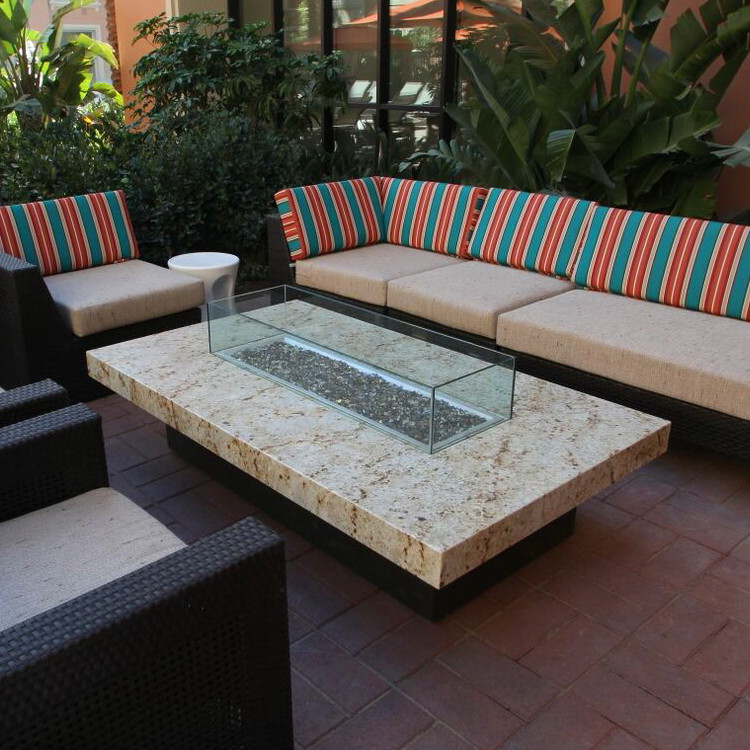
Rectangular fire pit tables anchor comprehensive outdoor systems tailored to California's climate. They're not standalone features but central elements in integrated entertainment zones. Contractors presenting fire pits as system components—not isolated products—win larger projects with better margins.
Collaborating with Premium Fire Pit Suppliers for High-End Projects
Partnering with premium brands
Specified partnerships elevate contractor credibility. Crossfire burners by Warming Trends deliver extreme efficiency, operating effectively at 70% fuel capacity. Brand relationships provide technical support, warranty backing, and marketing differentiation that generic suppliers cannot match.
Sourcing and customizing luxury fire pit options
Material versatility meets diverse aesthetic preferences. Fire glass offers modern reflective profiles in multiple colors and sizes. Lava rock provides rustic, natural appearance at accessible price points. Ceramic logs and shapes deliver traditional fireplace aesthetics with high-temperature durability. Contractors maintaining diverse material inventories respond quickly to client preferences without project delays.
How to Choose the Right Fire Pit for a Luxury Home Client?
Fire pit selection requires balancing spatial constraints, aesthetic preferences, technical requirements, and budget parameters. Systematic evaluation ensures installations that satisfy client expectations while meeting safety and performance standards.
Understanding Client Style Preferences and Needs
When designing a custom fire pit, it’s essential to align the size, design, and functionality with the client’s vision for their outdoor space. Here’s how to evaluate client needs and select the appropriate features:
- Space Size & Design Considerations:
- Size selection determines seating capacity and setback requirements.
- For a 24" unit:
- Seats 2–4 people, 12" burner ring, 40–70K BTU, 8–12" flames
- 10' setback, 15' poolside
- For a 30" unit:
- Seats 3–5 people, 15' setback, 20' poolside
- For a 36" unit:
- Seats 4–6 people, 15' setback, 20' poolside
- For a 42" unit:
- Seats 5–7 people, 20' setback, 25' poolside
- For a 48" unit:
- Seats 6–8 people, 20' setback, 25' poolside
- For a 54" unit:
- Seats 7–9 people
- For a 60" unit:
- Seats 8–10 people, 200–300K BTU output, 25' setbacks, 30' poolside
- Balancing Aesthetics and Functionality:
- BTU requirements scale with space size:
- Small patios (~150 sq ft) need 10,000+ BTU minimum.
- Medium areas require 40,000–60,000 BTU for heating up to 150 sq ft.
- Large spaces demand 50,000–150,000 BTU for effective coverage.
- Undersizing results in poor performance, while oversizing wastes fuel and creates uncomfortable heat zones.
To meet both aesthetic and functional needs, the right fire pit size and BTU output are essential. Matching these to the client’s outdoor space ensures both comfort and visual appeal, delivering a fire feature that enhances their outdoor living experience.
Customization Options for Fire Pits
Materials, finishes, and unique design elements
Stainless steel grade selection impacts longevity and cost. 304 grade (18% chromium, 8% nickel) provides good corrosion resistance at accessible pricing for most environments. 316 marine grade (16% chromium, 10% nickel, 2% molybdenum) costs 20-30% more but delivers superior pitting and crevice corrosion protection. Specify 316 for installations within 5 miles of coast—this isn't optional in salt air environments.
Tailoring features for specific outdoor environments
Coastal locations require wind-resistant burners and tempered glass wind guards for flame protection and safety. Wildland-Urban Interface (WUI) areas demand low-profile designs that minimize ember production. Environmental factors dictate specifications—ignore them at the project's peril.
Budgeting for High-End Fire Pit Projects
Estimating costs based on customization and size
Ignition systems span cost and convenience ranges. Match-lit systems offer simplicity, reliability, and lowest cost with no electronic components. Spark ignition (piezo) provides push-button convenience with battery power at mid-range pricing. Electronic ignition delivers maximum convenience and safety—remote control, smartphone integration, flame sensing—at premium cost. Client lifestyle and budget determine appropriate selection.
Budget allocation for fire pit installation in luxury homes
Gas pressure specifications prevent performance issues. Natural gas requires 7-10" water column; propane needs 11-13" water column. Excessive pressure creates noise and blowtorch effects. Insufficient pressure produces weak, short flames. Proper pressure regulation isn't negotiable—it's fundamental to satisfactory operation and client satisfaction.
Ready to Maximize Fire Pit Property Value for Your Clients?
Partner with specialists who understand how luxury fire pit tables drive measurable fire pit home value increase in California's competitive market. Our expertise in material specifications, fuel economics, and regional code compliance ensures your installations deliver maximum fire pit property value while meeting safety standards and client expectations.
Whether you're specifying marine-grade stainless steel for coastal properties or designing integrated outdoor entertainment systems, we provide the technical guidance and premium components that separate luxury contractors from basic installers. Contact us today to discuss your next high-end fire pit project and access specifications that command premium pricing and generate referrals.