
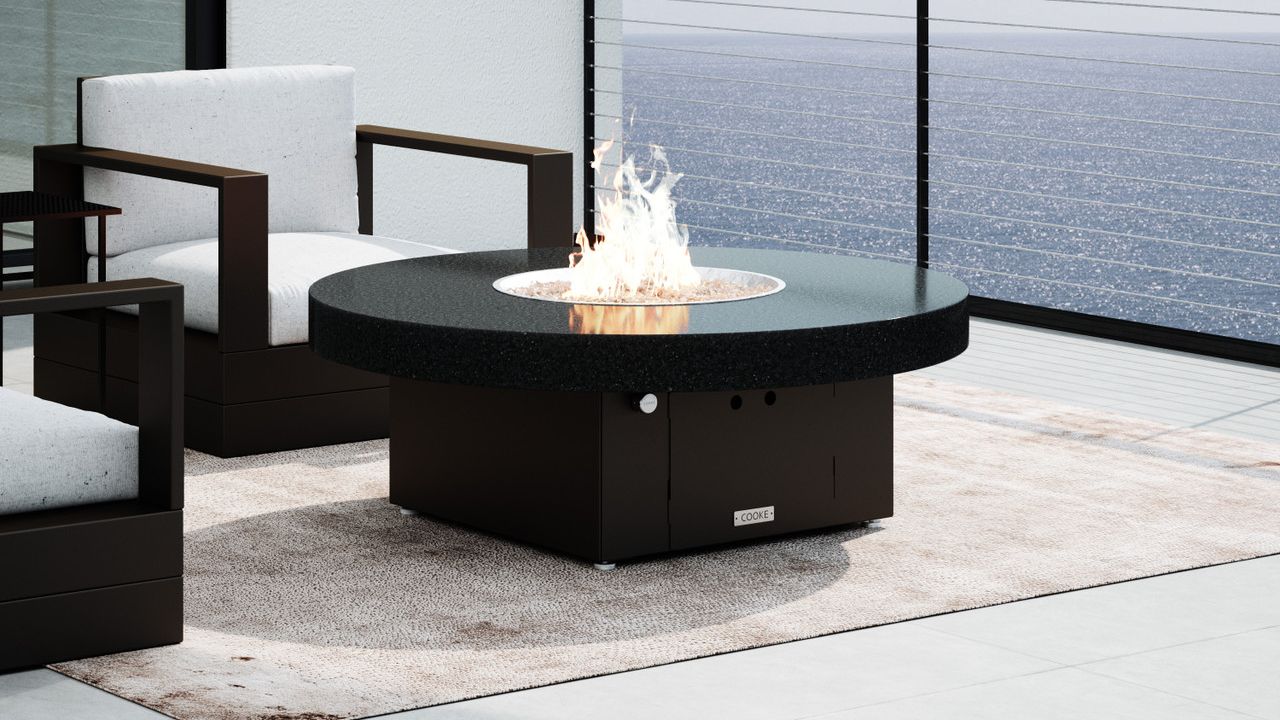
Fire pit installations combine aesthetic appeal with serious safety considerations, making certification verification and compliance non-negotiable for licensed professionals. Whether you're specifying a commercial installation for a resort property, recommending a luxury fire table for a discerning residential client, or installing a gas fire pit in a coastal estate, understanding the interplay between product listing, installation codes, and material specifications protects your reputation and your clients.
Fire pit safety and compliance are governed by a complex interplay of national and international standards, local codes, and material specifications. Failure to comply with safety standards can lead to significant liability issues, and insurance claims may be denied if uncertified products or non-compliant installations are found to be the cause of injury, damage, or fire.
This safety certification guide covers standards (ANSI Z21.97, NFPA 54/58, IFGC), fuel-specific requirements, common failures, and non-negotiable approval criteria that protect contractors and clients from liability while ensuring luxury fire pit regulations compliance.
Key Takeaways
- Certification proves safety; compliance proves installation quality, both are required for licensed professional safety
- Each fuel type follows distinct regulatory paths with specific pressure, clearance, and ventilation requirements
- Documentation protects you from intake through final inspection with submittals, commissioning records, and closeout packages
- Common failures are predictable and preventable through systematic verification workflows
- Commercial installations require enhanced controls, maintenance plans, and more frequent inspections
What Does "Certified Fire Pit" Mean, And How Is It Different From A "Code-Compliant Installation"?
A certified fire pit carries third-party testing verification from organizations like CSA or UL, proving the appliance itself meets fire pit quality standards before it ever reaches a job site. Code-compliant installation means the certified product was installed according to local building codes, fuel gas codes, and fire marshal regulations, where the approved product meets proper field installation practices.
The distinction matters for liability: selling or installing uncertified gas-burning appliances is illegal in the EEA and UK, and insurance claims can be denied anywhere if uncertified products are involved in incidents. Certification covers the product; compliance covers the installation.
Who Is The Authority Having Jurisdiction (AHJ), And What Decisions Do They Control For Fire Pit Approvals?
The AHJ is typically your local fire marshal or building official who enforces codes and issues permits in your jurisdiction. They control what gets approved based on local regulations that often exceed baseline national codes, covering location, size, fuel type, and permit requirements that vary significantly from one municipality to the next.
You must consult the AHJ before installation to confirm compliance with all applicable codes and secure necessary permits. Skipping this step can result in project shutdowns, removal orders, or insurance complications.
Which Fuel Types Create Different Compliance Paths (Natural Gas, Propane, Wood, Alcohol/Gel, Electric)?
Each fuel type follows distinct regulatory and performance requirements affecting luxury fire pit regulations:
Natural Gas: Delivers 117,000 BTU per therm with 12 lbs CO2 emissions. Requires 2-5" WC gas pressure and approximately 10 cubic feet of air per cubic foot of gas (stoichiometric ratio 9.7:1). Generally the cleanest-burning fossil fuel option.
Propane: Delivers 91,500 BTU per gallon with 12.7 lbs CO2 emissions. Requires 11" WC gas pressure and approximately 24 cubic feet of air per cubic foot of gas (stoichiometric ratio 23.9:1).
Bioethanol: Burns cleanly with minimal soot or smoke. Considered carbon-neutral because CO2 released during combustion is offset by CO2 absorbed during biomass growth.
Wood: Sustainably sourced wood from managed forests can be part of a closed carbon cycle. Traditional wood releases significant particulate matter and is subject to strictest clearance requirements.
What Certification Marks Should Licensed Professionals Accept As Proof Of A Safety Listing (UL, CSA, ETL), And Why?
Accept marks from Nationally Recognized Testing Laboratories (NRTLs) that conduct rigorous third-party testing: UL, CSA, and ETL are the primary marks for certified fire pits. These certifications verify safety, supply quality, emissions, and electrical/electronic safety through independent testing, not manufacturer self-certification.
How Does OSHA Define An NRTL Listing, And Why Does It Matter To Inspections?
OSHA recognizes NRTLs as independent organizations authorized to test and certify products for workplace safety. An NRTL listing means a qualified third party verified the product meets specific safety standards; it's not just a manufacturer's claim. During inspections, AHJs and insurance inspectors look for valid NRTL marks because they indicate legitimate safety testing.
Listing Mark Quick-Interpretation
|
Mark/Label |
What It Proves |
Where It Appears |
What to Verify |
Common Pitfalls |
|
UL |
NRTL listing for safety compliance |
Rating plate, manual |
Standard referenced, model match |
Fake marks, missing standard reference |
|
CSA |
NRTL listing for gas appliance safety |
Rating plate, manual |
Standard referenced, model match |
Invalid marks, expired certifications |
|
ETL |
NRTL listing (Intertek) |
Rating plate, manual |
Standard referenced, model match |
Counterfeit labels, non-matching models |
Which Product Standards Most Commonly Apply To Outdoor Gas Fire Pits And Fire Tables?
ANSI Z21.97/CSA 2.41 is the primary standard for outdoor decorative gas appliances, covering safety and performance requirements specific to fire pits and fire tables.
What Is ANSI Z21.97 / CSA 2.41, And When Does It Apply To "Outdoor Decorative Gas Appliances"?
ANSI Z21.97-2017 (R2022)/CSA 2.41-2017 (R2022) establishes national benchmarks for outdoor decorative gas appliances, the category that includes fire pits, fire tables, and similar products designed primarily for ambiance. It applies when the appliance operates on natural gas or propane, is intended for outdoor use, and serves a decorative function.
Rating Plate Field → Jobsite Verification
|
Field |
What It Means |
What Must Match Onsite |
Pass/Fail Red Flags |
|
Gas type |
Fuel the appliance is rated for |
Gas supply type |
Wrong fuel = immediate fail |
|
Input rating (BTU) |
Maximum fuel consumption |
Installer calculations |
Oversized for gas line = fail |
|
Manifold/supply pressure |
Required operating pressure |
Manometer reading |
Outside range = fail |
|
Model/configuration |
Exact product tested |
Installed product |
Mismatch = uncertified |
|
Minimum clearances |
Required distances from combustibles |
Measured distances |
Violations = fire hazard |
Component-Level Listing Verification Before Sign-Off
Gas Train:
- Valve rated for fuel type and pressure
- Regulator matches required manifold pressure
- All connections leak-tested with soap solution
Ignition:
- Pilot or electronic ignition system functional
- Moisture protection verified (5-7 year expected lifespan)
Safety Shutoff/Flame Supervision:
- Automatic shutoff system operational if equipped
- Flame-sensing components tested
Burner/Media Compatibility:
- Burner type matches appliance certification
- Media (glass or lava rock) approved for burner design
- Burner ports clear and properly aligned (3-5 year expected lifespan)
Control System:
- Switch/remote/timer matches listing
- Gas valve operation confirmed (10-15 year expected lifespan with annual inspection)
Which Installation Codes Most Often Govern Gas Fire Pit Piping, Cylinders, And System Safety?
NFPA 54, NFPA 58, and the International Fuel Gas Code (IFGC) form the primary regulatory framework for gas fire pit installations.
How Does NFPA 54 (ANSI Z223.1) Govern Fuel Gas Piping, Appliances, and Testing?
NFPA 54 (National Fuel Gas Code) provides comprehensive guidance for the safe installation and operation of fuel gas piping systems, appliances, equipment, and fire pit accessories. It covers pipe sizing, materials, pressure testing, appliance connections, and shutoff valve requirements.
How Does NFPA 58 Govern LP-Gas (Propane) Storage, Cylinder Setups, And Related Hazards?
NFPA 58 establishes safety requirements for propane storage, handling, and distribution. For fire pits, this means propane systems must operate at 11" WC pressure and undergo annual professional pressure testing.
When Do The International Code Council Fuel-Gas Provisions Control Enclosure Ventilation And Appliance Clearances?
The IFGC applies whenever gas appliances are installed in enclosed or semi-enclosed spaces, governing combustion air supply and appliance clearances to combustibles. Operating with 10-20% excess combustion air at high fire prevents incomplete combustion and dangerous gas buildup.
Clearance requirements under IFGC:
- Wood-burning fire pits: Minimum 10 feet from structures, 6 feet from property lines
- Gas fire pits: 72 inches from burner top to overhead combustibles, 24 inches from burner trim to combustible side walls, 8 inches below burner
- Combustible materials: Cloth, wood, charcoal, straw, leaves, paper, plastics, fabrics
What Rules Typically Govern Wood-Burning Fire Pits As "Recreational Fires" Rather Than Listed Appliances?
Most jurisdictions classify portable wood-burning fire pits as "recreational fires" rather than permanent appliances, subjecting them to local fire marshal regulations instead of appliance listing requirements.
Wood Fire Pit Compliance Constraints to Confirm With AHJ:
- Burn bans and seasonal restrictions
- Approved fuels (seasoned firewood only)
- Spark arrestor/screen expectations
- Distance/clearance expectations
- Supervision/extinguishment requirements
- Permitted locations (yard vs roof vs balcony)
When Does NFPA 211 Become Relevant For Solid-Fuel Appliances, Chimneys, And Venting Systems?
NFPA 211 applies when wood-burning fire pits transition from recreational fires to permanent solid-fuel appliances with chimneys or venting systems. Its clearance-from-combustibles and material-use principles apply to all solid fuel fire pits.
Which Standards And Safety Expectations Apply To Alcohol, Gel, And Bioethanol Fire Features?
Alcohol, gel, and bioethanol fire features fall under different regulatory treatment than gas or wood appliances, with standards focusing on fuel handling and spill prevention.
What Is UL 1370, And Which Alcohol/Gel Decorative Appliances Fall Within Its Scope?
UL 1370 covers unvented decorative gas appliances but has been adapted to address alcohol and gel-fueled decorative appliances in some jurisdictions. Not all bioethanol products carry a UL 1370 listing, so verify specific product certification before specifying.
What Is ASTM F3363, And Why Does It Matter For Portable Liquid/Gel-Fuel Tabletop Devices?
ASTM F3363 establishes safety requirements specifically for portable liquid and gel-fueled tabletop fire devices, addressing stability testing, fuel reservoir integrity, flame height control, and labeling requirements.
Alcohol/Gel/Bioethanol No-Go Conditions:
- Indoor/enclosed use when not permitted
- Refueling while hot or operating
- Unstable placement or edge proximity
- Proximity to combustibles
- Unapproved fuel types
- Evidence of spills or leaks
Which Standards And Checks Apply To Electric Fire Pits And Outdoor Electric "Fireplace-Style" Appliances?
Electric fire pits must meet electrical safety standards for outdoor appliances, focusing on weatherproofing, GFCI protection, and proper grounding.
What Is UL 2021, And When Is It Used For Fixed/Location-Dedicated Electric Room Heaters Used In "Electric Fireplace" Products?
UL 2021 covers fixed and location-dedicated electric room heaters, including many electric fireplace products designed for permanent installation. The standard addresses electrical component safety, heating element protection, and tip-over/overheat shutoffs.
Outdoor Electrical Risks to Address:
- GFCI protection on circuit
- Wet-location rating for all components
- Drip loops and weatherproofing at connections
- Bonding and grounding verified
- Extension-cord prohibitions enforced
What Documentation Proves A Fire Pit Is Both Listed And Installable As Proposed?
Complete documentation starts before rough-in and extends through final inspection, proving the appliance is certified and installed correctly.
Pre-Rough-In Submittal Packet Requirements:
- Manual and installation guide
- Listing evidence (mark photo and standard reference)
- Rating plate photo
- Site plan showing location and clearances
- Fuel source details
- AHJ notes and permit status
Closeout Records for Liability and Serviceability:
- Pressure/leak test results
- Commissioning checklist results
- Photos: label, valve, shutoff, clearances
- Owner training sign-off
- Maintenance instructions with annual inspection requirements
How Do Licensed Professionals Verify Certification And Code Compliance From Submittal To Final Sign-Off?
Verification follows a systematic workflow from initial classification through final commissioning.
Inspection Workflow From Intake to Sign-Off:
- Classify install: fuel type, location, portability, enclosure type, occupancy
- Verify listing source: NRTL mark + correct standard + model match
- Validate rating plate vs job conditions
- Screen listing-voiding conditions
- Confirm permits/AHJ constraints
- Inspect piping and shutoff access (NFPA 54)
- Verify LP cylinder placement (NFPA 58)
- Verify enclosure ventilation + clearances
- Commission: leak check, ignition test, flame stability, shutdown behavior
- Owner handoff + documentation completion
Enclosure Ventilation + Clearance Verification
|
What to Measure |
Common Failure Modes |
Fixes |
|
Vent opening requirements |
Insufficient opening size |
Enlarge vents or add openings |
|
Airflow paths |
Blocked or obstructed vents |
Clear obstructions |
|
Heat shielding |
Non-rated materials used |
Replace with fire-rated materials |
|
Separation from combustibles |
Too close to wood/vinyl/plastics |
Add shielding or increase separation |
What Are The Most Common Certification And Code Failures That Licensed Professionals Should Catch Early?
Early detection prevents expensive rework and failed inspections.
Top Failure Modes + What to Look For:
- Gas type/pressure mismatch (NG: 2-5" WC, LP: 11" WC)
- Missing shutoff or poor access
- Prohibited location/enclosure
- Inadequate ventilation
- Clearance violations (72" overhead for gas, 10 feet from structures for wood)
- Label/manual mismatch
- Unapproved modifications
- Unsafe electrical setup (missing GFCI)
- Missing flame-sensing shut-off
- Wood construction with gas burners
When Should You Require A Field Evaluation Or Refuse Installation Because A Unit Is Not Properly Listed?
Stop work immediately when fundamental listing or safety requirements are missing.
Automatic Refusal / Escalation Scenarios:
- No rating plate present
- No credible NRTL mark (UL, CSA, ETL)
- No referenced standard on rating plate
- Evidence of modification
- Client demands prohibited use or location
Claims That Are NOT Substitutes for a Listing:
- "Meets standards" without NRTL mark
- Retailer certificates
- Generic test reports not tied to model
- Overseas-only marks when AHJ requires NRTL
Insurance claims will be denied if uncertified products are involved in incidents. In EEA and UK regions, selling or installing uncertified gas-burning appliances is illegal.
How Do Requirements Change For Commercial Sites, Multifamily Projects, Rooftops, And High-Occupancy Outdoor Venues?
Commercial installations require enhanced safety controls and documentation.
Public-Facing Installation Add-Ons:
- Enhanced shutdown and access control
- Crowd proximity controls
- Tamper resistance
- Documentation depth (as-builts, maintenance logs)
- Maintenance plan
- Operational signage
- Carbon monoxide detector verification (quarterly)
- Semi-annual safety system audits
What Maintenance And Re-Inspection Guidance Keeps Certified Fire Pits Safe Over Time?
Ongoing maintenance preserves listing validity and prevents safety failures.
Service Intervals and Re-Inspection Triggers:
- Seasonal startup checks
- After relocation or renovation
- After gas supply changes
- After storm or water exposure
- After ignition failures
- After media replacement
Maintenance Schedule:
Monthly: Visual inspection, burner port cleaning, ash removal, drainage check, ignition test
Quarterly: Deep cleaning, gas line leak test, flex line inspection, sensor testing, media cleaning, cover inspection
Semi-Annual: Burner assessment, surface refinishing, surround resealing, winterization, safety system audit
Annual Professional Service: Gas pressure test (LP: 11" WC, NG: 2-5" WC), electrical component testing, structural integrity assessment, thermocouple inspection, recertification updates
Cost Planning: Annual maintenance costs 1-2% of installation cost, typically $1,000-$5,000 per year. Component replacement: Burners (3-5 years), Ignition systems (5-7 years), Gas valves (10-15 years), Structure (15-30+ years).
Professional Sign-Off Checklist: What Should You Never Approve Without Verifying?
Final approval requires systematic verification of non-negotiable safety and compliance items.
Non-Negotiables for Final Approval:
- Correct listing + standard + model match (ANSI Z21.97/CSA 2.41 for gas)
- Rating plate matches fuel/pressure/input (LP: 11" WC, NG: 2-5" WC)
- Compliant location/enclosure with verified clearances
- Verified piping/shutoff with passed leak test
- Verified ventilation/clearances
- Successful commissioning results
- Complete documentation + owner handoff
Material and Safety Verification:
- Fire-rated construction materials (fire bricks, natural stone, concrete blocks, masonry)
- Heat-resistant coatings for metal (rated to 1200°F)
- Corrosion-resistant metals (stainless steel for coastal installations)
- Tempered glass wind guards installed
- Flame-sensing shut-off systems are operational
Best Practices Confirmed:
- High-quality, weather-resistant cover provided
- Adequate ventilation verified in all gas fire pit enclosures
- No wood is used for the structure or veneer of gas fire pits
- Annual inspection schedule established
- Durable materials specified: stainless steel, GFRC, or high-quality stone
As one industry expert notes: "Regular fire table maintenance is crucial for maximizing ROI on a commercial fire pit, as consistent care ensures long-term performance, fire pit longevity, and a pristine appearance."
For additional guidance on fire pit compliance and safety, visit our FAQ page.
Ready to specify fire pits that meet the highest safety standards? Contact SoCal Fire Pits for California-engineered fire features with complete certification documentation and trade professional support.