


How to Design a Custom Fire Pit? From Concept to Installation for Design-Build Contractors
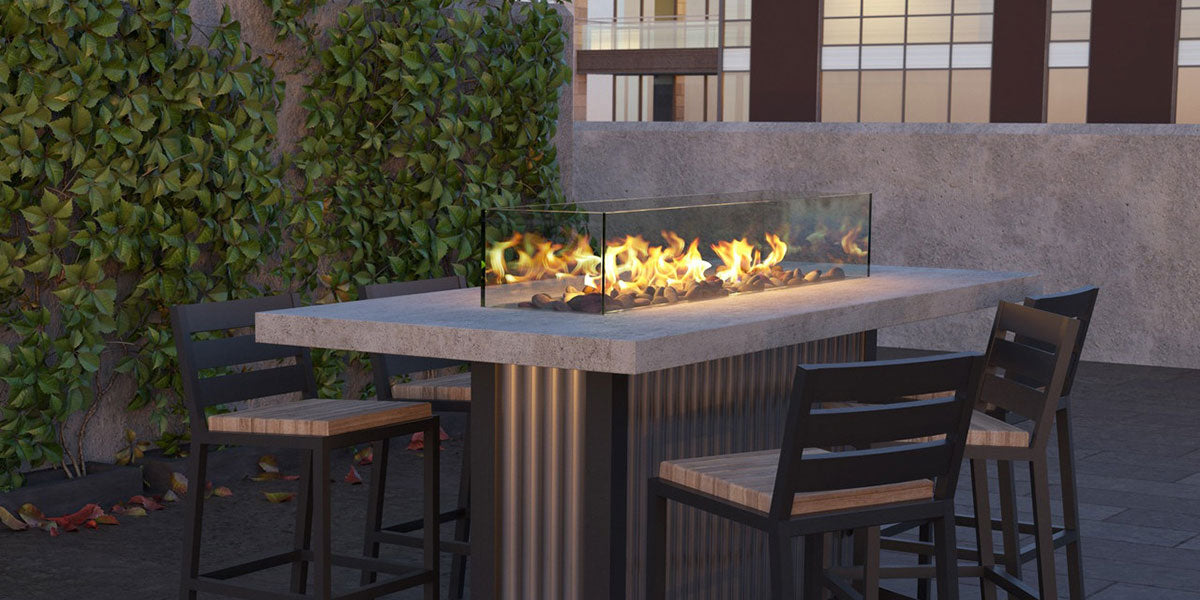
Key Takeaways:
- Fuel Selection Drives Long-Term Cost, Not Initial Investment — Natural gas costs $0.12 per 1,000 BTU versus propane's $0.65, creating dramatic annual operating cost differences. A 125,000 BTU unit runs $153/year on natural gas versus $814 on propane. For clients using fire pits 100+ hours annually, natural gas recoups line installation costs within 2–3 years despite higher upfront expenses.
- 316 Stainless Steel Is Non-Negotiable Within 5 Miles of Coast — Standard 304 stainless steel degrades rapidly in salt air, showing visible rust within months. 316 stainless contains 2% molybdenum, providing superior corrosion resistance. The 20–30% material premium prevents premature failure, warranty claims, and client dissatisfaction in coastal California installations.
- Code Compliance Begins at Concept, Not Permitting — California's layered regulatory framework creates jurisdiction-specific variations in setbacks, ventilation, and clearances. Plans must dimensionally document all code-required distances: 10-foot minimum from structures, 15-foot overhead clearance, and NFPA-compliant ventilation with 18 square inches free area per side. Incomplete documentation guarantees plan check corrections and delays.
- Gas Line Sizing Calculations Prevent Performance Failures — Line sizing balances run length, BTU demand, and fuel type. A 3/4" flex line carries up to 255,000 BTUs; higher ratings require dual flex lines or 1" pipe. Add approximately 5 feet equivalent length per fitting to account for pressure drop. Undersized lines cause low flame height, reduced heat output, and client dissatisfaction regardless of burner quality.
- Front-Load Site Analysis to Avoid Costly Redesigns — Document prevailing winds, view corridors, utility access, existing gas pressure, and property line dimensions during initial consultation. These constraints determine fuel selection, placement options, and material specifications. Design decisions made without site data create permit rejections, code violations, or field modifications that destroy budgets and schedules.
A custom fire pit design goes beyond aesthetics—it’s about engineering performance, safety, and comfort into an outdoor centerpiece built to last. Unlike prefabricated units, personalized fire pit table designs are tailored to specific site conditions, architectural goals, and fuel requirements.
From residential estates to hospitality projects, each fire feature integrates seamlessly with its surroundings while meeting California’s rigorous codes and environmental demands.
With precise craftsmanship, durable materials, and thoughtful planning, a custom fire pit transforms any space into a refined outdoor retreat that reflects both function and design intent.
What Defines a "Custom" Fire Pit in Professional Outdoor Design?
Custom fire pits are purpose-built installations engineered to meet specific site conditions, design requirements, and performance criteria. Unlike off-the-shelf products, these systems integrate seamlessly with hardscaping, utilities, and architectural intent while addressing code compliance, environmental factors, and client programming needs.
How Does a Custom Fire Pit Differ from Pre-Fabricated or Catalog Models?
Custom fire pits are fabricated to order based on project specifications, while pre-fabricated units ship ready-made with fixed dimensions and limited material options. Custom installations in the San Diego market range from $3,500 to over $12,000 for gas systems, compared to $500–$5,000 for pre-fabricated units. The premium delivers integrated seating, material flexibility, and solutions tailored to exact site conditions—clearances, setbacks, utilities, and design intent that catalog products can't accommodate.
Why Do Architects, Landscape Designers, and Contractors Favor Custom Fabrication?
Custom fabrication eliminates design compromises. Professional installations command 20–30% premium pricing in the Bay Area versus San Diego, reflecting both higher costs and market expectations. Custom builds ensure compliance with site-specific codes, accommodate challenging utility routing, and integrate with lighting, audio, and smart home systems—capabilities that separate high-end projects from standard installations.
Project Types That Benefit Most from Custom Fire Pit Design
Not all outdoor projects require full customization—but for high-value environments, a custom fire pit design delivers unmatched integration, performance, and longevity. The table below highlights where customization adds the most value across residential, resort, and multifamily applications.
|
Project Type |
Typical Investment Range |
Professional Design Fees |
Primary Advantages of Customization |
|
Luxury Residential Estates |
$15,000–$50,000+ |
Landscape architects: $150–$300/hr Design consultations: $2,000–$10,000 Construction drawings: $3,000–$15,000 |
Seamless integration with hardscaping, utilities, and architecture; full design control; high ROI for property value and aesthetics |
|
Resorts & Hospitality Venues |
$20,000–$75,000+ (varies by scale) |
Included in broader architectural scope |
Enhances guest experience, brand image, and amenity value through durable, statement-quality installations |
|
Multifamily & Mixed-Use Developments |
$10,000–$40,000+ per communal zone |
Design coordination within project budget |
Improves tenant amenities, supports code-compliant shared spaces, and provides long-term durability with reduced liability exposure |
From personalized fire pit designs in private estates to large-scale hospitality environments, customization ensures every detail—from materials to flame control—matches the project’s vision, safety standards, and long-term performance goals.
What Site and Use Factors Should Guide Your Initial Fire Pit Concept?
Site analysis and programmatic intent drive every successful fire pit design. Before specifying dimensions or materials, assess how the space will be used, what environmental forces affect the site, and which infrastructure constraints limit placement options. Early decisions about capacity, fuel delivery, and utility routing prevent costly redesigns during permitting or construction.
Fire Pit Form, Function, and Height Based on Usage Goals
The purpose of your custom fire pit design—whether for gathering, dining, or lounging—directly influences its size, heat output, and height. Balancing BTU range, seating capacity, and heat radius ensures comfort and functionality for every environment.
|
Usage Goal |
Typical Diameter / Size |
BTU Range |
Heat Radius |
Ideal Seating Capacity |
Design Considerations |
|
Gathering / Conversational |
24"–30" |
40,000–70,000 BTUs |
3–5 ft |
2–4 people |
Compact, low-profile fire pits ideal for intimate spaces and close conversation zones |
|
Dining Adjacency |
36"–42" |
90,000–125,000 BTUs |
5–8 ft |
4–6 people |
Controlled heat spread complements dining layouts and rectangular fire pit tables |
|
Lounge & Entertainment Areas |
48"+ |
150,000–300,000 BTUs |
8–12+ ft |
6–10+ people |
Larger installations deliver multi-zone warmth and visual impact for open, social settings |
By aligning form factor, fuel output, and seating layout with the intended use, designers create personalized fire pit designs that maximize comfort, energy efficiency, and aesthetic cohesion across outdoor living environments.
How Do Prevailing Winds, View Corridors, and Seating Patterns Shape Placement?
Fire pit placement balances functional clearances with experiential design. Maintain minimum 36-inch clear zones around the entire perimeter for comfortable circulation, with egress paths at least 36 inches wide and obstruction-free. Prevailing winds dictate burner orientation and wind guard requirements. View corridors determine focal point placement. Curved or circular seating arcs create natural conversation zones and optimize sightlines across the flame—critical for social engagement and spatial cohesion.
Why Should You Establish Fuel Source, Drainage, and Service Access Before Design Lock-In?
Infrastructure decisions lock in cost, performance, and code compliance pathways. Gas line installation runs $1,000–$4,000 depending on distance and routing complexity. Natural gas operates at 7–10" water column pressure; propane requires 11–13". A 3/4" flex line carries up to 255,000 BTUs—higher ratings demand dual flex lines. NFPA mandates minimum 18 square inches of free vent area on opposing enclosure sides. Drainage and service access requirements affect foundation design, material selection, and long-term maintainability. Committing to form before resolving these factors guarantees redesign, permit delays, or field modifications.
What Codes, Permits, and Compliance Factors Govern Fire Pit Design-Build Projects?
Code compliance begins at concept, not permitting. California's layered regulatory framework—state fire code, local amendments, utility district requirements, and AHJ interpretations—creates jurisdiction-specific variation that demands early coordination. Non-compliance triggers permit rejection, costly redesigns, or failed inspections. Contractors must document setbacks, ventilation, utility routing, and shutoff locations in submittals to satisfy building, plumbing, and fire officials.
Which Local Fire and Building Codes Affect Placement, Venting, and Shutoffs?
California Fire Code Section 307.4.3 establishes baseline setbacks: portable outdoor fireplaces require 15 feet from structures, though some jurisdictions allow 3 feet with spark arresters. Recreational fires demand 25-foot minimums; open burning requires 50 feet (or 15 feet with approved containers). Local amendments tighten these standards—Orange County mandates 7-foot property line setbacks and 10 feet from buildings for chimneys. Each jurisdiction interprets "structure," "combustible material," and "approved container" differently, making pre-application consultation essential.
What Setbacks, Clearance Distances, and Ventilation Rules Must Appear in Plans?
Plans must dimensionally document all code-required clearances. General residential standard: 10-foot minimum from combustible structures, 15-foot overhead clearance above the fire pit. Poolside installations increase setbacks to 15–30 feet depending on pit diameter and BTU output. Outdoor fireplaces over 6 feet in height trigger building permit requirements with structural calculations. Ventilation details must show NFPA-compliant vent placement, sizing, and free area calculations. Omitting any dimension invites plan check corrections and delays.
Proper Documentation for Fire Pit Utility Inspection
Accurate documentation keeps your project compliant, inspection-ready, and on schedule. Contractors should clearly outline all gas line details, regulator specs, and shutoff valve placements to avoid costly re-inspections or permit delays.
- Gas Line Routing: Show the complete path from the gas supply to the fire pit, including pipe size, material, and connection points.
- Regulator Specifications: List the correct pressure rating and fuel type (natural gas or propane) with the manufacturer’s model and documentation.
- Shutoff Valve Locations: Mark valves on both plan and as-built drawings for easy access by inspectors and future service technicians.
- Pressure Test Results: Record verified readings from a manometer to confirm proper system integrity and pressure balance.
- Plumbing Permits: Obtain permits for all gas line installations, typically ranging from $150–$400.
- Building Permits: Required for fire feature construction, costing $100–$500 for standard projects and $1,000+ for complex builds.
- Inspection Fees: Expect $100–$200 per visit, depending on jurisdiction.
- Plan Review Fees: Budget $200–$800 for design and code compliance verification.
Comprehensive documentation of utility routes, regulators, and shutoff valves ensures smooth inspections, minimizes delays, and reinforces professional standards for every custom fire pit design.
How Should You Select Between Natural Gas and Propane for the Design?
Fuel selection affects installation cost, operating expense, and long-term flexibility. Natural gas offers lower operating costs but requires permanent utility connection and line sizing calculations based on distance and BTU load. Propane provides installation flexibility and higher BTU density but costs significantly more per hour of operation. The decision hinges on utility access, site constraints, and client operational budget—not aesthetics or flame preference.
How Do Utility Access and Line Distance Determine Gas Selection?
Gas line sizing calculations balance three variables: run length, total BTU demand, and fuel type. High-BTU applications demand larger lines—a 440,000 BTU burner at 20 feet requires 1" pipe. Add approximately 5 feet of equivalent length per fitting to account for pressure drop. Long runs, multiple fittings, or undersized existing service favor propane's higher energy density. No utility gas service at the site eliminates natural gas entirely, regardless of operating cost advantages.
What Are the Key Differences in BTU Delivery, Cost, and Flame Characteristics?
Operating cost divergence is dramatic. Natural gas averages $0.12 per 1,000 BTU in California; propane runs $0.65. A 65,000 BTU unit costs $80 annually on natural gas versus $423 on propane. A 125,000 BTU installation: $153 natural gas, $814 propane. One cubic foot of LP gas delivers 2,516 BTU—higher energy density than natural gas but at steep cost premiums. For clients using fire pits 100+ hours annually, natural gas pays back line installation costs within 2–3 years.
When Do Rooftop or Remote Installations Make Propane the Practical Choice?
Propane eliminates utility routing constraints for rooftop decks, remote site locations, and installations where gas line extensions exceed budget. A standard 20-lb tank (15 lbs actual fill) contains 320,600 BTU total—providing 4.9 hours for a 65,000 BTU pit or 2.6 hours for a 125,000 BTU unit. Tank exchanges cost $15–$25. Despite higher fuel costs, propane suits seasonal-use installations, temporary features, or projects where gas line trenching, boring, or vertical routing pushes natural gas installation over $5,000.
How Do You Align Fire Pit Shape, Size, and Seating Layout with Client Intent?
Fire pit geometry directly shapes social dynamics and spatial experience. Form follows function: conversational programming demands circular or radial layouts; lounging and sectional furniture favor linear configurations. Sizing correlates to capacity—intimate gatherings require compact footprints, while communal spaces scale up proportionally. Clearances balance code compliance, comfort, and accessibility, ensuring the design performs legally and experientially.
When Is a Round Fire Pit Ideal for Conversational Spaces vs. Linear for Sectional Seating?
Round fire pits create natural focal points that equalize sightlines and facilitate face-to-face conversation across the flame. Linear designs align with sectional seating arrangements, contemporary architectural vocabularies, and elongated spatial proportions. Curved seating arcs—whether fully circular or segmented—optimize eye contact and social engagement. Match geometry to furniture layout and program: intimate conversation circles demand radial symmetry; lounge zones with L-shaped or modular seating benefit from linear burner runs that distribute heat along furniture edges.
How Do Designer Seating Zones (Intimate, Social, Communal) Dictate Pit Diameter and Height?
Capacity drives diameter. Intimate zones (2–4 people) use 24" diameter pits. Social gatherings (4–6 people) require 36" diameter. Communal spaces (6–8+ people) scale to 48"+ diameter. Seating distance from the fire rim must balance thermal comfort with conversation range—too close creates discomfort, too far dilutes warmth and breaks social cohesion. Height affects flame visibility and heat projection: lower profiles suit lounge seating; taller rims align with dining or bar-height applications.
What Clearances Ensure Both Comfort and Compliance Around Seating Clusters?
ADA compliance for fire tables mandates 27 inches minimum height, 30 inches width, and 19 inches depth for knee and toe clearance. Accessible routes to and around the fire feature require firm, stable, slip-resistant surfaces—not loose gravel or sand. Controls must mount within easy reach and operate with one hand, without tight grasping or twisting. Even on non-ADA-mandated residential projects, these dimensions improve usability for all guests and reduce liability exposure. Universal design principles enhance market appeal without compromising aesthetics.
What Materials and Finishes Deliver Both Design Appeal and Longevity?
Material selection determines lifecycle cost, maintenance burden, and warranty exposure. Coastal environments demand marine-grade metals; inland sites tolerate standard alloys. Heat exposure, UV degradation, and thermal cycling affect enclosure materials differently—concrete cracks, powder coatings fade, untreated metals corrode. Finish choices must align with architectural intent while meeting performance thresholds for the specific microclimate. Upfront material premiums prevent premature failure and client dissatisfaction.
Why Should Contractors Specify 316 Stainless Steel for Coastal or Salt-Air Zones?
316 stainless steel contains 2% molybdenum, providing superior pitting and crevice corrosion resistance that 304 lacks. Standard 304 stainless (18% chromium, 8% nickel) degrades rapidly in salt air environments—visible rust and staining appear within months. 316 typically costs 20–30% more than 304 but delivers better ROI through extended lifespan and reduced maintenance. Specify 316 for all installations within 5 miles of the coast, particularly areas with direct marine layer exposure. This isn't an upgrade—it's a liability shield.
How Do Concrete, Aluminum, and Powder-Coated Metals Perform Under UV and Heat Exposure?
Enclosure material costs vary widely by durability and fabrication complexity. Brick installations run $300–$1,000, offering high temperature resistance and easy maintenance. Natural stone ranges $500–$2,500, providing exceptional durability and design flexibility. Concrete costs $300–$1,500, delivering low maintenance and long-term value. Metal enclosures (steel/cast iron) span $150–$2,000, from portable units to custom-fabricated systems. UV exposure fades powder coatings within 3–5 years in California sun. Concrete withstands UV but cracks under thermal cycling without proper reinforcement and control joints.
How Do Finish Choices (Textured, Brushed, or Polished) Integrate with Architectural Palettes?
Finish selection balances aesthetic intent with environmental performance. All metallic anchoring hardware must be 316 stainless steel in coastal zones—304 fasteners fail first, staining surrounding materials. Marine-grade finishes are non-negotiable for coastal California projects regardless of design preferences. Proper passivation is critical for both 304 and 316 grades after fabrication, welding, or field modification—skipping this step accelerates corrosion even on premium alloys. Textured finishes hide minor corrosion longer than polished; brushed finishes offer middle ground. Match finish to maintenance reality, not just design boards.
Step-by-Step Phases of a Custom Fire Pit Project
Every custom fire pit project follows a clear, structured process from concept to commissioning. Each phase builds on the previous one—skipping steps often leads to costly redesigns, failed inspections, or installation delays. Typical timelines range from 8–20 weeks, depending on project complexity, season, and local permitting requirements.
Step 1 – Gather Client Goals, Site Photos, and Utility Details
The initial consultation (1–2 weeks) defines the project’s foundation. Document client goals—capacity, aesthetics, budget, and functionality. Capture site photos from multiple angles, noting wind direction, view corridors, gas service type (natural gas or propane), and meter location. This groundwork prevents design conflicts later in the process.
Step 2 – Develop Conceptual Sketches and Fuel Strategy
During design development (2–4 weeks), convert site data into spatial layouts. Match BTU output to seating capacity and comfort goals. Choose forms—round, linear, or custom—that align with modern outdoor fire pit tables, existing furniture, and architecture. Present material and fuel-source recommendations (NG or LP) with performance and cost comparisons.
Step 3 – Finalize Drawings, Materials, and Ignition Systems
Prepare permit-ready construction drawings ($3,000–$15,000 range) detailing burner type, pan depth, ventilation, and drainage. Specify 316 or 304 stainless steel based on coastal exposure. Choose ignition type: match-lit, spark, or electronic. Include all required setbacks and clearances for smooth plan approval.
Step 4 – Coordinate Permits and Gas Load Calculations
Allow 1–2 weeks for permit submittal and 2–8 weeks for review. Include gas load calculations, manufacturer specs, and line sizing documentation. Coordinate with utility providers and HOAs early—especially during peak season—to avoid schedule extensions.
Step 5 – Manage Fabrication, Testing, and Finish Selection
Integrate supplier lead times into your schedule. Peak season (March–October) can extend delivery to 12–20 weeks, while off-season (November–February) shortens to 6–12 weeks and may offer 10–20% savings. Order long-lead components immediately after permit approval and confirm pre-fit testing for custom parts.
Step 6 – Execute Installation and Utility Connections
Installation spans 1–7 days, depending onthe scope. Prepare the base, install drainage, and coordinate gas line routing. Sequence trades properly—plumber, mason, gas fitter, finisher—to avoid rework. For larger rectangular fire pit tables or integrated seating, ensure secure anchoring and code-compliant venting.
Step 7 – Commissioning, Inspection, and Client Turnover
Final inspection and commissioning take 1 day. Test ignition systems, verify orifice sizing, and document gas pressure. Train the client on safe operation, seasonal maintenance, and emergency shutoff procedures. Provide a written manual, warranty details, and final project photos for recordkeeping.
Following this step-by-step workflow ensures efficiency, compliance, and long-term performance. By partnering with So-Cal Fire Pits, designers and contractors gain access to durable, weather-resistant fire pit tables built for California’s climate—delivering exceptional results from design to ignition.
Bring Your Custom Fire Pit Design Vision to Life with So-Cal Fire Pits
Bring your custom fire pit design to life with So-Cal Fire Pits—California’s trusted source for premium craftsmanship, weather-resistant materials, and personalized support from concept to completion.
Whether you’re creating a private outdoor lounge or a commercial centerpiece, our personalized fire pit designs combine engineering precision with timeless style. Contact us today to begin your next project.
You may also like
View all

