
Key Takeaways
- Planning and understanding safety regulations are key for a successful fire pit integration near pools.
- Proper materials and design considerations, such as distance from the pool, ensure safety and longevity of fire pits.
- Fire pits require careful attention to ventilation and appropriate connections for gas or electricity to function correctly.
- Aesthetic and design choices should complement the pool’s overall style while incorporating safety features like fire-resistant materials.
- Regular maintenance and proper insurance coverage are essential to ensure the fire pit’s durability and compliance with regulations.
Fire features near swimming pools create stunning outdoor spaces. But combining fire and water demands precision. This aquatic contractor guide covers everything you need to know about fire pit pool integration—from code compliance to material selection. Whether you're handling summer fire pit prep for an existing installation or planning a new build, understanding the fundamentals protects your clients and your reputation. Pool season fire pit projects require specific expertise. Water-safe fire pits don't happen by accident. They result from careful planning, proper materials, and strict adherence to safety standards. Here's how to get it right.
What Are the Key Principles to Consider When Integrating a Fire Pit into a Pool Area?
Successful fire pit pool integration balances three factors: safety, durability, and aesthetics. Poolside environments present unique challenges that standard backyard installations don't face. Contractors must account for chemical exposure, humidity, splash zones, and traffic patterns around the water. Getting these fundamentals right from the start prevents costly callbacks and liability issues down the road.
What Are the Safety Concerns for Integrating a Fire Pit Near a Pool?
Code compliance is non-negotiable. The National Fire Protection Association (NFPA) and the International Fire Code (IFC) mandate specific clearances for fire pits near structures. These aren't suggestions—they're legal requirements that vary by jurisdiction.
Gas leaks pose the greatest safety hazard in poolside installations. All inspections must comply with the National Fuel Gas Code (NFPA 54). Before any maintenance or inspection work on gas fire pits, contractors must turn off the gas supply and disconnect electrical connections. This applies to routine summer fire pit prep and emergency service calls alike.
How Can Aquatic Contractors Ensure Proper Distance Between Fire Pit and Pool?
Minimum clearances protect structures and people. Fire pits must sit at least 10 feet from any combustible structure. Portable outdoor fireplaces require 15 feet minimum from structures. From the pool's water edge, maintain 10–15 feet to prevent thermal shock to the pool shell and keep debris out of the water.
These distances work in practice. One successful poolside integration placed a linear fire pit 12 feet from the pool's edge and 15 feet from the house. This configuration met all code requirements while creating an intimate gathering space. When in doubt, add distance—it's easier than relocating a fire pit after installation.
What Materials Are Best for Fire Pits Near Pools?
Water-safe fire pits require corrosion-resistant materials throughout. The poolside environment is harsh. Constant exposure to water, humidity, and pool chemicals destroys standard components within seasons. Material selection determines whether an installation lasts two years or twenty.
For burners, pans, and enclosures, specify 316 grade stainless steel, copper, or powder-coated aluminum. These metals offer superior corrosion resistance against chlorinated and saltwater environments. Standard stainless steel won't cut it—the 316 marine grade is essential. For fire pit surrounds, choose travertine, concrete, or high-density stone. These materials withstand both high temperatures and water exposure without cracking or spalling. Avoid porous materials that absorb pool chemicals and deteriorate from within.
How Can Aquatic Contractors Integrate a Fire Pit Safely into a Pool Area?
Installation quality determines long-term performance. Cutting corners during fire pit pool integration creates problems that surface months later—often at the worst times. A systematic approach protects both the installation and your client relationship. These steps apply whether you're completing summer fire pit prep on existing units or building new water-safe fire pits from scratch.
What Are the Key Steps for Installing a Fire Pit Near a Pool?
Use a checklist-based approach for every installation. Checklists ensure no step gets missed during complex poolside work. They also provide documentation if questions arise later.
Start by verifying code compliance at the source before beginning work. Pull permits, confirm setback requirements, and document everything. Next, address drainage. Proper drainage around and within the fire pit enclosure prevents water from accumulating and damaging internal components. Pool areas see significant water—from splash-out, rain, and deck washing. Design the enclosure base with weep holes or drainage channels that direct water away from burners and ignition systems. Skipping this step guarantees premature component failure.
How Can Contractors Use Proper Ventilation for Poolside Fire Pits?
Ventilation prevents two serious problems: gas buildup and incomplete combustion. All ventilation openings must be cleared of leaves, debris, and spiderwebs to ensure proper airflow. This applies during installation and every service visit afterward. Blocked vents cause dangerous gas accumulation inside enclosures.
Cross-ventilation must be incorporated per manufacturer specifications. Don't improvise here—each fire pit system has engineered airflow requirements. Humid poolside air makes proper ventilation even more critical. Moisture-laden air affects combustion efficiency and can cause ignition problems. Follow the spec sheet exactly, and position vents where pool traffic and landscaping won't obstruct them.
What Should Contractors Know About Electrical and Gas Connections?
Electronic ignition systems typically operate on 24V AC circuits. Gas systems must maintain correct pressure—nominally 7.0" W.C. for Natural Gas and 11.0" W.C. for Propane. Verify these specifications before commissioning any installation.
Leak detection is straightforward but essential. Apply a non-corrosive leak-detecting fluid such as simple soapy water to all joints, fittings, and connections. Bubble formation indicates a leak requiring immediate repair. Test every connection, every time. This applies whether you're maintaining an existing installation or inspecting a new purchase from a fire pit table sale before first use. For poolside installations, all electrical components require NEMA-rated enclosures to protect against water ingress. Standard outdoor-rated boxes aren't sufficient in splash zones. Specify appropriate NEMA ratings based on the installation's proximity to the pool and exposure to direct water contact.
Why Is Proper Lighting Important When Integrating a Fire Pit with a Pool?
Lighting transforms poolside fire features from daytime amenities into evening focal points. The fire itself provides illumination, but strategic supplemental lighting extends usability and enhances safety. For aquatic contractors handling fire pit pool integration, understanding lighting principles adds value to every project. Proper lighting design also prevents dark zones that create trip hazards around water.
What Type of Lighting Works Best for Poolside Fire Pits?
Ambient lighting outperforms harsh direct fixtures in poolside settings. The goal is extending the fire's natural glow rather than competing with it. Low-voltage LED path lights, subtle uplighting on nearby landscaping, and integrated deck lighting all work well. These options provide functional illumination without overwhelming the fire feature's ambiance.
Position fixtures to illuminate walking paths and level changes without creating glare on the water's surface. Pool areas used after dark need lighting that serves both safety and atmosphere. During summer fire pit prep, check existing fixtures for proper aim and function. Bulbs shift over time, and what worked last season may now create blind spots or unwanted reflections.
How Can Contractors Achieve a Balanced Aesthetic with Fire and Pool Lighting?
Design cohesion matters. A well-integrated fire pit should complement the pool's overall design language. Modern linear fire pits suit geometric pools with clean edges. Rustic stone fire pits complement naturalistic pools with organic shapes and rock features. Mixing styles creates visual confusion.
Apply this same principle to lighting selections. Contemporary pools pair well with sleek, minimal fixtures. Traditional or natural designs benefit from understated lighting that disappears into the landscape. Water-safe fire pits become true centerpieces when surrounding elements support rather than compete with them. Coordinate fixture finishes, color temperatures, and brightness levels across the entire pool area. Unified lighting design elevates the space from functional to impressive.
What Are the Challenges of Integrating Fire Pits with Pools?
Poolside installations face obstacles that standard backyard fire pits never encounter. Weather exposure, chemical corrosion, and biological intrusion all threaten system performance. Understanding these challenges helps aquatic contractors set realistic client expectations and build maintenance plans that prevent failures. Proper fire pit pool integration anticipates problems before they occur.
How Do Weather and Climate Affect Fire Pit Integration?
Humidity is the primary enemy. Select fire pit systems with All-Weather Electronic Ignition Systems (AWEIS), which are designed to be waterproof and operate reliably in humid conditions. Standard ignition components fail quickly in poolside environments where moisture is constant.
Seasonal startups require patience. After reconnecting gas following winter shutdown or extended dormancy, the system may require several cycles to bleed air from the line. Warn clients about this during summer fire pit prep visits. A fire pit that won't light immediately isn't necessarily broken—it may just need air purged from the supply line. Running the ignition cycle three to five times typically resolves the issue.
What Are the Environmental Concerns with Poolside Fire Pits?
Nature invades idle equipment. Spiderwebs and debris block gas orifices and ventilation slots, causing ignition failure. One service call revealed a three-year-old fire pit that wouldn't ignite simply because spiders had colonized the burner pan during off-season storage. Regular inspection prevents these easily avoidable failures.
Chemical exposure causes slower but more serious damage. Pool chemicals, chlorine, and salt create corrosive conditions that degrade non-resistant materials over time. Water-safe fire pits specified with proper materials resist this corrosion. Units built with standard components deteriorate visibly within two to three seasons. Saltwater pools accelerate this damage significantly.
How Can Aquatic Contractors Address Maintenance Issues with Fire Pits?
Different fire pit types require different maintenance protocols. Fire media—lava rocks, fire glass, and ceramic logs—can be cleaned with mild soapy water, rinsed thoroughly, and must dry completely before being returned to the pan. Wet media causes popping and uneven flames.
Wood-burning fire pits demand extra caution. Embers can remain hot for days after the last fire. Use a metal shovel and metal container with tight-fitting lid for ash disposal. Never use plastic or cardboard. Creosote buildup presents another hazard in wood-burning and masonry units. This flammable residue from incomplete combustion must be removed with a stiff brush during every seasonal service. Neglected creosote accumulation creates chimney fire risk in enclosed designs.
How Do Aquatic Contractors Address Aesthetic and Design Concerns?
Technical excellence means nothing if the final result looks wrong. Clients invest in poolside fire features for visual impact as much as function. Successful fire pit pool integration requires design sensibility alongside installation expertise. Aquatic contractors who master both disciplines win repeat business and referrals. The best water-safe fire pits disappear into their surroundings while commanding attention.
How Can Fire Pits Complement the Pool's Overall Design?
Style alignment creates cohesion. The fire pit's design should match the pool's architectural language for a unified outdoor living space. Mismatched elements look like afterthoughts, regardless of installation quality.
Evaluate the pool's existing characteristics before recommending fire pit styles. Sharp angles and clean lines call for contemporary fire features. Freeform pools with natural edges pair better with organic shapes and natural stone. Consider material finishes too—brushed metal suits modern pools while textured stone complements traditional designs. When fire and water elements share visual DNA, the entire space feels intentional rather than assembled.
What Are the Popular Fire Pit Styles for Pool Areas?
Linear fire pits dominate contemporary poolside designs. Their elongated flames create dramatic sight lines and work well along seating walls or between pool and patio zones. Fire bowls offer versatility—they fit tight spaces and serve as sculptural elements when not in use.
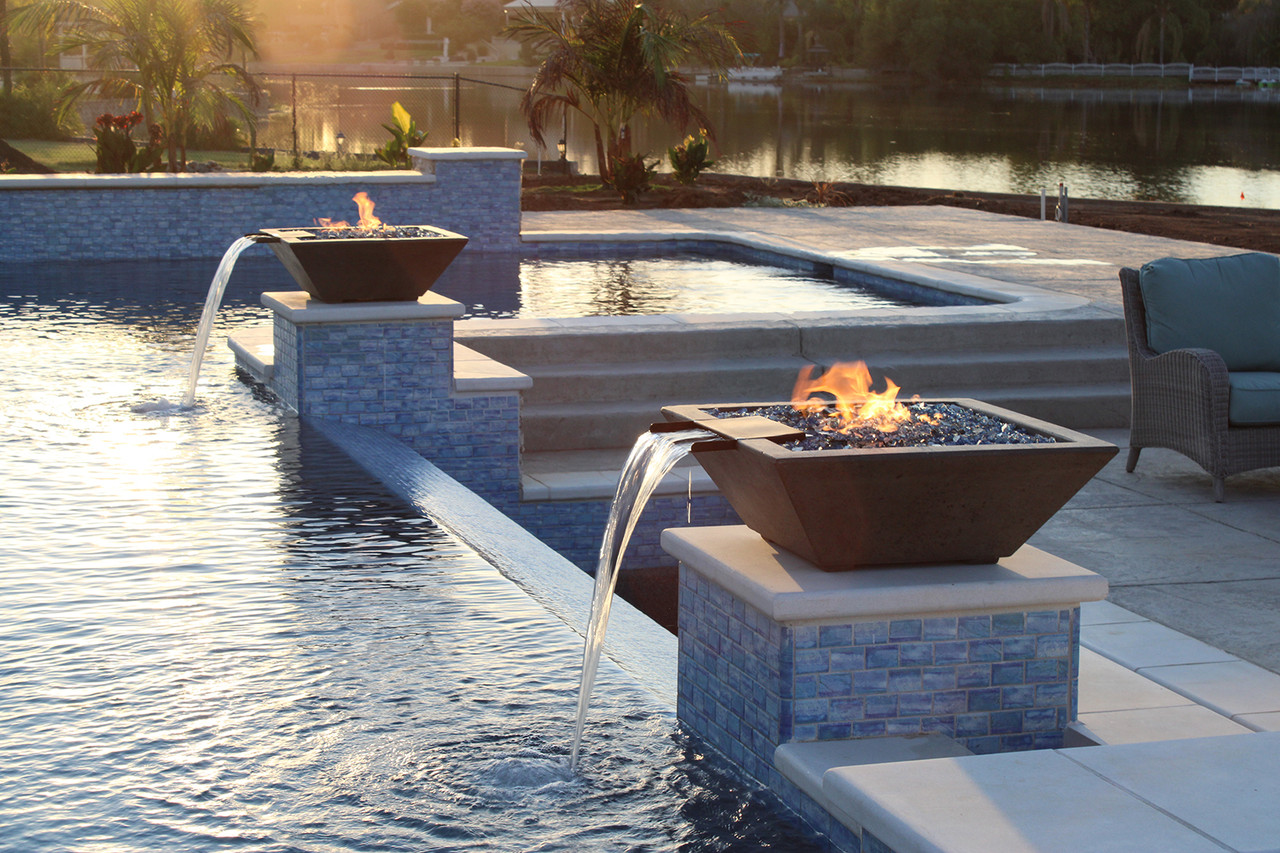
Fire and water combination features represent the newest trend. These dual-element installations merge flames with fountains or spillways for maximum impact. They require specialized expertise but deliver showpiece results. Elevated fire bowls positioned near water features create reflection effects that multiply visual interest after dark. Each style serves different spatial requirements and client preferences.
How Can Contractors Customize Fire Pit Designs to Suit Client Preferences?
Custom work differentiates professional installations from DIY attempts. One successful project illustrates effective customization: the client wanted a modern, linear fire pit close to the seating area. The contractor built the enclosure with concrete blocks for structural integrity, then faced it with travertine to match the existing pool deck.
This approach delivers custom aesthetics without custom pricing. Standard fire pit components sit inside site-built enclosures finished with client-selected materials. The fire system performs identically to off-the-shelf units, but the exterior reflects the property's unique character. During summer fire pit prep consultations, discuss facing options with clients considering upgrades. A new surround transforms dated installations without full replacement.
What Safety Features Should Be Incorporated into a Poolside Fire Pit?
Safety features protect people and property. Poolside locations add complexity—wet surfaces, barefoot traffic, and proximity to swimmers increase risk profiles. Proper fire pit pool integration addresses these hazards through equipment selection and regular inspection. Every aquatic contractor guide emphasizes prevention over reaction. Built-in safety components and diligent maintenance keep pool season fire pit installations incident-free.
How Can Fire Pits Be Designed to Minimize Accidental Fires?
Physical barriers and automatic controls work together. Spark screens contain embers and prevent wind-driven flame spread. Covers protect units when not in use and prevent debris accumulation. Inspect both components regularly for rust, holes, or other damage—replace worn parts immediately to ensure continued safety. Compromised screens create liability exposure.
Automatic shutoff systems provide critical backup protection. Perform functional tests to verify automatic shutoff solenoid valves engage correctly when the flame is extinguished. These valves stop gas flow if the pilot light fails or wind blows out the main flame. Test them during every summer fire pit prep visit by manually extinguishing the flame and confirming gas flow stops within seconds. Valves that hesitate or fail require immediate replacement.
What Fire-Resistant Materials Should Be Used in Poolside Fire Pit Construction?
Material selection balances fire resistance with water durability. Water-safe fire pits need components that handle both extremes without degradation. This dual requirement eliminates many standard construction materials.
Dense stone pavers are durable materials that withstand both heat and water without cracking. Granite, bluestone, and certain limestones perform well in poolside applications. Avoid porous stones that absorb moisture and spall when exposed to flame heat. Concrete remains a reliable choice when properly specified—use high-density mixes rated for fire pit applications. The surround material matters as much as the fire pit itself. Radiant heat affects adjacent surfaces, and poolside materials face thermal cycling between fire exposure and water contact. Specify materials tested for these conditions.
How Can Aquatic Contractors Maintain Fire Pits Over Time?
Maintenance separates lasting installations from short-lived ones. Poolside fire pits face harsher conditions than standard backyard units—chemical exposure, humidity, and seasonal extremes accelerate wear. Proactive service prevents emergency calls and extends equipment life. This aquatic contractor guide outlines maintenance schedules that keep water-safe fire pits performing reliably season after season. Clients who understand the maintenance commitment make better long-term partners.
What Maintenance Is Required for Fire Pits in Pool Areas?
Structured maintenance prevents problems. Follow this timeline for comprehensive coverage:
Annual (Spring): Full professional service before pool season fire pit use begins. Complete cleaning, leak testing, ignition system inspection, structural review, and component replacement as needed. This is the most critical service visit—it catches winter damage and prepares the system for heavy summer use.
Monthly (Summer): Visual inspection during peak season. Check for debris accumulation, inspect fire media condition, test safety shutoff systems, and look for rust or corrosion. Quick monthly checks catch developing issues before they cause failures during client events.
Annual (Fall): Deep clean and prep for winter shutdown. Thoroughly clean the fire bowl, inspect for weather damage, apply protective sealants to metal and masonry surfaces, and cover securely. Proper winterization prevents the majority of spring repair needs.
As Needed (Winter): Visual checks after major weather events. Remove heavy snow or ice buildup from covers to prevent collapse. Inspect for freeze-thaw damage to masonry, especially in climates with repeated freezing cycles.
How Can Contractors Ensure Fire Pit Longevity and Durability?
Component inspection catches failures early. Inspect the burner pan and pilot assembly for cracks or damage during every annual service. Heat cycling stresses metal components, and small cracks become dangerous gaps over time.
Ignition systems require particular attention. Inspect the pilot assembly thoroughly—including the igniter, hood, and thermocouple—for corrosion or damage. The pilot flame should burn steady and blue when lit. Yellow or flickering flames indicate combustion problems requiring adjustment or component replacement. For masonry units, address cracks and loose stones before they worsen. Small gaps allow water infiltration that causes major damage during freeze cycles. Apply protective sealant during summer fire pit prep to refresh appearance and shield surfaces against weather damage. Preventive maintenance costs far less than structural repairs.
What Are the Legal and Insurance Considerations for Poolside Fire Pits?
Code compliance and insurance protection go hand in hand. Fire pit pool integration involves regulated systems—gas lines, electrical components, and open flames near structures. Ignorance of requirements offers no legal defense. Every aquatic contractor guide emphasizes documentation and compliance for good reason. Proper paperwork protects your business when questions arise. Shortcuts that save hours during installation create liabilities that last years.
What Regulations Do Aquatic Contractors Need to Know About Fire Pits?
Three primary code frameworks govern fire pit installations. National Fire Protection Association (NFPA) codes establish baseline safety requirements for fire features nationwide. The International Fire Code (IFC), specifically Section 307.4.3, addresses portable outdoor fireplaces with clearance and placement requirements. The National Fuel Gas Code (NFPA 54) covers all gas line safety—from supply connections to shutoff valves.
Know these codes thoroughly. More importantly, know that local codes may impose stricter requirements than national standards. Municipal fire marshals and building departments often add restrictions based on regional conditions, housing density, or past incidents. Always verify local requirements before beginning fire pit pool integration projects. Permits pulled under incorrect assumptions create costly rework and inspection failures.
How Can Aquatic Contractors Ensure Proper Insurance Coverage for Poolside Fire Pits?
Compliance enables coverage. Adherence to or exceeding NFPA, IFC, and local codes protects contractors and ensures insurance policies remain valid. Insurers investigate claims thoroughly—installations that violated code at the time of construction give carriers grounds for claim denial.
Documentation provides liability protection when incidents occur. Photograph completed installations. Retain permit records, inspection approvals, and equipment specifications. Record gas pressure readings and leak test results from summer fire pit prep visits. Keep maintenance logs showing regular service. This paper trail demonstrates professional standards if litigation arises. Water-safe fire pits installed and maintained to code rarely cause problems. When they do, documentation proves the contractor met every applicable standard.
Ready to Elevate Your Poolside Projects? Partner with SoCal Fire Pits
Successful fire pit pool integration demands expertise in code compliance, material science, and design aesthetics. Water-safe fire pits that perform flawlessly don't happen by accident. They result from proper planning, quality components, and professional execution.
At SoCal Fire Pits, we specialize in supporting aquatic contractors with professional-grade systems engineered for poolside environments. We understand the unique challenges you face—from corrosion-resistant material requirements to code compliance documentation. Our product lineup includes AWEIS-equipped systems, marine-grade components, and customizable designs built for chlorinated and saltwater environments.
Whether you're planning your first fire pit pool integration or streamlining your summer fire pit prep services, we're here to help. We provide equipment specifications, installation guidance, and ongoing technical support.