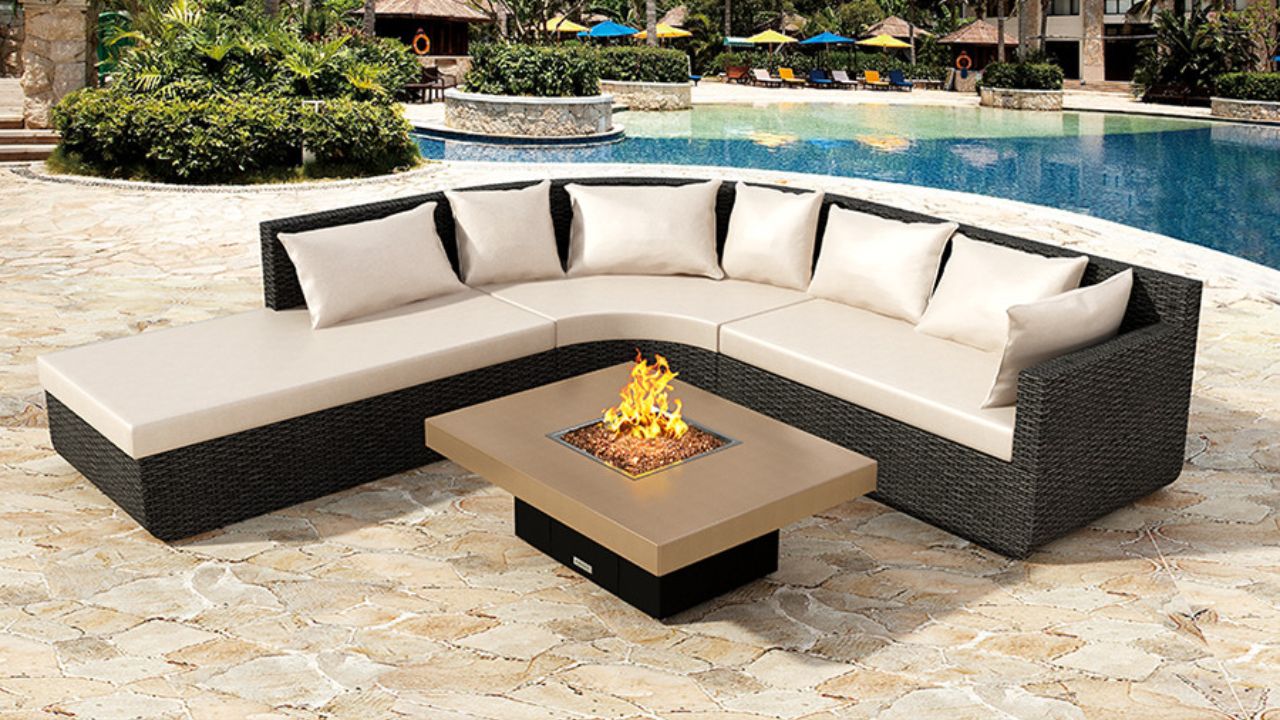
Custom luxury fire pits represent the intersection of engineering precision and design artistry. Unlike standard models adapted from stock configurations, true custom installations are purpose-built for specific sites, clients, and performance requirements.
This guide clarifies what personalized fire pits actually mean, identifies the decisions that lock before design begins, and outlines the constraints and compliance standards that define successful luxury installations.
Key Takeaways
- Custom luxury fire pits require locked decisions before design: fuel source, ignition type, geometry, utilities routing, material direction, budget band, permitting pathway, and lead times (8-16 weeks typical)
- Premium customization spans engineering precision (20,000-150,000+ BTU burners matched to site conditions), material grade (marine-grade metals, exotic natural stones, architectural concrete), and integrated controls (smart home, voice activation, app operation)
- Wind, weather, and flame stability demand site-specific engineering: tempered glass guards for exposed locations, IP65+ electronic ignition for demanding sites, proper drainage for freeze-thaw zones, and load-verified structures for rooftop installations
- Material selection communicates luxury through performance: bluestone and granite offer excellent heat tolerance and coastal suitability; 316 stainless steel provides corrosion resistance; 4,000+ PSI air-entrained concrete with control joints prevents failure
- Pricing protects margin through separated line items: burner system, controls tier, gas work, electrical, base build, finishes, seating, accessories, and commissioning, with Good tier ($8,000-$15,000), Better tier ($15,000-$35,000), and Best tier ($35,000-$100,000+)
What Is A "Custom" Luxury Fire Pit, And What Makes It Different From A Standard Model?
Bespoke vs Upgraded: What "Custom" Actually Means
Custom fabrication means hand-built construction to exact dimensions and geometries, not modifications of stock sizes. Burner specification involves engineered BTU output (20,000-150,000+ BTU) matched to space, seating layout, and climate. Material grade includes exotic natural stones (bluestone, limestone, granite, travertine), marine-grade metals (copper, corten steel, stainless steel), or architectural concrete with custom aggregates.
Integrated controls offer remote operation, smartphone app control, and smart home integration (Alexa, Google Home, Apple HomeKit). Site-specific engineering addresses wind mitigation, drainage solutions, and structural calculations for rooftop or hillside installations.
Lock-Before-Design Decisions: The Foundation Of Every Custom Project
Fuel source selection determines natural gas, propane, wood-burning, or bioethanol compatibility. Ignition type specifies manual, electronic push-button, or advanced smart systems. Overall shape and size define linear, circular, L-shaped, hexagonal, or custom geometry. Budget band frames entry luxury ($8,000-$25,000), mid-tier ($25,000-$50,000), or ultra-premium ($50,000-$100,000+) scope.
Permitting pathway addresses local code requirements, HOA approvals, and commercial compliance needs. Lead times reflect custom fire pit options fabrication requirements of 8-16 weeks, with complex projects extending beyond that timeline.
Why Do Luxury Clients Care About Fire Pit Personalization?
The global fire pits market reached $8.37 billion in 2025 and is projected to $13.37 billion by 2033, with luxury customization driving premium segments. High-net-worth clients view custom fire features as signature architectural elements that define outdoor spaces and reflect personal taste.
Signature flame patterns include ribbon flames, multi-zone burners, dual-ring designs, or see-through fire lines. Premium media options feature colored glass, polished stones, geometric ceramic logs, or designer lava rock. Unique fire pit designs deliver infinity edge concepts, L-shaped configurations, or fire-on-water effects. Integrated seating incorporates heated bench walls, curved banquettes, or conversation pit layouts. Lighting scenes coordinate color-changing LEDs beneath fire features with landscape and step lighting.
What Constraints Should You Confirm Before You Design Anything?
Wind exposure accounts for prevailing direction, seasonal patterns, and nearby structures creating downdrafts. Overhead clearances measure tree canopy, pergola beams, second-story decks, or awnings. Adjacent combustibles include wood siding, composite decking, fabric cushions, and landscape plantings. Seating radius maintains comfortable heat zones (typically 4-8 feet from flame edge). Drainage slope directs water flow, identifies existing catch basins, and prevents pooling areas.
Gas line size and pressure verify existing diameter, available PSI, and distance from meter to fire pit location. Electrical supply confirms 120V availability for electronic ignition, lighting, and automation. Drain and weep paths establish where water exits fire feature base and surrounding hardscape. Surface temperature risks identify coping and ledge materials that won't cause burns at typical contact points. Wall clearances maintain minimum distances from combustible walls (typically 24-36 inches).
Which Fuel Type Best Fits The Client's Lifestyle And The Project Constraints?
For luxury residential projects with existing gas service, natural gas delivers consistent supply with no tank refills, instant ignition, and seamless integration with outdoor kitchens. Propane demand is growing at 8.8% CAGR from 2025 to 2030, but natural gas remains preferred for estates with established infrastructure. The trade-off: fixed location, gas lines dictate placement.
Remote sites, retrofit constraints, or temporary installations favor propane. Hidden tank planning preserves aesthetics, and portability allows seasonal reconfiguration. Propane delivers higher BTU output per volume than natural gas, ideal for large-format luxury fire pits in exposed locations. Wood-burning fire pits held 48.8% market share in 2022, driven by clients who prioritize aroma, crackle, and primal flame connection. Bioethanol offers radical design freedom: no gas lines, no venting, placement flexibility enabling fire-on-water effects.
How Should You Customize The Burner Style To Control Flame Shape And Drama?
Smart technology integration in fire pits is growing from a 35% adoption base, but even traditional burners benefit from engineering precision. Linear burners suit parallel lounge seating with ribbon effect and modern lines (24"-96"+ length), though more susceptible to crosswinds. Round/pan burners work best for circular banquettes (18"-48" diameter) with better wind stability and simpler maintenance.
Ribbon flames create continuous linear fire lines ideal for modern architecture. Multi-zone burners offer independently controlled flame sections for variable heat. Dual-ring designs use concentric circles creating layered depth. Proper gas sizing matches BTU demand to line diameter and pressure. Correct media depth ranges 1"-3" depending on burner type. Wind mitigation includes glass guards and orientation away from prevailing wind.
What Shapes And Geometries Create A Truly Unique Fire Feature?
Modern linear designs are gaining market share over traditional round styles, with concrete and steel overtaking traditional stone in popularity. L-shaped configurations anchor corner seating and define zones. Curved radius designs provide organic flow with softer edges. Split islands separate fire features into multiple coordinated elements. Fire-and-water adjacency layouts combine negative edge pools with flame features.
Feature-to-space proportion: A 60"-72" linear feature works in a 300-400 sq ft patio; scale up to 96"+ for grand terraces. Seating radius: Comfortable heat zone extends 4-8 feet from flame edge. Raised plinth elevates fire features 12"-24" above grade. Sunken lounge positions fire pit at seating level or lower for intimate feel.
Which Materials And Finishes Communicate "Luxury" Up Close?
Bluestone: Excellent heat tolerance (600°F+), excellent coastal suitability, low maintenance. Best for coping, surrounds, integrated seating.
Granite: Excellent heat tolerance (600°F+), excellent coastal suitability, low maintenance. Best for high-traffic coping and coastal installations.
Limestone: Good heat tolerance (400-500°F), moderate coastal suitability with sealing, moderate maintenance. Best for decorative accents and low-heat zones.
Mix design priorities include 4,000+ PSI compressive strength and air entrainment for freeze-thaw. Control joints plan crack lines every 8-10 feet. Sealers require penetrating types reapplied every 2-3 years. Stainless Steel (316 for coastal) offers excellent corrosion resistance with low maintenance, recommended for burner pans and modern coping. Corten Steel provides self-protecting rust finish with low maintenance after patination, ideal for decorative screens and contemporary surrounds.
How Can You Personalize The Fire Media For A Custom Visual Identity?
Crushed glass provides modern, jewel-like sparkle with excellent durability, best paired with linear burners. Lava stone offers natural, organic texture with excellent durability, best paired with pan burners. Ceramic logs deliver realistic wood-fire look with good durability, best paired with round burners. Fire beads create contemporary spheres with good durability, best paired with linear or pan burners in modern luxury settings.
Cool gray stone pairs with reflective glass; warm travertine complements amber tones. Stainless accents suggest clear glass; corten steel calls for earth-tone lava rock. Fire-on-water effects demand transparent or reflective media. Fire Pit media must allow combustion air to reach burner ports. Ideal depth: 1"-2" for most burners. Over-packing (>3" depth) starves the flame, causing yellow tips and sooting. Plan for annual media cleaning with access panels that allow removal without demolishing hardscape.
How Do You Design Wind, Weather, And Flame Stability Into The Customization?
Exposed sites, rooftop/terrace installations, and inconsistent flame complaints demand glass guards. Tempered glass (1/4" minimum thickness) stabilizes flames, reduces fuel consumption, and protects nearby combustibles. Frame them with stainless brackets and concealed fasteners to maintain luxury aesthetics.
Weather-resistant options include electronic ignition modules rated IP65+ for moisture/dust protection. Protected pilot placement uses recessed pilot lights shielded from crosswinds. Orientation to wind positions burner perpendicular to prevailing wind when possible. Surrounding wall heights use partial walls (18"-30" tall) to deflect ground-level wind.
What Ignition And Controls Upgrades Feel Premium Rather Than Gimmicky?
Manual ignition offers hands-on ritual requiring no electrical with minimal safety features, ideal for traditionalists. Electronic push-button provides single-touch ignition requiring 120V or battery with flame sense and manual shutoff, ideal for mainstream luxury. Advanced smart systems deliver app control and voice activation requiring 120V plus network with timers, auto shutoff, and geofencing, ideal for tech-forward clients and smart homes.
Timers provide auto shutoff after 2-4 hours through smart controls or discrete wall-mounted panels. Fire plus step lights plus niche lights plus audio plus landscape accents activate entire outdoor room with single command. Voice integration enables "Alexa, start the fire" commands. Smart technology upgrades cost between $1,500 and $2,500 for electronic ignition, app control, and flame sense safety features.
How Should You Customize The Surround And Seating To Complete The Luxury "Outdoor Room"?
Coping/ledge: 12"-18" height, 6"-12" depth for casual seating and arm rest at fire pit perimeter edge. Bench seating: 16"-18" height, 18"-24" depth for extended sitting in integrated conversation areas. Table-height surround: 28"-30" height, 12"-18" depth for dining adjacency and outdoor kitchen coordination.
Round fire pits with circular banquettes provide equal heat and inclusive sightlines but fixed orientation. Linear fire pits with parallel lounge seating offer a modern, flexible arrangement but uneven heat at the ends. L-shape with sectional in corner defines zones and maximizes seating, but requires complex fabrication. Flush access panels use spring-loaded or magnetic closures. Concealed storage incorporates firewood bins and propane tank enclosures built into seat walls.
What Customization Changes Are Needed For Special Environments And High-Risk Installs?
Material selection requires 316 stainless steel, sealed concrete, and avoidance of mild steel for coastal installations. Corrosion strategy employs marine-grade fasteners and stainless gas lines. Wind management uses tempered glass guards and wind-blocking landscape. Drainage paths incorporate weep holes, a gravel base, and sloped surfaces for freeze-thaw zones. Crack mitigation uses control joints every 8-10 feet and air-entrained concrete.
Weight planning requires engineer verification of load capacity for rooftops. Membrane protection uses non-combustible paver systems over waterproofing. Access plans crane lifts or freight elevators. Ventilation constraints consult HVAC engineers if near building air intakes.
How Should You Price Custom Fire Pit Personalization So Margin Stays Protected?
Burner system specifies model and BTU rating. Controls define manual, electronic, or smart system tier. Gas work includes line sizing, trenching, and valve installation. Electrical covers ignition, power, lighting, and automation. Base build encompasses excavation, foundation, and drainage. Finishes detail stone, concrete, and metal fabrication. Commissioning covers testing, tuning, and client training.
Good: Standard concrete/stone, round pan 50K BTU burner, electronic push-button controls. Total range $8,000-$15,000.
Better: Premium stone or concrete, linear 80K BTU burner, smart system with app controls. Total range $15,000-$35,000.
Best: Exotic stone plus metal, multi-zone 120K+ BTU burner, full automation with voice controls. Total range $35,000-$100,000+.
Material availability adds 30-50% for exotic stone over standard materials. Custom fabrication multiplies labor hours for non-standard shapes. Automation adds $2,500-$5,000 for smart home integration. Utilities distance spikes expenses for gas line runs over 50 feet. Fully customized design-build fire pit solutions typically range from $8,000 to over $100,000, with lead times of 8-16 weeks for custom fabrication.
What Maintenance Plan Should You Hand Off To Protect The Client Experience?
Media cleaning removes debris, rinses, and resets depth quarterly or seasonally. Burner inspection checks ports and verifies flame distribution. Ignition test confirms reliable startup. Drainage check clears weep holes and verifies no standing water. Cool-down steps wait minimum 2 hours after last use. Media depth reset restores proper depth (1"-3").
Winterizing shuts off gas, drains lines if freeze risk exists, and covers burner. Storm prep secures covers and clears drainage. Corrosion prevention rinses coastal installations after storms. The startup checklist includes spring inspection: test ignition and check for pest nests.
What Are The Most Common Mistakes That Make A "Custom" Fire Pit Look Builder-Grade?
Wrong proportions create an undersized fire pit in an expansive patio or oversized in a small courtyard. Mismatched materials show stone coping that clashes with pool coping. Exposed access reveals visible hinges, raw panel edges, and unfinished gas valve boxes. Awkward seating distances are too close (uncomfortable heat) or too far (loses intimacy).
Undersized gas delivers insufficient BTU and weak flame. Poor airflow buries burner ports with excessive media depth. Drainage neglect causes water pooling in the base. Sloppy finish transitions show visible gaps and uneven coping joints. Unclear warranty presents ambiguous coverage terms. No maintenance plan leaves client guessing about care requirements.
What Are The Most Asked Questions About Luxury Fire Pit Customization?
How Do I Match Fire Pit Materials To My Outdoor Kitchen And Pool Coping?
Request samples from the same production lot and quarry block. For concrete, use the same mix design and aggregate source. Schedule installations close together to avoid weather differences. Manage client expectations: aim for harmonious variation, not sterile uniformity in natural materials.
Should I Specify Linear Or Round Fire Pits For Conversation Seating?
Linear fire pits suit modern architecture and parallel lounge seating, two facing sofas with fire between. Round fire pits encourage circular seating and equal heat distribution, ideal for traditional settings. For large gatherings (12+ people), linear features scale better. For intimate groups (4-8), round pits feel more inclusive.
What's A Realistic Timeline From Design Approval To Enjoying The First Fire?
Typical custom fire pit projects unfold over 12-20 weeks: design finalization (2-3 weeks), custom fabrication lead time (8-16 weeks), installation sequencing (1-2 weeks), and commissioning (1-3 days). Complex shapes, exotic materials, municipal permitting delays, site access challenges, and weather-dependent installations extend timelines.
What Safety Measures Should I Plan Around Kids And Pets?
Maintain 36" minimum between flame edge and high-traffic paths. Specify lockout ignition systems, emergency shutoff valves, and auto-timers. For families with young children, integrate decorative screens or glass guards. Include client education in commissioning; fire pits require supervision regardless of design safeguards.
What Should The Contractor's Next Step Be To Deliver A One-Of-One Fire Feature?
Renderings provide 3D visualizations showing materials, proportions, and context; augmented reality (AR) design tools are emerging for visualization. Spec sheets detail burner model, BTU output, fuel type, controls, and warranty. Options tiers present Good/Better/Best breakdowns with clear cost differences. Maintenance plan outlines routine care schedule and seasonal prep. The commissioning checklist specifies what you'll test, tune, and verify.
Complex shapes (infinity edges, cantilevered features, fire-on-water designs), advanced ignition (smart home integration, geofencing, AI-powered safety), unusual materials (exotic stones, architectural metals), and demanding environments (rooftop installations, coastal exposures, seismic zones) warrant manufacturer engineering support or structural engineering collaboration.
The global fire pits market is projected to reach $13.37 billion by 2033, growing at 5.9% CAGR. Luxury customization drives premium segments, and contractors who master these personalization options will capture the high end of that growth.
Deliver One-Of-One Fire Features That Command Premium Pricing
Custom luxury fire pits demand engineering precision from the first site check through final commissioning. Contractors who master fuel dynamics, material performance, site-specific constraints, and smart integration deliver installations that justify premium pricing and generate portfolio-worthy results. Success requires locked pre-design decisions, separated line-item pricing, specialty manufacturer collaboration for complex geometries, and comprehensive maintenance handoffs that protect the client experience long after installation.
Ready to specify a custom fire feature that elevates your next project? Contact SoCal Fire Pits for engineering support and California-specific compliance guidance.