Key Takeaways
- Climate dictates color durability, coastal environments require marine-grade stainless steel or sealed GFRC in light neutrals; desert climates favor GFRC or Corten in warm tones resistant to extreme heat and UV; high-altitude installations need mid-tone GFRC that withstands freeze-thaw cycles
- Matte black and charcoal gray dominate 2026 luxury trends for modern minimalist designs, creating sophisticated focal points that contrast dramatically with light hardscapes while allowing fire to command attention
- Natural patina materials (copper, Corten steel) add bespoke value, evolving finishes create unique character that cannot be replicated, aligning with the 2026 "natural patina celebration" trend in high-end outdoor design
- Powder coating outperforms high-temperature paint for weather resistance and longevity; heavy-gauge copper prevents warping under 1200°F heat; all finishes must accommodate two-vent systems with 36 square inches of airflow for gas units
- Future-proof selections by anchoring with sophisticated neutrals while applying trend colors to replaceable elements like fire media and cushions; plan for refinishing options and embrace materials that age gracefully rather than require premature replacement
Fire pit color determines whether an outdoor installation feels cohesive or disjointed. The wrong color clashes with the architecture, shows excessive wear, or dates the space within a few seasons. When specifying a luxury fire pit, color selection becomes even more critical—the right tone anchors the design, withstands climate extremes, and requires minimal maintenance while complementing the high-end materials and finishes that discerning clients expect.
This contractor-focused fire pit color guide delivers climate-specific material recommendations, maintenance comparisons, and coordination strategies for 2026 luxury installations. You'll learn which colors work for coastal, desert, mountain, and urban environments, how to match undertones to existing architecture, and which finishes offer superior durability for gas and wood-burning applications. The goal: specify colors that meet client expectations for aesthetics while delivering long-term performance and minimal upkeep.
Why Fire Pit Color Matters In Luxury Outdoor Design
Fire pit color selection determines spatial hierarchy, psychological impact, and long-term aesthetic cohesion in high-end outdoor projects. The right color anchors the design, complements architectural materials, and establishes the mood clients expect from luxury outdoor living spaces. This fire pit color guide provides contractors with climate-specific recommendations, material durability standards, and coordination strategies for 2026 luxury installations.
How Fire Pit Color Shapes Mood And Defines Luxury
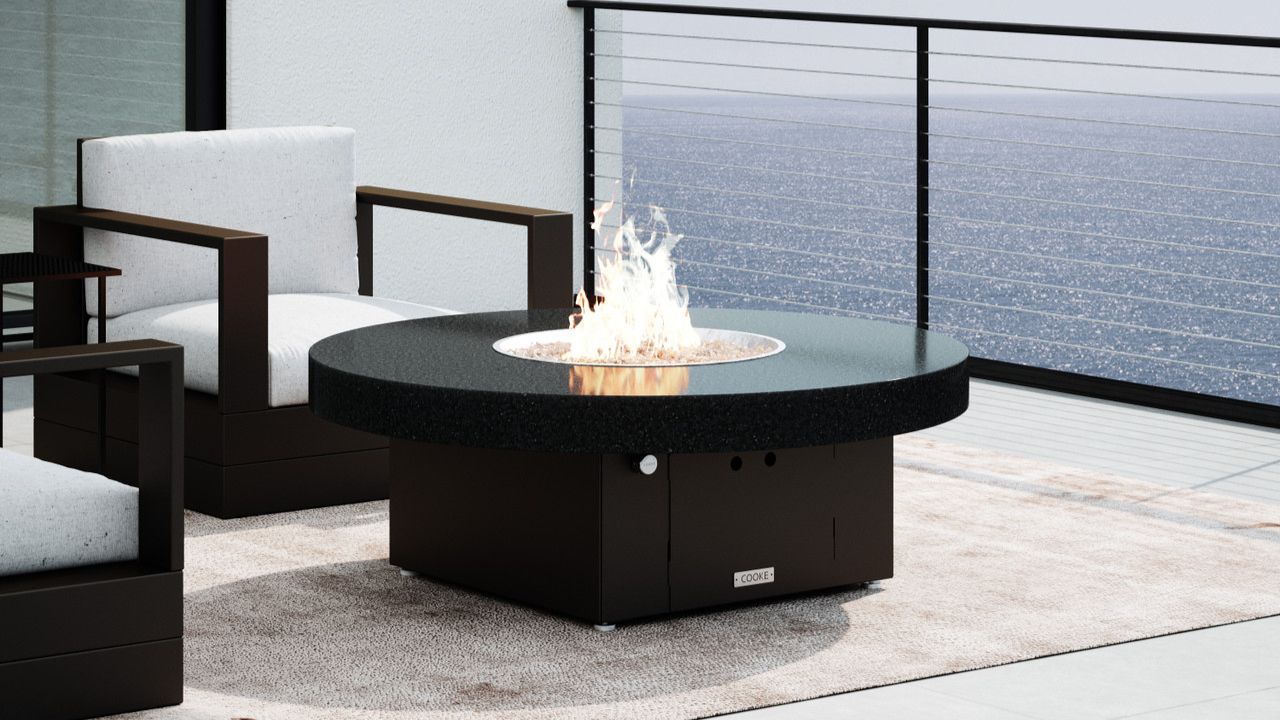
Dark neutrals like matte black and charcoal gray psychologically evoke elegance, calm, and stability. These colors let the fire itself become the focal point, creating visual drama against lighter hardscape. Warm metallics, bronze, copper patina, and rust finishes, are grounding and promote conversation, making them ideal for social gathering spaces. In 2026, luxury design, sophisticated neutrals, and rich metallics anchor spaces and complement high-end architectural elements without competing for attention.
Key Factors Before Choosing A Fire Pit Color
Three variables dictate color selection before aesthetics: climate, fuel type, and architectural integration. Climate affects color appearance dramatically, coastal glare intensifies colors, desert UV fades finishes, high-altitude sun bleaches lighter tones, and urban night lighting alters perception.
Fuel type impacts finish durability: gas fire pits (30,000-100,000 BTU residential range) produce minimal soot and work with any finish, while wood-burning units create heavy soot deposits that favor dark finishes or natural patinas. Custom powder-coated colors can match existing architectural elements like window frames or railings, ensuring cohesive design integration.
Should You Choose Light, Dark, Or Mid-Tone Fire Pit Colors?
Color tone selection balances visual weight, maintenance requirements, and design style. Dark tones dominate modern luxury projects, while lighter tones serve specific coastal and poolside applications.
When Dark Charcoal And Black Create The Most Luxurious Effect
- Modern minimalist homes: Matte black and charcoal gray are dominant 2025-2026 trend colors for modern outdoor design fire pits
- Pro: Creates sleek geometric focal point; evokes sophistication
- Con: May show dust in dry climates
- High-contrast with light hardscapes: Powerful visual contrast against pale wood decking and concrete
- Pro: Fire becomes primary focal point
- Safety note: Maintain 10-foot clearance from structures, 4-foot seating distance
When Light And Mid-Tone Fire Pits Work Best
- Light neutrals (ivory, limestone, white): Best for coastal/poolside with marine-grade stainless steel or sealed GFRC concrete
- Why: Reflects coastal glare; resists corrosion
- Con: Shows soot/ash; requires gas fuel and frequent cleaning
- Mid-tone grays and greiges: Most versatile for transitional and contemporary styles
- Why: Bridges warm/cool palettes; GFRC concrete withstands freeze-thaw cycles
- Safety note: 3-6 foot safety perimeter with non-slip, non-combustible surfaces required
Which Materials And Finishes Define Luxury Fire Pit Colors?
Material selection determines color behavior, durability, and maintenance requirements. Concrete and metal dominate luxury installations, each offering distinct color characteristics and performance profiles. Understanding luxury fire pit finishes ensures proper specification for climate-specific applications.
Concrete And GFRC Fire Pits
|
Finish Type |
Best Colors |
Perceived Luxury |
Ideal Climates |
Key Requirements |
|
Smooth GFRC |
Charcoal, mid-gray |
High when sealed |
All climates |
Must be sealed for weatherproofing |
|
Honed |
Warm taupe, charcoal |
Very high |
Coastal, desert, high-altitude |
Corrosion/heat/freeze-thaw resistant |
|
Textured |
Mid-neutrals |
High (hides marks) |
Universal |
Custom powder-coating available |
GFRC concrete is recommended for coastal environments (corrosion resistance), desert climates (heat/UV resistance up to 1200°F), and high-altitude regions (freeze-thaw durability). Custom powder-coating can match architectural elements for seamless design integration.
Metal Fire Bowls And Finishes
|
Metal Type |
Color Over Time |
Patina Behavior |
Best Styles |
Critical Requirements |
|
Powder-coated steel |
Stable black/charcoal |
No patina; maintains finish |
Modern, minimalist |
Superior to high-temp paint |
|
Corten steel |
Stable rust finish |
Self-protecting rust layer |
Naturalistic, industrial |
Ideal for desert; thermal expansion resistant |
|
Copper |
Orange→brown→green |
Unique traditional patina adds character |
Traditional, transitional |
Heavy-gauge required (prevents warping at 1200°F) |
|
Stainless steel |
Bright silver |
Minimal tarnishing |
Modern, coastal |
Marine-grade for salt air |
Powder coating offers superior weather resistance compared to high-temperature paint. Copper patina development adds bespoke, high-end character that cannot be replicated, while Corten's stable rust layer prevents deeper corrosion. Heavy-gauge copper is critical, it prevents warping under extreme heat up to 1200°F.
How Should Fire Pit Color Match Your Environment?
Climate dictates color performance, material durability, and maintenance requirements. Environmental factors, salt air, UV intensity, temperature extremes, and regulatory constraints, determine which colors remain viable long-term and which fail prematurely.
Climate-Specific Color Recommendations
- Coastal/Poolside: Stainless steel or GFRC in light neutrals; marine-grade materials essential for corrosion resistance; high-quality custom-fit covers required for moisture protection
- Desert/Mediterranean: GFRC or Corten in warm neutrals and rust tones; materials must withstand extreme heat, UV exposure up to 1200°F, and thermal expansion without cracking or fading
- Mountain/High-altitude: GFRC in mid-tones; heavy units resist high winds; durable against freeze-thaw cycles; BTU derating required above 4,500 feet for proper heat output
- Urban rooftops: Sleek blacks and grays with gas fuel only; natural gas or propane required for emissions compliance (wood often restricted by local ordinances); compact fire pit tables maximize space efficiency
Which Bold Colors And Metallics Elevate Fire Pit Design?
Bold metallics and living finishes create focal points that evolve over time. These colors work best when the fire pit serves as the primary design statement rather than a supporting element.
When Copper, Bronze, And Metallic Finishes Work Best
- Bronze and copper patina: Cater to traditional, transitional, and modern rustic aesthetics in 2025-2026 luxury market
- Day effect: Warm earthiness that grounds the space visually
- Night effect: Reflective glow from flame creates ambient lighting and visual drama
- Patina development advantage: Copper's unique traditional patina adds character and historical depth; evolving finish creates bespoke quality that cannot be replicated
- Heavy-gauge copper requirement: Essential to prevent warping under intense heat up to 1200°F
- Ideal pairings: Warm wood tones for traditional settings; sleek concrete and glass for modern interpretations
Making Corten Steel Look Sophisticated
- Corten characteristics: Stable rust layer is self-protecting, preventing deeper corrosion; favored for naturalistic and industrial designs
- Sophistication guidelines:
- Keep surroundings clean-lined with modern concrete and glass
- Limit other orange/rust elements in design palette to avoid overwhelming warmth
- Use controlled planting with cooler greens and grays for contrast
- Pair with geometric forms rather than rustic shapes to elevate the aesthetic
- Climate advantage: Ideal for desert environments (extreme heat/UV resistance) and industrial urban settings where weathering adds character
How To Coordinate Fire Pit Color With Hardscape And Furniture
Color coordination determines whether the fire pit integrates seamlessly or stands as a deliberate focal point. Successful coordination requires analyzing existing materials, architectural elements, and the intended spatial hierarchy. Mastering the art of coordinating fire pit colors with surrounding elements ensures cohesive luxury outdoor spaces.
Matching Fire Pit Color To Architecture And Hardscape
Custom powder-coated colors can match architectural elements like window frames or railings for cohesive, integrated design. This approach works particularly well with an outdoor propane fire pit, where the portable unit should blend into the overall composition rather than dominate it. Dark neutrals provide powerful visual contrast against lighter materials like pale wood decking and modern concrete, making the fire feature a clear focal point when a statement piece is desired.
Mid-tone sophisticated neutrals bridge warm and cool palettes in transitional designs, offering versatility when architectural styles mix or when future renovations are likely.
Furniture Coordination Strategies
- Match strategy: Cohesive, streamlined appearance; best for monochromatic modern designs where continuity matters more than contrast
- Complement strategy: Harmonious, sophisticated aesthetic; works for transitional spaces; requires undertone alignment (warm with warm, cool with cool)
- Contrast strategy: Dynamic, memorable visual impact; best when fire pit is the focal point; maintain 4-foot minimum seating distance from flames for safety
Future-Proofing Your Color Choice
- Keep fire pit in sophisticated neutrals: 2025-2026 trend toward matte black, charcoal, and rich metallics has proven longevity; these colors transcend temporary design movements
- Use trend colors in replaceable items: Apply current color trends to cushions, fire glass media, and accessories that can be swapped without major investment
- Embrace natural patina materials: Copper and Corten that age gracefully align with 2026 "natural patina celebration" trend; evolving finishes add value rather than require replacement
- Plan for refinishing: Powder-coated finishes can be professionally recoated; tile cladding is replaceable; modular designs allow component updates without full replacement
What Practical Factors Should Guide Your Fire Pit Color Choice?
Color selection extends beyond aesthetics to maintenance requirements, weather performance, and long-term cost of ownership. Practical considerations often override visual preferences when projects demand durability and low-maintenance solutions.
Maintenance And Weathering Considerations
|
Color/Finish |
Soot Visibility |
Weather Resistance |
Best Use |
Maintenance Level |
|
Light neutrals + gas |
High (shows every mark) |
Medium (requires sealing) |
Coastal with covers |
Weekly cleaning |
|
Mid-tone textured concrete |
Low (texture hides marks) |
High |
Universal |
Monthly |
|
Matte black powder-coat |
Low (ash blends) |
Very high |
Modern, urban |
Seasonal |
|
Corten steel |
Very low (rust hides marks) |
Excellent (self-protecting) |
Desert, industrial |
Minimal |
|
Copper patina |
Low (patina masks marks) |
Excellent |
Traditional |
Seasonal |
All enclosed gas fire pits require two vents on opposing sides with minimum 36 square inches total net free airflow to prevent dangerous gas buildup. Finishes must withstand temperatures up to 1200°F without degradation. GFRC concrete must be sealed for weatherproofing, while powder coating offers superior weather resistance compared to high-temperature paint for metal units.
Cost-Effective Color Upgrades
- Change fire media: Swap lava rock for recycled glass (2026 sustainability trend); $100-300 cost; high visual impact when lit creates entirely new appearance
- Repaint/re-coat metal: Powder coating preferred over paint; $200-500 investment; transforms entire aesthetic without replacement
- Add stone cap: Creates custom appearance on basic units; $300-800 upgrade; elevates from basic to luxury presentation
- Upgrade safety perimeter: Non-slip, non-combustible surfaces required within 3-6 feet; $500-1,500; frames pit as intentional focal point while meeting code
Common Fire Pit Color Mistakes to Avoid
Color mistakes create visual discord, maintenance headaches, and safety concerns. Most errors stem from ignoring undertones, fuel type implications, or long-term design trends.
Why Some Colors Clash and How to Fix Them
- Cool gray pit with warm tan house: Undertone mismatch creates visual tension; fix with warm greige GFRC or custom powder-coated taupe matching architectural elements
- White pit with wood-burning fuel: High soot visibility requires constant cleaning; fix by switching to natural gas/propane (produces minimal soot) or choosing mid-tone gray that masks deposits
- Weak contrast pit/floor blend: Trip risk for multi-generational families and ADA concerns; ensure 2-3 shade difference minimum; define 3-6 foot safety perimeter visually with contrasting materials
- Overly trendy colors: Bright accent colors date the space within 3-5 years; stick to sophisticated neutrals (matte black, charcoal, bronze, copper) for structure; reserve trends for replaceable elements like cushions and fire media
Your Action Plan For Choosing The Perfect Fire Pit Color
Systematic color selection eliminates costly mistakes and ensures the fire pit integrates properly with climate, style, and maintenance expectations. Follow this framework before finalizing specifications for custom designer outdoor fire pits.
Quick Decision Framework
Research-Based Framework:
- Environment: Coastal → stainless steel/GFRC light neutrals | Desert → GFRC/Corten warm neutrals/rust | Mountain → GFRC mid-tones | Urban → gas-fueled blacks/grays for emissions compliance
- Style: Modern → matte black/charcoal (2025-2026 dominant trend) | Traditional → bronze/copper patina | Rustic → Corten rust | Contemporary → custom powder-coated grays matching architecture
- Maintenance tolerance: Low → Corten, powder-coated blacks, textured mid-tones | Moderate → copper with natural patina development | High acceptable → light neutrals with gas fuel and weekly cleaning schedule
Final Implementation Steps
- Gather samples: Test powder-coated panels, stone samples, metal finishes at actual site in morning/noon/evening/night lighting conditions; colors shift dramatically under different light and shadow
- Verify requirements: 10-foot clearance from structures; 3-6 foot safety perimeter with non-combustible surfaces; 4-foot minimum seating distance; two vents with 36 square inches airflow for gas units; BTU derating above 4,500 feet elevation
- Document specs: Record exact color codes, finish names, CSA/UL certification for gas components, weatherproofing requirements (sealing schedule for GFRC, custom-fit covers for coastal installations)
- Plan evolution: Lock in structural color with timeless sophisticated neutrals; embrace 2026 "natural patina celebration" trend for copper/Corten that ages gracefully; consider smart integration (35% of luxury clients now request; adds 20-30% premium)
Selecting The Perfect Color For Your Fire Pit
Fire pit color selection in luxury outdoor projects demands strategic thinking beyond personal preference. Climate conditions, architectural integration, maintenance requirements, and long-term design trends must guide material and finish decisions. The 2025-2026 market favors sophisticated neutrals, matte black, charcoal gray, and rich metallics, that anchor high-end outdoor spaces while allowing fire itself to remain the focal point. Natural patina materials like copper and Corten steel offer bespoke character that evolves over time, aligning with the growing appreciation for finishes that age gracefully rather than deteriorate.
Successful color coordination requires matching undertones to existing architecture, selecting finishes that withstand local climate extremes (salt air, UV exposure, freeze-thaw cycles), and balancing visual impact with practical maintenance realities. Gas-fueled units in sophisticated dark neutrals dominate urban and modern installations, while warm metallics serve traditional and transitional aesthetics. Smart contractors prioritize durable powder-coated finishes, marine-grade materials for coastal projects, and GFRC concrete for extreme climate applications, all while maintaining required safety clearances and ventilation standards.
Ready to design a fire pit with perfect color integration for your luxury outdoor project? Whether you're envisioning a rectangle patio with fire pit as the centerpiece or exploring custom configurations, contact SoCal Fire Pits for expert consultation on climate-specific materials, custom finishes, and code-compliant installations.