


What's the Best Seating Around Fire Pits? Layout & Comfort Solutions for Outdoor Living Designers
Key Takeaways:
- BTU Output Determines Seating Distance, Not Pit Size Alone — Heat radius scales with BTU rating: 40-70k BTU serves 2-4 people at 3-5 feet; 90-125k BTU serves 4-6 people at 5-8 feet; 150-250k+ BTU serves 6-10+ people at 8-12+ feet. Match fire pit capacity to actual seating zones rather than aspirational guest counts.
- 316 Stainless Steel Is Non-Negotiable Within 5 Miles of Coast — Marine-grade 316 stainless steel costs 20-30% more than 304 grade but contains 2% molybdenum that prevents pitting and crevice corrosion from salt air. Standard 304 stainless steel fails within 18-24 months in coastal environments, creating liability and callback costs that exceed material savings.
- California Fire Code Setbacks Are Minimums, Not Design Standards — Code requires 10 feet from combustible structures, 15 feet overhead clearance, and 36-inch circulation paths. Real-world installations demand greater distances: poolside setbacks increase 50% due to reflected heat; high-BTU units (150k+) require 20-25 feet from structures for thermal comfort regardless of code compliance.
- Fire Pit Shape Dictates Seating Strategy and Social Dynamics — Round pits demand radial seating for conversational equality; square pits enable modular arrangements on architectural grids; linear fire tables create directional flow for dining functions. Shape selection is a functional decision that determines traffic patterns, not an aesthetic preference applied after site planning.
- Off-Season Specification Captures 10-20% Cost Savings — November-February procurement compresses timelines from 12-20 weeks to 6-12 weeks while reducing project costs 10-20% through reduced demand pricing. Strategic designers specify during the off-season for spring installations, avoiding peak-season production bottlenecks and premium pricing while maintaining quality specifications.
This guide provides California-specific fire pit seating ideas for landscape architects, design-build contractors, and pool builders specifying luxury residential projects. Learn how fire pit tables influence social dynamics, which modern fire pit table withstands marine layer corrosion, and how to engineer fire pit conversation areas that balance thermal comfort with code compliance.
From BTU sizing to 316 stainless steel specifications, these professional strategies protect your reputation while delivering clients the year-round outdoor living experience they expect.
What Defines the Ideal Fire Pit Seating Experience for Designers and Builders?
The ideal fire pit seating experience hinges on three factors: spatial geometry, thermal comfort, and human scale. Designers must balance heat delivery with conversation flow while maintaining code-compliant clearances. When these elements align, seating transforms from functional furniture into an engineered social environment that clients use repeatedly.
How Does Seating Influence Guest Experience and Spatial Design?
Curved or circular seating arcs create natural focal points and facilitate conversation. Position seating to allow easy eye contact across the fire feature—this optimizes sightlines and encourages engagement. Distance from fire pit to seating must balance warmth and comfort; too close overwhelms, too far disengages. Round fire pit tables work especially well with curved seating layouts because they give every guest a clear view of the flame while maintaining comfortable conversation distances.
Comfort Metrics for Specifying Outdoor Fire Pit Layouts
When designing outdoor living spaces, professionals rely on heat coverage and BTU output to balance comfort, efficiency, and design. These comfort metrics ensure that guests experience the right amount of warmth for the space and seating arrangement.
- 40,000–70,000 BTU: Provides a 3–5 ft heat radius, ideal for 2–4 people and smaller, intimate seating layouts.
- 90,000–125,000 BTU: Delivers a 5–8 ft heat radius, comfortably warming 4–6 people in medium-sized areas.
- 150,000–250,000+ BTU: Reaches an 8–12+ ft heat radius, suitable for 6–10+ guests and expansive outdoor spaces.
- Specification Tip: Always match BTU output to actual seating capacity, not the maximum possible guest count, to maintain consistent comfort and fuel efficiency.
Understanding these heat coverage standards helps outdoor living professionals design weather-resistant. The balance fire pits that perform reliably and create evenly heated, inviting gathering spaces for every occasion.
Why Do Proportion, Clearance, and Ergonomics Define Luxury-Grade Outcomes?
Effective seating design encourages social interaction through proper spatial relationships. The balance between proximity for warmth and distance for comfort separates amateur layouts from professional installations. Luxury clients expect furniture that feels custom-scaled to the fire feature—not arbitrary placement that prioritizes available space over human experience.
How Do Fire Pit Shapes Affect Seating Layouts and Flow?
Fire pit geometry dictates seating strategy. Round pits demand radial layouts, square pits enable modular grids, and linear tables create directional flow. Shape selection isn't aesthetic—it's a functional decision that determines traffic patterns, seating capacity, and social dynamics. Match the pit shape to the site constraints and client entertaining style.
What Seating Geometry Complements Circular and Round Fire Pits for Social Symmetry?
Circular seating creates equal sightlines and promotes intimacy. Round fire pits naturally encourage conversational balance—every seat has equivalent status and heat exposure. This geometry works best for residential clients who prioritize face-to-face interaction over formal dining.
How Do Square Fire Pits Support Modular Seating and Visual Balance?
Square fire pits support modular seating arrangements that align with architectural grid lines. They're well-suited for modern courtyards and rooftops where clean geometry reinforces contemporary design language. Use square pits when the hardscape or building facades establish orthogonal patterns.
When Do Rectangular or Linear Fire Tables Improve Conversation and Dining Function?
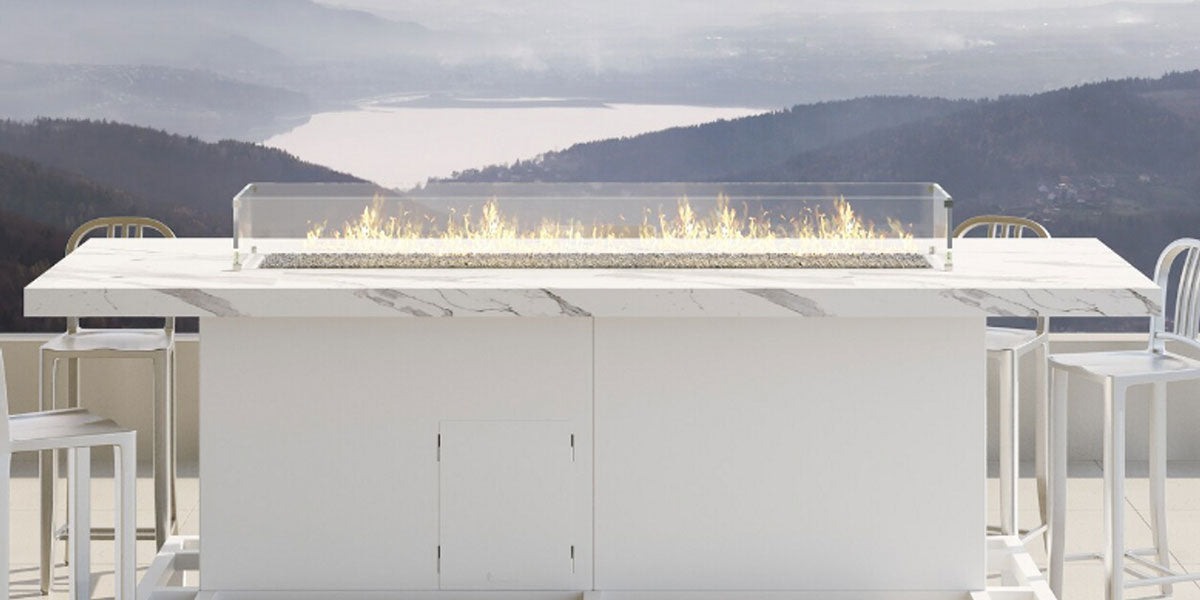
Elongated benches align well with rectangular fire tables for group dining. Linear designs combine functionality with sleek aesthetics for intimate gatherings—they create directional conversation flow rather than radial engagement. Specify linear fire tables when the outdoor space doubles as a dining zone or when site dimensions constrain radial layouts.
Can Asymmetrical Groupings Elevate Resort or Hospitality Environments?
Asymmetrical groupings elevate resort and hospitality design by breaking predictable patterns. Flexibility in arrangement supports varied guest experiences—couples seek intimate corners while groups claim open zones. Use asymmetry strategically in commercial projects where diverse user groups occupy the space simultaneously.
How Should Seat Heights Align with Fire Pit Profiles?
Seat height determines eye-line relationship to flame—the critical factor in thermal comfort and visual engagement. Mismatched heights force guests to crane necks or suffer heat exposure. Specify seat height based on flame height, which scales with pit diameter and BTU output. Proper alignment creates natural sightlines where guests view flames comfortably without postural strain.
Ergonomic Guide to Flame Height and Eye-Line Comfort
Balancing flame height with seating elevation ensures visual comfort and heat efficiency. Use this reference to match fire pit diameter, BTU output, and flame height with the right seating type for optimal outdoor comfort.
|
Fire Pit Diameter |
Typical BTU Range |
Flame Height |
Recommended Seating Type |
Comfort Note |
|
24" |
40,000–70,000 BTU |
8–12 inches |
Lounge seating |
Ideal for smaller, intimate setups with lower sightlines |
|
30" |
60,000–90,000 BTU |
10–15 inches |
Lounge or chat height |
Balanced warmth and visibility for relaxed seating areas |
|
36" |
90,000–125,000 BTU |
12–18 inches |
Chat height |
Suitable for medium group gatherings with moderate eye-line alignment |
|
42" |
120,000–150,000 BTU |
15–20 inches |
Chat or dining height |
Provides engaging flame visibility without visual obstruction |
|
48" |
150,000–200,000 BTU |
18–24 inches |
Dining height |
Comfortable for larger social settings and open layouts |
|
54" |
180,000–250,000 BTU |
20–28 inches |
Dining height |
Best for expansive patios needing high flame visibility |
|
60" |
200,000–300,000 BTU |
24–36 inches |
Dining or standing height |
Creates a dramatic focal point for large outdoor entertainment areas |
Selecting the correct flame height relative to seating ensures both safety and ambiance. Lower flames complement lounge areas, while taller flames suit dining and event spaces—creating the perfect balance between warmth, visibility, and comfort around your weather-resistant fire pit.
When Are Lounge-Height Fire Pit Tables (15–18 In.) Better Than Chat-Height (21–24 In.)?
Lower profiles provide more relaxed, casual seating arrangements for extended evening use. Chat-height supports more upright, conversational postures ideal for shorter gatherings. Specify lounge height when clients prioritize comfort over formality; choose chat height when the fire pit serves as a social hub rather than A relaxation zone.
How Does Dining-Height (29–30 In.) Seating Expand Outdoor Kitchen Usability?
Dining-height seating integrates fire features with outdoor kitchen zones, eliminating the need for separate dining areas. It supports dual-purpose entertaining and dining functions—guests transition from cocktails to dinner without relocating. Use dining-height fire tables when space constraints demand multi-functional furniture or when clients expect restaurant-style outdoor dining.
How Can Multi-Height Clusters Support Mixed-Use Hospitality Zones?
Multiple height options accommodate diverse activities and guest preferences within a single fire pit zone. This approach enhances functionality in commercial and resort settings where unknown user groups require flexibility. Cluster lounge, chat, and dining heights around larger fire features to serve couples, families, and business groups simultaneously.
How Much Clearance Should Exist Between Seating and the Flame Zone?
Clearance requirements balance safety codes with functional comfort. California Fire Code establishes minimum setbacks, but BTU output, flame height, and site-specific conditions often demand greater distances. Designers face liability when seating positions guests too close—even if technically code-compliant. Use published minimums as starting points, then adjust for actual heat output and traffic flow.
Safe Spacing Standards for Residential and Commercial Fire Pits
Proper spacing is critical to meet California Fire Code standards and ensure safe, enjoyable outdoor gatherings. The following guidelines outline clearance requirements based on fire pit type and use setting.
|
Fire Pit Type / Area |
Minimum Setback from Structures |
Overhead Clearance |
Movement Clearance |
Egress Path Requirement |
Notes / Jurisdictional Exceptions |
|
Portable Outdoor Fireplaces |
15 feet |
15 feet |
36 inches |
36 inches |
May be reduced to 3 feet with spark arresters for R-3 occupancies in some California jurisdictions |
|
Recreational Fires |
25 feet |
15 feet |
36 inches |
36 inches |
Applies to backyard or patio fire pits used for leisure purposes |
|
Open Burning (without containment) |
50 feet |
15 feet |
36 inches |
36 inches |
Can be reduced to 15 feet if conducted in approved containers |
|
Residential Installations (General Practice) |
10 feet |
15 feet |
36 inches |
36 inches |
Maintain minimum clearance from combustible structures such as fences, pergolas, and patio covers |
|
Commercial Installations |
15–25 feet (per local code) |
15 feet |
36 inches |
36 inches |
Subject to local fire authority approval and additional safety plan requirements |
Following these spacing standards ensures compliance with California regulations while maintaining guest safety and comfort. Always verify local amendments and consider wind exposure when installing weather-resistant fire pits to maintain optimal fire pit wind resistance and clear, safe circulation zones.
How Do BTU Output and Burner Configuration Change Recommended Distance?
Higher BTU ratings produce more heat, requiring greater clearances beyond code minimums. Burner design and flame height influence heat distribution patterns—linear burners project heat directionally, while round burners radiate uniformly. Use this sizing chart to correlate pit diameter with recommended setbacks: 24-30" diameter requires 10 feet standard, 15 feet poolside; 36-42" diameter requires 15 feet standard, 20 feet poolside; 48-54" diameter requires 20 feet standard, 25 feet poolside; 60" diameter requires 25 feet standard, 30 feet poolside. Poolside installations demand increased setbacks due to reflective heat from hardscape.
Can Tempered-Glass Wind Guards Reduce Required Spacing While Improving Safety?
Tempered glass wind guards create a physical barrier between flame and the surrounding area without reducing code-required setbacks. They provide both wind protection and an additional safety layer that prevents accidental contact with flames. Glass guards offer an aesthetically pleasing solution for coastal installations where wind disrupts flame patterns—they maintain visibility while containing heat and embers within the fire pit perimeter.
What Layout Patterns Create Optimal Social Dynamics Around Fire Pits?
Layout patterns determine whether guests naturally engage or isolate. Circular arrangements promote equality, sectionals create cohesion, and flexible pieces adapt to changing group sizes. Commercial projects require staff circulation paths that residential designs ignore. The best layouts balance intimacy with accessibility—guests feel connected without crowding service routes or emergency egress.
How Does Circular Seating Promote Intimacy and Equal Sightlines?
Circular seating creates a natural focal point, facilitating conversation across the fire feature. It ensures all guests have equal view and access—no premium or secondary seats exist. This geometry encourages social interaction through a balanced spatial arrangement where every position offers equivalent status and comfort. Specify circular layouts for residential clients who prioritize egalitarian gatherings over formal entertaining hierarchies.
When Do Sectional or Curved Sofas Outperform Individual Lounge Chairs?
Sectionals create more cohesive, intimate gathering spaces by physically connecting seating positions. They're better for accommodating larger groups in a unified arrangement—guests don't drift into isolated conversations. Curved designs follow the fire pit arc for optimal heat distribution, positioning all occupants at consistent distances from the flame. Use sectionals when clients entertain established friend groups rather than mixing unfamiliar guests.
How Can Ottomans and Benches Adapt Group Sizes and Traffic Flow?
Flexible seating options accommodate varying group sizes without permanent spatial commitments. Built-in benches provide permanent, durable seating solutions that define circulation boundaries and prevent furniture migration. Ottomans offer moveable, adaptable seating configurations that guests rearrange based on actual attendance. Combine fixed benches for spatial definition with mobile ottomans for capacity flexibility.
What Ratio of Open Space Ensures Staff Circulation in Hospitality Venues?
Commercial applications require enhanced clearances for ADA compliance beyond residential standards. Staff circulation paths must remain clear during service—36-inch minimum pathways support accessibility and operational flow even when guests occupy all seating. Design hospitality fire pit zones with a 40-50% open space ratio to prevent bottlenecks during peak occupancy. Residential projects tolerate 30-35% open space since homeowners control guest counts.
How Can Designers Enhance Comfort and Usability Through Accessories?
Accessories transform functional seating into luxury outdoor living. Cushions, side tables, and supplemental heating extend fire pit usability from seasonal amenity to year-round destination. Specify accessories during initial design—not as afterthoughts—to ensure dimensional compatibility and cohesive aesthetics. Accessory investment typically represents 15-25% of total seating budget but delivers disproportionate impact on client satisfaction.
What Roles Do Cushions, Pillows, and Arm Heights Play in Relaxation?
Performance fabrics must withstand UV and moisture exposure without fading or mildewing—solution-dyed acrylics outperform printed synthetics in coastal environments. Proper cushioning enhances comfort for extended gatherings; 4-6 inch seat cushions with high-resilience foam cores prevent bottoming out. Arm heights influence seating ergonomics and relaxation—18-24 inch arms support natural elbow position for lounge seating, while 24-26 inch arms suit chat-height furniture.
How Can Side Tables and Storage Modules Improve Functional Flow?
Side tables provide convenient surfaces for drinks and items within arm's reach—eliminating the lean-and-reach that breaks conversation flow. Storage modules keep fire pit accessories organized and protected between uses; specify weatherproof storage for fire glass covers, ignition tools, and cushions. Integrated solutions enhance overall outdoor living functionality by reducing visual clutter while maintaining operational efficiency. Position one side table per 2-3 seats to prevent guest conflicts over shared surfaces.
How Do Radiant Heaters or Integrated Lighting Elevate the Four-Season Experience?
Supplemental heating extends usability into cooler seasons when fire pit heat alone proves insufficient—pair overhead radiant heaters with fire pits to create 360-degree comfort zones. Integrated lighting creates ambiance and enhances safety by eliminating trip hazards without harsh overhead illumination. Four-season design maximizes return on investment; clients who use fire pit zones 8-10 months annually justify premium material specifications through cost-per-use rather than initial expense.
Where Can Designers Start Their Specification Process with So-Cal Fire Pits?
Begin the specification process by contacting So-Cal Fire Pits' trade team for project-specific guidance, material samples, and timeline coordination. Early engagement during schematic design prevents costly revisions when fire pit dimensions conflict with furniture layouts or clearance requirements. Trade professionals receive priority access to technical support, expedited samples, and pricing that maintains project budgets while delivering coastal-grade quality.
How to Access Trade Pricing, Samples, and Design Assistance
Working with So-Cal Fire Pits gives trade professionals access to premium pricing, product samples, and personalized design support—all while keeping projects on schedule. Understanding seasonal timelines helps you plan installations efficiently and maximize savings.
- Typical Project Timeline: Most custom fire pit projects span 8–20 weeks from design to completion.
- Design Phase: Takes 3–7 weeks for material selections, layout reviews, and client approvals.
- Approval Phase: Lasts 4–18 weeks, depending on jurisdiction and permit complexity.
- Construction Phase: Usually completes within 4–8 days for experienced installers once approvals are clear.
- Peak Season (March–October): Timelines extend to 12–20 weeks with premium pricing due to high demand.
- Off-Season (November–February): Schedules shorten to 6–12 weeks, often with 10–20% trade discounts available.
- Pro Tip: Strategic designers specify and order during the off-season to secure spring installations, avoid production delays, and capture cost savings.
Trade partners who plan ahead gain faster turnaround, better pricing, and smoother project execution. For access to trade pricing, product samples, or expert design assistance, contact So-Cal Fire Pits today and start building your next weather-resistant fire pit project with confidence.
How to Coordinate White-Glove Delivery and On-Site Support Across Southern California?
Professional installation services are available through So-Cal Fire Pits' network of certified installers trained on specific product requirements. Regional coverage across Southern California ensures consistent quality from San Diego to Santa Barbara, eliminating the variability of general contractors unfamiliar with fire pit systems. On-site technical support during installation resolves field conditions and change orders without project delays or callback costs.
How So-Cal Fire Pits Protects a Designer’s Reputation
Designers trust So-Cal Fire Pits for performance-driven products that combine reliability, compliance, and long-term client satisfaction. Every installation is engineered to meet code, perform flawlessly, and reinforce a designer’s reputation for quality and professionalism.
- Installation Cost Ranges:
- Basic projects start around $3,250–$16,500+
- Gas fire pits (San Diego market): $3,500–$12,000
- Outdoor fireplaces: $12,000–$30,000+
- Luxury installations: $15,000–$50,000+ with integrated seating and landscape features
- Code Compliance: Professionally engineered systems ensure permits pass on first inspection, avoiding costly rework and schedule delays.
- Warranty Protection: All products include manufacturer-backed warranties that safeguard designers from liability related to product performance or failure.
- Reduced Risk Exposure: Engineered, tested systems eliminate the hazards of field-built, improvised solutions that often fail under real-world conditions.
- Quality Materials: Durable, weather-resistant fire pits minimize corrosion, wear, and service calls—crucial in coastal environments.
- Reputation Protection: Clients remember lasting quality. Reliable performance reflects on the designer’s professionalism, not just the product itself.
- Referral Value: High client satisfaction translates to repeat business and referrals that often exceed the value of a single project.
By specifying So-Cal Fire Pits’ performance-driven, weather-resistant fire pits, designers ensure each installation not only meets expectations but enhances their professional credibility for years to come.
Ready to Specify Fire Pit Seating That Performs?
Transform your fire pit seating ideas into engineered outdoor living solutions with So-Cal Fire Pits' trade program. Access California-specific technical specifications, coastal-grade materials, and curated fire pit furniture designed for BTU compatibility and code compliance. Our trade team provides CAD details, material samples, and installation support that protect your reputation through performance-driven products.
Contact So-Cal Fire Pits today for trade pricing and project consultation. Specify with confidence—316 stainless steel construction, tempered glass wind guards, and coordinated furniture selections ensure your fire pit zones deliver luxury-grade comfort and decades of coastal reliability. Start your specification process now.
You may also like
View all

