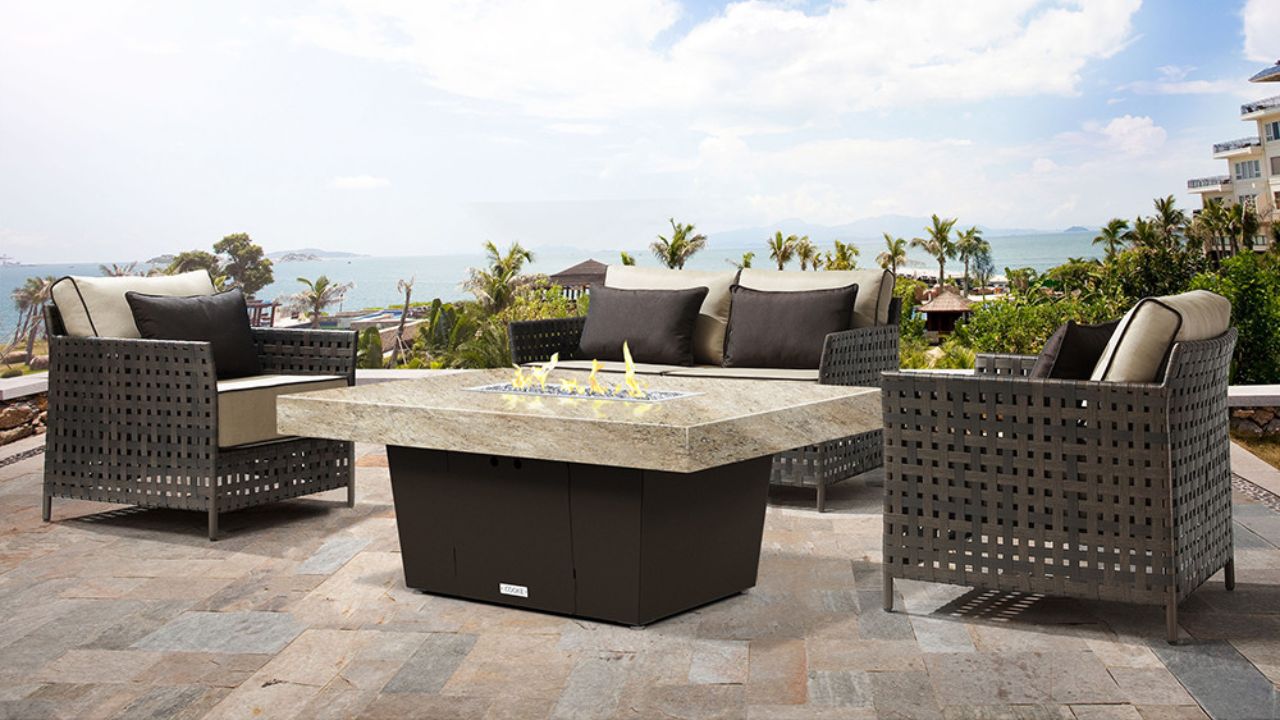
Wellness-focused designers increasingly recognize fire pits as more than aesthetic amenities. They serve as therapeutic infrastructure with documented mental health benefits. Research involving 226 adults demonstrated that observing fire with natural sound produces consistent blood pressure reduction and activates the parasympathetic nervous system responsible for stress recovery. A modern fire table positioned near comfortable seating creates an ideal setting for these benefits, combining clean flame presentation with functional surface space that encourages lingering and relaxation.
Japanese brain wave studies revealed real flame triggers stronger relaxation responses than LED simulations, validating what hospitality designers, healthcare architects, and residential wellness specialists have observed: properly designed fire features support stress reduction, social connection, and mindfulness practice.
This guide translates physiological research into actionable design specifications for commercial spas, corporate wellness spaces, therapeutic gardens, and luxury wellness spaces where fire pits serve as evidence-based wellness amenities.
Key Takeaways
- Real flame produces measurable physiological benefits that LED cannot replicate. A 226-adult study showed blood pressure reduction only with the crackling fire sound
- Distance zoning enables therapeutic self-selection. 10-12 feet provides intimate warmth, 15 feet offers balanced comfort, 18-20 feet creates peripheral seating
- Clean combustion is non-negotiable. Propane (52,500 BTU) and natural gas (70,000 BTU) prevent smoke exposure; avoid wood entirely
- Temperature thresholds dictate programming, usage drops significantly above 75-80°F, requiring BTU adjustment (30,000-60,000 summer vs. 60,000-100,000+ winter)
- Therapeutic spaces require operational consistency, staff training, quarterly maintenance, quiet hours, and weather closures (wind >15 mph, AQI >100)
What Does "Fire Pit Therapy" Mean For Wellness-Focused Design?
Fire pit therapy refers to designing fire features specifically to support stress reduction, mindfulness, and social bonding rather than purely decorative purposes. Therapeutic fire spaces prioritize sustained user engagement, controllable sensory input, and behavioral outcomes like reduced anxiety and increased dwell time.
|
Element |
Therapeutic Fire Space |
Decorative Fire Feature |
|
Intent |
Stress reduction, mindfulness support, social bonding |
Visual interest, evening atmosphere |
|
User Behavior |
Sustained viewing (15+ min), meditation, quiet conversation |
Pass-through, brief pause |
|
Sensory Profile |
Adjustable flame, controllable heat zones, natural sound |
Fixed intensity |
|
Risk Controls |
Multiple distance zones, air quality focus, clear egress |
Standard safety clearances |
|
Success Signals |
Dwell time >15 min, reduced voice volume, repeat use |
Visual appeal, social activity |
Designers can support six mental health benefits without claiming to "treat" clinical conditions: stress downshift through blood pressure reduction, emotional regulation via slow brain wave activity, attention restoration using fire as a mindfulness anchor, social ease through oxytocin release, mindfulness support from dynamic flames, and creative reset from hypnotic flame quality.
Use terminology like "restorative space," "wellness amenity," or "mindfulness support" instead of "therapy." Frame outcomes as "supports" or "promotes" rather than "treats" or "cures."
Why Can Fire Features Support Stress Relief And Emotional Regulation?
Research involving 226 adults demonstrated consistent blood pressure decreases when observing fire with a crackling sound; the auditory component was crucial, as muted fire produced no effect. This activates the parasympathetic nervous system responsible for stress recovery.
Japanese brain wave studies revealed that real flame triggers stronger slow wave activity compared to LED simulations, a neurological state linked to deep relaxation and nervous system balance. Fire also creates socially safer gathering conditions by reducing eye-contact pressure while promoting oxytocin release and co-regulation, where breathing and posture synchronize among users. Simple applications include one-minute flame watching, breath pacing matched to flicker rhythm, lighting rituals, and designated quiet zones around custom fire pits.
What Does Evidence Say About Fire, Relaxation, And Social Connection?
Research provides three designer-safe takeaways: consistent blood pressure reduction occurs with fire observation, stronger brain slow-wave activity appears with real flame versus LED simulation, and the sound component is essential; crackling fire produces measurable effects while silent fire does not.
Fire aligns with biophilic design principles: refuge and prospect balance, non-rhythmic sensory stimuli that maintain engagement, natural materials that strengthen the calming effect, and evolutionary gathering patterns that trigger social bonding. Acceptable claims include "supports stress reduction," "promotes calm and present-moment awareness," "encourages social connection," and "may help manage seasonal mood changes." Avoid claiming fire "treats anxiety or depression," "cures seasonal affective disorder," or "replaces therapy."
Who Are Fire Pit Wellness Spaces For?
Relaxation fire pits serve five primary user groups: burned-out creatives seeking mental reset, hospitality guests wanting memorable experiences, residents building daily rituals, workplace teams needing decompression, and solo users pursuing restoration and meditation.
Trauma-aware wellness design requires clear exits visible from all seats, multiple distance zones at 10, 15, and 20 feet from flame, both fire-facing and fire-adjacent seating options, adjustable flame height (30,000-60,000 BTU for ambiance), quiet zone signage, and smokeless fuel options like propane or natural gas. Solo restoration and group bonding coexist through strategic zoning: intimate pairs sit 10-12 feet from fire, group clusters position at 15 feet, and individual contemplation seats occupy the 18-20 foot periphery.
What Risks And Tradeoffs Should Designers Treat As Non-Negotiable?
Wood-burning produces particulate matter exposure; avoid it entirely for wellness applications. Smoke drift requires a 10-foot minimum clearance from structures, and vulnerable groups including children, elderly users, and those with respiratory conditions face heightened risk.
Overstimulation triggers include high flames causing visual stress, BTU ratings above 60,000 creating discomfort when ambient temperatures exceed 75-80°F, erratic wind-affected flames generating anxiety, and gas odor overwhelming sensitive users. Accessibility requirements include mixed seat heights (18" standard, 20" senior, 17" ADA), 36-inch minimum pathways with 60-inch wheelchair turning radius, heat-safe routes maintaining 48 inches from fire pit edge, and 2-5 foot-candle ambient lighting. Operational failures to avoid: visible propane tanks, unclear rules, poor maintenance, and placement closer than 10 feet from property lines.
What Design Variables Most Influence The Mental Health Experience?
|
Distance |
Comfort |
Social Pressure |
Heat Exposure |
Best For |
|
10-12ft |
High warmth, cozy |
High (direct sight lines) |
Maximum |
Intimate pairs; avoid when ambient >75°F |
|
15ft |
Balanced |
Moderate |
Moderate |
Optimal for 30,000-45,000 BTU summer use |
|
18-20ft |
Cool/ambient |
Low (avoidable eye contact) |
Minimal |
Year-round peripheral seating |
Flame control affects experience through height (30,000-60,000 BTU for ambiance; 60,000-100,000+ BTU for winter), flicker rate (moderate is calming; wind shielding stabilizes), and predictability (gas provides consistency). Soundscape guidelines recommend natural crackling, target ambient noise below 50 dB, and 6-8 feet between seats for private conversation.
Materials that amplify restoration include natural stone and wood for tactile warmth, irregular edges, native plantings within sightlines, and warm white lighting at 2700-3000K with matte finishes. Privacy elements: 3-4 foot partial walls providing refuge without blocking egress, positioning away from circulation paths, and layered boundaries with planting at 3 feet, low walls at 10 feet, and screening at 20 feet.
Which Fire Technology Best Fits A Wellness Goal?
|
Fuel |
Emissions |
Control |
Heat Output |
Best For |
|
Wood |
High smoke/PM |
Low |
Variable |
Avoid for wellness |
|
Natural Gas |
Minimal |
High (instant, adjustable) |
70,000 BTU avg |
Permanent installations |
|
Propane |
Minimal |
High (instant, portable) |
52,500 BTU avg |
Flexible locations |
|
Bioethanol |
Zero smoke |
Medium (manual refill) |
17,500 BTU |
Indoor/outdoor, sensitive populations |
|
Electric LED |
Zero |
High (programmable) |
Supplemental |
When combustion is prohibited; no slow-wave response |
Real flame produces measurable physiological responses, including blood pressure reduction and brain wave changes. LED simulation does not produce the same therapeutic benefits. Use real flame whenever air quality and safety permit for authentic wellness benefits. Quality parts and accessories ensure long-term therapeutic performance.
What Are The Best Practices For Air Quality In Fire Pit Wellness Design?
Smoke reduction requires prioritizing propane or natural gas over wood, positioning perpendicular to prevailing winds, multi-port burners for clean combustion, glass wind guards, and 15-foot minimum distance for sensitive users.
Choose zero-combustion options in urban high-density settings (neighbors within 20 feet), senior living and healthcare facilities, indoor-adjacent spaces (windows within 25 feet), and wildfire-prone regions. Seasonal planning demands electric backup during wildfire smoke days, AQI triggers for closure (close when AQI exceeds 100), wind closure threshold above 15 mph sustained, and temperature-based closure above 80°F.
How Do You Design A Fire Pit Wellness Space Step By Step?
Step 1: Define wellness intent. Choose outcomes: stress reduction (95/100 benefit score), social connection (90/100), mindfulness (88/100), or blood pressure support (85/100). Document non-claims using "support" not "treat."
Step 2: Define users and sensitivities. Identify primary users and assess sensitivities: respiratory, heat tolerance, anxiety, mobility, sensory processing.
Step 3: Site constraints. Establish clearances of 10-20 feet from pools and 10 feet from structures. Plan egress paths (36" pathways, 60" turning radius). Address permits, fire codes, and ADA accessibility, similar considerations apply to concrete fire pits.
Step 4: Choose fire modality. Select propane (portable, 8-20 hour burn) or natural gas (unlimited, fixed). Summer: 30,000-60,000 BTU; winter: 60,000-100,000+ BTU. Avoid wood.
Step 5: Select layout. Create distance zones at 10-12 feet (intimate), 15 feet (recommended), 18-20 feet (peripheral). Capacity: 8-12 people maximum. Use 180-degree arc for balance; full circle for cohesion.
Step 6: Add supporting elements. Provide 2-5 foot-candles warm white lighting (2700-3000K). Use stone, wood, matte finishes. Add partial screens, layered planting, mindfulness signage.
Step 7: Plan operations. Train staff on ignition protocols. Schedule quarterly burner cleaning, annual fire glass replacement. Establish quiet hours and weather closures.
Step 8: Pilot and iterate. Track dwell time (target >15 minutes), voice volume, repeat use. Collect feedback via QR surveys, comment cards. Adjust flame height, seating, operational hours.
|
Intent |
User |
Modality |
Layout |
Key Safeguards |
|
Stress reduction |
Solo users |
Natural gas (70K BTU) |
Quiet ring (15ft, 6-8 seats) |
Wind shield, adjustable, quiet hours |
|
Social connection |
Groups, teams |
Propane (52.5K BTU) |
Social hearth (180° arc, 10-12 seats) |
6-8ft spacing, ambient light |
|
Mindfulness |
Meditation groups |
Bioethanol (17.5K BTU) |
Ritual micro-space (2-4 seats, 10ft) |
Zero smoke, predictable flame |
|
Year-round |
Residents |
Natural gas (30-100K BTU) |
Multi-zone (10ft/15ft/20ft) |
Seasonal BTU adjustment, mist option |
What Proven Layout Patterns Can Designers Reuse?
Quiet restoration ring: Best for solo stress reduction. Layout: 6-8 individual seats at 15-foot radius, 45,000 BTU gas. Must include silent zone signage, fire-facing seats, low lighting (2-3 fc), and a wind-shielded burner. Avoid if the primary goal is social interaction.
Social hearth: Best for conversation and hospitality settings. Layout: 180-degree arc of mixed seating at 10-15 feet, 52,500 BTU propane. Must include 6-8 foot spacing, low-back chairs, warm ambient light (4-5 fc). Avoid if users need solitary restoration or noise-sensitive neighbors within 30 feet.
Multi-zone warmth: Best for year-round use. Layout: Three zones at 10, 15, and 20 feet from 30,000-100,000 BTU natural gas. Must include zone differentiation, adjustable flame, cooling mist for summer, and a covered option. Avoid if limited space (<40ft diameter).
Ritual micro-space: Best for mindfulness practice and small groups (2-4). Layout: 10-foot radius with floor cushions, 30,000-40,000 BTU bioethanol/gas. Must include predictable flame, zero smoke, partial screening, and meditation prompts. Avoid if high-throughput public space.
How Can Designers Evaluate Whether The Space Improves Wellbeing?
Observable signals include dwell time exceeding 15 minutes, reduced pacing and quieter voice levels, repeat use, users self-selecting different zones, and fewer conflicts.
|
Metric |
Capture Method |
What It Suggests |
|
Average dwell time |
Time-lapse or hourly sampling |
>15 min = restorative; <5 min = failure |
|
Repeat user rate |
Optional sign-in/loyalty tap |
Daily/weekly returns = therapeutic value |
|
Distance self-selection |
Seat occupancy heat map |
Diverse zone use = successful flexibility |
|
Quiet hour compliance |
Decibel meter readings |
<50 dB = successful norm-setting |
Feedback methods include emoji scale intercept prompts immediately after use, three-question QR survey ("Did this help you relax?"), anonymous comment cards, optional mood check-in (before/after slider), and staff observation logs documenting behaviors without identifying individuals.
How Do You Integrate Fire Pit Wellness Into Brand And Program Design?
Hospitality programming requires quiet hours (6-9 AM or 7-10 PM) with low flame, optional ritual prompts ("Notice your breath"), warm beverage service timed with evening lighting, and gradual daylight-to-firelight transition. Workplace guidance prevents meeting takeover through low seating without laptop surfaces, "screen-free zone" signage, 20-minute suggested occupancy, and location away from building exits. Similar programming works well for outdoor entertainment design. Inclusive prompts include "What surprised you today?" signage, speaking stones for gratitude sharing, and zone maps showing distance options.
What Questions Should Wellness-Focused Designers Expect From Stakeholders?
You CAN say: "Supports stress reduction and promotes calm," "Research shows fire-viewing activates parasympathetic nervous system," "226-adult study demonstrated blood pressure reduction," "Designed to encourage social connection."
You CANNOT say: "Treats clinical anxiety or depression," "Cures seasonal affective disorder," "Replaces therapy or medication," "Guaranteed health outcomes."
Add disclaimers: "This space supports wellness but is not a substitute for professional medical care."
|
Context |
Recommended Modality |
Safeguards |
|
Urban high-density |
Natural gas or electric LED |
15ft from property lines, quiet hours 10 PM-7 AM |
|
Indoor-adjacent |
Bioethanol or electric only |
Heat-safe distance from facade, extinguisher <20ft |
|
Sensitive populations |
Electric primary + propane accent |
AQI monitoring (<100 for gas), alternative indoor space |
|
Wildfire regions |
Natural gas with seasonal closure |
AQI thresholds, electric backup, alternative programming |
Design for kids, elders, and mobility devices with 12-18 inch low stone walls at 8-foot radius, mixed seat heights (18" standard, 20" senior, 17" ADA), 48-inch pathways (60" at fire approach), cool-touch surfaces only (stone/concrete within 10 feet), and "Children must be supervised" signage. Operating rules require gas-only fuel, wind closure above 15 mph sustained, quiet hours 10 PM-7 AM (<50 dB limit), seating etiquette guidance, and maintenance (weekly visual, quarterly cleaning, annual professional service).
How Can Designers Use Fire Pits To Enhance Mental Well-Being In Residential Or Commercial Settings?
Designers enhance mental well-being by treating fire pits as therapeutic infrastructure. This requires clean-burning fuel (propane at 52,500 BTU or natural gas at 70,000 BTU) eliminating smoke, multiple distance zones (10-12 feet intimate, 15 feet recommended, 18-20 feet peripheral), allowing self-selection, predictabl,e adjustable flames activating parasympathetic stress responses (blood pressure reduction in 226-adult study), and flexible seating supporting solo restoration and group connection.
Success depends on operational consistency, staff training, maintenance, and seasonal adjustments (30,000-60,000 BTU for summer when usage drops above 75-80°F), building user trust in the therapeutic environment. The fire pit market reaches $9.6 billion globally by 2030 (5.6-6.9% CAGR), with spa and resort applications showing 85% wellness adoption, reflecting recognition that fire features designed with therapeutic intent deliver measurable well-being outcomes.
Ready to design a fire pit wellness space that delivers measurable mental health benefits? Contact SoCal Fire Pits to discuss custom therapeutic fire features engineered for California's luxury residential and commercial wellness projects.