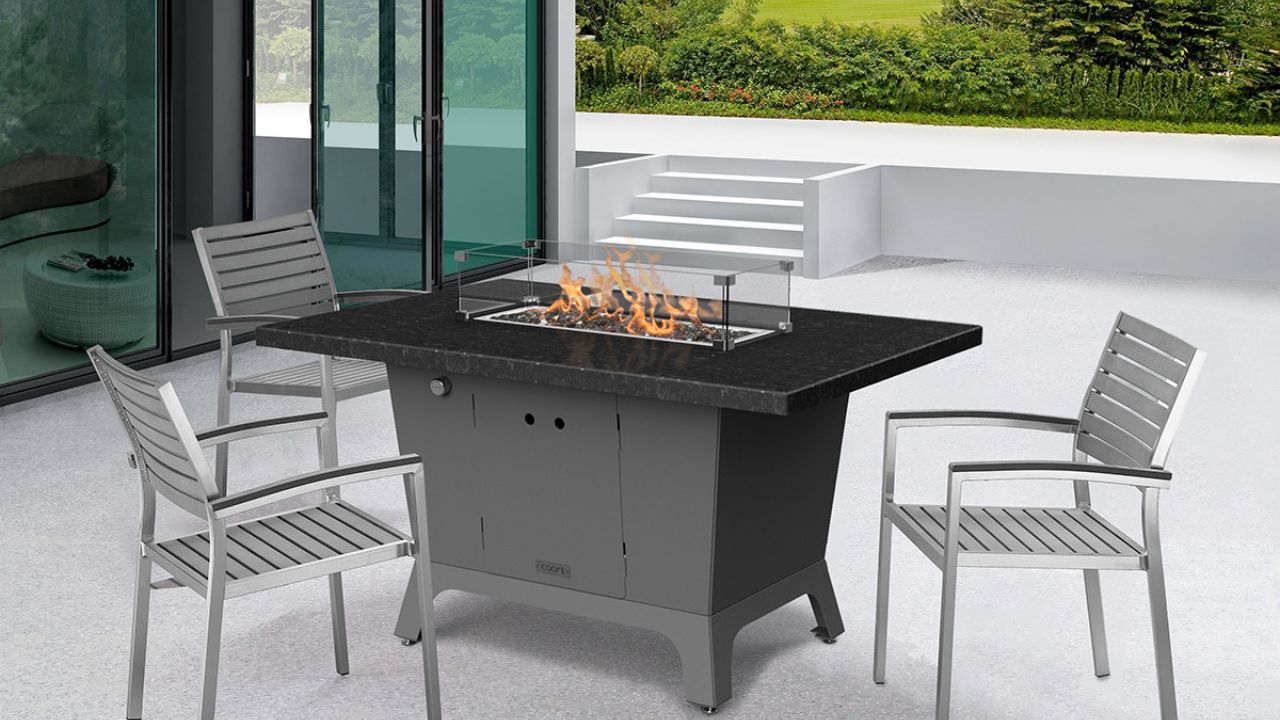
Corporate events demand venues that facilitate meaningful connections. Corporate event fire pits transform standard meeting spaces into premium networking environments, driving measurable booking increases and repeat business. A luxury fire table creates an especially effective gathering point, offering flat surface space for drinks and materials while drawing attendees into natural conversation clusters. Commercial venues report 15-25% booking growth after installing fire pit amenities, with installations paying back within 2-3 years through higher utilization and premium pricing.
This guide provides commercial contractors with specifications, clearance requirements, safety protocols, and event strategies for managing 50-200+ attendee corporate events across multiple fire pit stations.
Key Takeaways
- Corporate venues with fire pit amenities report 15-25% booking increases and command 10-20% premium pricing with 2-3 year ROI payback
- Commercial installations require 5-6 feet structural clearances (gas) or 10-15 feet (wood), permits ($100-500 annually), and 1 attendant per 2-4 units
- Fire pits distribute 50-200+ guests across multiple stations, preventing bottlenecks and extending dwell time 30-60 minutes for deeper networking
- Permit timelines require 60-90 day advance planning: 2-4 weeks for operational permits, 30-90 days for special event permits
- Complete installations cost $10,000-$100,000+, with primary drivers being unit quantity, staffing requirements, fuel duration, and permitting complexity
Are Fire Pits A Good Fit For Corporate Events For Commercial Contractors?
Yes. Commercial contractor fire pit solutions deliver measurable venue performance increases. Venues with fire pit amenities see 15-25% booking growth, command 10-20% premium pricing, and achieve 30-40% repeat booking increases. Commercial installations require professional-grade units (60,000-150,000 BTU), multiple stations for crowd distribution, and trained supervision.
Corporate fire pits serve networking receptions, client appreciation events, team building sessions, and product launches for 50-200+ attendees. Commercial-grade units output 60,000-150,000 BTU and require multiple stations to distribute crowds effectively. One attendant supervises 2-4 units depending on layout and event intensity.
Venues achieve 15-25% booking increases, charge 10-20% premium pricing, and see 30-40% repeat booking growth. Installations pay back within 2-3 years through higher utilization and premium event pricing.
What Does "Fire Pits For Corporate Events" Mean For Commercial Contractors?
Corporate fire pits serve networking receptions, client appreciation events, team building sessions, and product launches for 50-200+ attendees. Commercial-grade units output 60,000-150,000 BTU and require multiple stations to distribute crowds effectively. One attendant supervises 2-4 units depending on layout and event intensity.
Business entertainment design centers on creating conversation zones that encourage relationship building. Fire pits naturally cluster 4-10 person groups while preventing the single-point crowding common at standard bar or buffet setups.
Venues achieve 15-25% booking increases, charge 10-20% premium pricing, and see 30-40% repeat booking growth. Installations pay back within 2-3 years through higher utilization and premium event pricing.
What Is The Difference Between A Decorative Fire Feature And An "Open Flame" Use Case?
|
Fire Feature Type |
Venue Acceptance |
Clearances |
Best For |
|
Enclosed Gas Tables |
Easy |
5-6 feet from structures |
Client mixers, VIP lounges |
|
Open Flame Wood |
Moderate-Hard |
10-15 feet from structures |
Team building, casual events |
Enclosed gas tables gain easier venue approval and require less clearance. Fire pit tables offer standing-height conversation zones ideal for cocktail-style networking. Open flame wood units need more space but deliver traditional campfire ambiance for team building and casual corporate gatherings.
Choose enclosed gas when: Venue policies restrict open flames, clearance space is limited, or events emphasize modern aesthetics.
Choose open flame when: Outdoor space allows 10-15 feet clearances, traditional ambiance matches event branding, or team building activities benefit from wood-fire experience.
What Does "Site-Ready" Mean For A Contractor-Hosted Event?
Site-readiness ensures safe operation and regulatory compliance for corporate events. Every installation requires accessibility compliance, proper clearances, fire suppression, trained staff, and clear egress routes.
Site-Readiness Checklist:
- ADA pathways maintained (36" minimum)
- Fire features: 5-6 feet from structures, 3 feet circulation
- Extinguishers every 75 feet
- Staffing: 1 attendant per 2-4 units
- Fuel staging (concealed propane/accessible gas shutoffs)
- Egress routes clear and marked
Documentation includes site plans showing all clearances, equipment certifications, staffing schedules, and emergency procedures. Missing elements trigger permit denials and venue liability exposure.
What Event Goals Do Fire Pits Support Best?
|
Goal |
How Fire Supports It |
Best Format |
|
Networking |
4-10 person conversation pods |
Multiple station cocktail reception |
|
Hospitality |
30-40% repeat booking increase |
Client appreciation events |
|
Brand Presence |
Custom surrounds, projection mapping |
Product launches |
Fire pits create natural gathering points for 4-10 person conversation groups. Capacity sizing: 36-42" diameter units accommodate 4-6 people, 55" units seat 6-10 people, and 60"+ linear installations handle 10-16+ people per station.
Luxury business fire pit installations elevate brand perception through custom surrounds displaying corporate logos, premium materials matching interior design, and integrated technology for presentations or product demonstrations.
How Do Fire Pits Change Guest Flow Compared To Standard Setups?
Fire pits eliminate single-point crowding by creating multiple gathering nodes. For 50-200+ guests, distributed stations prevent bar and food bottlenecks while guiding natural circulation. Guests migrate between fire pit zones instead of clustering in one area.
Problems Solved: Overcrowding, awkward mingling, unused venue space
Result: Guests stay 30-60 minutes longer, enabling deeper networking and relationship building. Multiple stations distribute crowds evenly across the venue footprint.
Event lighting with fire pits creates a layered ambiance. LED pathway lighting guides circulation between stations while fire glow provides focal points. Uplighting on surrounds or nearby landscaping enhances visual impact without competing with fire features.
Which Fire Pit Formats Work Best For Corporate Events?
Fire tables and fire bowls serve different event types. Standing-height fire tables suit cocktail circulation and bar-style mingling. Ground-level fire bowls accommodate seated conversations and extended networking sessions.
Fire Table vs Fire Bowl
|
Factor |
Fire Table |
Fire Bowl |
|
Style |
Standing-height, modern |
Ground-level, traditional |
|
Best For |
Cocktail circulation |
Extended conversations |
|
Capacity |
4-6 people |
6-16+ people (larger models) |
Choose fire tables when: Events emphasize networking circulation, limited space requires vertical design, or bar-style mingling is preferred.
Choose fire bowls when: Extended conversations are prioritized, seating capacity exceeds 6+ per station, or traditional aesthetics match event branding.
When Should You Choose Propane Versus Natural Gas?
Propane offers portability and fast setup for temporary events. Natural gas provides unlimited runtime and lower operating costs for recurring or permanent installations. Event duration and venue infrastructure determine the optimal choice.
|
Factor |
Propane |
Natural Gas |
|
Setup |
Fast, portable |
Requires gas line |
|
Runtime |
4-8 hours/tank |
Unlimited |
|
Cost |
$2.50-5/hour |
$1.50-3/hour |
|
Best For |
Pop-up events |
Recurring/permanent |
Choose propane when: Events are temporary, venue lacks gas infrastructure, or setup flexibility is required. Office holiday fire pit ideas often feature portable propane units for seasonal flexibility.
Choose natural gas when: Events recur at the same location, budget prioritizes long-term cost efficiency, or runtime exceeds 8 hours.
What Setups Work Best On Different Surfaces?
Surface type dictates unit selection and safety requirements. Concrete and pavers support built-in or heavy portable units. Turf requires non-combustible platforms to prevent heat damage and fire spread.
|
Surface |
Requirements |
Best Units |
|
Concrete/Pavers |
Level check, heat mats |
Built-in or heavy portable |
|
Turf |
4x4' non-combustible platform |
Portable only |
Wood decks and composite materials require manufacturer-approved heat shields and 12+ inch clearances. Always verify surface load capacity before installing permanent units. Parts and accessories including heat shields and protective mats prevent surface damage.
What Clearance And Spacing Rules Should You Expect?
Clearances prevent fire spread, ignition, and burns. Gas units require 5-6 feet from structures; wood-burning units need 10-15 feet. Overhead clearances under tents or pergolas must maintain 7 feet minimum. Seating positions 18-20 inches from fire pit edges to prevent accidental contact.
|
Clearance Type |
Requirement |
Why |
|
Structures |
5-6 feet (gas), 10-15 feet (wood) |
Fire spread prevention |
|
Overhead |
7 feet under tents/pergolas |
Ignition prevention |
|
Seating |
18-20 inches from edge |
Burn prevention |
|
Egress |
36-inch pathways |
Emergency evacuation |
ADA compliance requires 36-inch minimum pathways for accessibility. Fire extinguishers must be positioned every 75 feet. Winter heating solutions require additional wind protection and fuel considerations for cold-weather events.
What Permits Are Commonly Required?
Corporate events with fire features require operational permits from the fire marshal and special event permits from the municipality. Timelines range from 2-4 weeks for operational permits to 30-90 days for special events. Costs typically run $100-500 annually.
|
Permit Type |
Issued By |
Timeline |
|
Operational |
Fire marshal |
2-4 weeks |
|
Special Event |
Municipality |
30-90 days |
Triggers: Public events with 50-100+ attendees, tents containing fire features, or fuel volume thresholds exceeding local regulations. Maintain documentation for insurance and liability protection.
Start permit applications 60-90 days before events. Fire marshals review site plans, clearances, supervision ratios, and emergency procedures before approval. Missing documentation delays permits and risks event cancellation.
What Do Special-Event Fire Guidelines Require?
Special-event fire guidelines mandate site plans, fire suppression, supervision ratios, weather protocols, and liability insurance. Fire marshals review clearances, extinguisher placement, and emergency procedures before issuing permits. Compliance protects venue liability and ensures safe operation.
Compliance Checklist:
- Site plan (locations, clearances, egress)
- Extinguisher plan (every 75 feet)
- Supervision plan (1 attendant per 2-4 units)
- Weather shutdown protocol (31 MPH winds)
- COI ($1M-$2M general liability)
Submit documentation 60-90 days before events to allow permit processing time. Missing items delay approval and risk event cancellation. Holiday fire pit hosting requires seasonal permit coordination for recurring annual events.
When Do Open-Burning Restrictions Affect Events?
Open-burning restrictions activate during burn bans, air quality alerts, drought declarations, wildfire season, or under venue policies. Wind thresholds determine safe operation: 10 MPH maximum for normal operation, mandatory shutdown at 31 MPH to prevent flame spread and ember transport.
Common Triggers: Burn bans, air quality alerts, drought declarations, seasonal restrictions (wildfire season), venue policies
Wind Thresholds: Safe operation up to 10 MPH, mandatory shutdown at 31 MPH
Monitor local fire department alerts and National Weather Service wind forecasts. Establish shutdown protocols in advance to protect guests and property. Enclosed gas units gain easier approval during restricted periods than open flame wood-burning installations.
What Insurance and Documentation Are Required?
Corporate fire pit events require $1M-$2M general liability coverage, site plans showing clearances, equipment certifications (CSA/UL), staffing plans, and emergency procedures. Insurance costs run $500-$2,000 annually depending on event frequency and coverage limits.
Documentation Checklist:
- COI: $1M-$2M general liability
- Site plan with clearances
- Equipment specs (CSA/UL certifications)
- Staffing plan
- Emergency procedures
Venues require COI verification before contract signing. Missing certifications void insurance coverage and expose hosts to liability. Maintain digital copies for permit applications and venue coordination.
What Contract Terms Reduce Risk For Hosts?
Risk-reducing contracts grant hosts shutdown authority, establish weather protocols, define liability boundaries, and protect against regulatory changes. Vendors should provide barriers, supervision, and heat protection as standard inclusions.
Key Terms:
- Safety: Host shutdown authority, vendor provides barriers/supervision
- Weather: Wind shutdown at 31 MPH, burn ban contingency
- Liability: Vendor liable for surface damage, provides heat protection
- Cancellation: No penalty if permits denied or regulatory changes
Choose vendors who: Include safety equipment in base pricing, provide written protocols immediately, and accept liability for equipment-caused damage.
Avoid vendors who: Claim permits are unnecessary, provide vague insurance information, or lack documented staffing plans.
How Much Do Fire Pits Cost And What Drives Price?
Fire pit costs range from $500 for individual commercial units to $100,000+ for complete multi-station installations. The number of units creates the largest cost impact, followed by duration (fuel costs), staffing requirements, and permitting complexity.
Cost Ranges:
- Individual commercial units: $500-$5,000+
- Commercial fire tables: $2,000-$8,000
- Complete installations: $10,000-$100,000+
Top Cost Drivers:
- Number of units (biggest impact)
- Duration/fuel needs ($1.50-5/hour)
- Staffing (1 per 2-4 units)
- Permitting complexity ($100-5,000+)
Permanent installations amortize costs across multiple events. Temporary setups carry higher per-event costs but eliminate long-term maintenance. Budget planning should account for annual permit renewals, fuel consumption, and supervision labor.
How Many Fire Features Do You Need?
Fire feature quantity scales with guest count. Allow 2-3 units for 25-50 guests, 3-5 units for 50-100 guests, and 5-8+ units for 100-200 guests. Each unit requires dedicated attendant supervision at 1 attendant per 2-4 units.
|
Guest Count |
Fire Features |
Attendants |
|
25-50 |
2-3 |
1 |
|
50-100 |
3-5 |
1-2 |
|
100-200 |
5-8+ |
2-4 |
Distribute units across venue zones to prevent overcrowding. Calculate capacity per unit: 4-6 people for 36-42" units, 6-10 people for 55" units, 10-16+ people for 60"+ linear installations.
What Seating Layouts Work Best?
Seating layouts match event objectives. Pod clusters (12-15' diameter) optimize networking circulation. Linear lounges (10-12' wide) create contemporary VIP zones. Rings (16-20' diameter) focus attention for presentations or demos.
- Pod Clusters: 12-15' diameter, best for networking
- Linear Lounge: 10-12' wide, best for VIP/contemporary events
- Rings: 16-20' diameter, best for presentations
- Lighting: LED pathways, professional uplighting, backlit surrounds
- Add-ons: Hot beverage station, attended s'mores, photo backdrop
Maintain 36-inch pathways between layouts for ADA compliance and emergency egress. Position seating 18-20 inches from fire pit edges. Layered lighting combining fire glow with LED accents creates professional atmosphere without overwhelming conversation zones.
Planning Process (8 Steps)
Step 1: Confirm Rules And Permits (60-90 Days Before)
Verify venue fire pit policies, fire marshal requirements, and fuel type restrictions. Identify permit timelines: 2-4 weeks for operational permits, 30-90 days for special event permits. Submit applications immediately to avoid delays.
Contact local fire marshal office with preliminary site plans. Clarify specific clearance requirements, fuel restrictions, and supervision ratios before finalizing layouts or vendor contracts.
Step 2: Choose Fire Format And Fuel
Conduct site assessment for wind exposure and gas access. Match fire format to guest profile: families prefer enclosed units, executives prefer linear designs. Compare fuel logistics: propane offers 4-8 hour runtime, natural gas provides unlimited operation.
Budget considerations: propane costs $2.50-5/hour with 4-8 hour tanks requiring mid-event swaps. Natural gas costs $1.50-3/hour with unlimited runtime but requires permanent gas line installation.
Step 3: Map Fire Pit Zones
Define conversation pods based on guest count (50-100 guests = 3-5 units). Mark 5-6 foot clearances from structures and maintain 36-inch egress pathways. Distribute units to prevent single-point crowding.
Create site plan drawings showing exact fire pit locations, clearance measurements, extinguisher positions, and circulation pathways. Submit plans to fire marshal for approval before proceeding with installations.
Step 4: Build Safety Plan
- Position extinguishers every 75 feet
- Assign 1 attendant per 2-4 units
- Establish wind monitoring (31 MPH shutdown threshold)
Document procedures in writing for staff training and permit applications. Include emergency contact numbers, shutdown protocols, and evacuation procedures. Conduct pre-event staff training on fire safety and guest management.
Step 5: Finalize Documentation
- Verify COI ($1M-$2M coverage)
- Obtain site plan approval
- Confirm CSA/UL certifications
- Secure all required permits
Submit complete documentation packages 30 days before events. Missing items trigger permit denials and event cancellations. Maintain physical and digital copies accessible during events for inspection.
Step 6: Weather Contingencies
Establish wind protocol: 10 MPH maximum for safe operation, mandatory shutdown at 31 MPH. Monitor burn ban alerts through local fire departments. Prepare alternative heating plans for weather-forced closures.
Check 10-day weather forecasts starting two weeks before events. Have backup plans for patio heaters or enclosed flame units if burn bans or high winds are predicted.
Step 7: Event Operation
Position attendants with clear sightlines to all units. Monitor capacity limits: 4-6 guests per small unit, 10-16+ per large unit. Schedule propane tank swaps during low-traffic periods to minimize disruption.
Track guest distribution across fire pit zones. Redirect crowds from overloaded stations to underutilized areas. Monitor wind conditions hourly and implement shutdown protocols if thresholds are exceeded.
Step 8: Teardown And ROI
Allow 30-60 minute cool-down before moving units. Document surface conditions and equipment status. Track performance metrics: guest dwell time, repeat bookings, networking meetings scheduled.
Calculate ROI by comparing event booking rates, premium pricing achieved, and repeat business generated. Use data to refine future fire pit quantities, layouts, and operational procedures.
Choosing A Corporate-Ready Vendor
Corporate-ready vendors provide written protocols, staffing plans, and immediate documentation. Ask specific questions to verify experience and compliance standards before contracting.
Key Questions:
- "Who supervises and what's the attendant ratio?" (Expect: 1 per 2-4 units)
- "What's your wind shutdown protocol?" (Expect: Written procedures, 31 MPH)
- "What documentation do you provide?" (Expect: COI, CSA/UL certs immediately)
Green Flags: Requests site plan early, includes barriers as standard, provides written protocols
Red Flags: "Never needed permits," vague on insurance coverage, no staffing plan
Choose vendors with commercial event experience and established fire marshal relationships. Verify references from similar-scale corporate events. Contractors should evaluate vendors on documentation quality, not just pricing.
When To Avoid Fire Pits
Fire pits are unsafe during active burn bans, persistent high winds (>20 MPH), inadequate clearance space, or when supervision is impossible. Alternatives include patio heaters (no permits), enclosed flame units (easier approval), or LED flame effects (zero risk).
No-Go Conditions:
- Active burn ban
- Wind consistently >20 MPH
- Space too tight for 5-6 foot clearances
- No supervision feasible
Alternatives: Patio heaters (no permits required), enclosed flame units (easier venue approval), LED effects (zero operational risk)
Prioritize guest safety over aesthetics. Postpone or modify events when conditions prevent safe fire pit operation. Maintain backup plans for weather contingencies or regulatory restrictions.
Contractor-Specific Use Cases
Fire pits enhance contractor-hosted events beyond standard corporate functions. Groundbreakings, ribbon cuttings, client open houses, trade partner appreciation, and crew recognition events gain atmosphere and extended networking time through fire pit amenities.
Best Events: Groundbreaking ceremonies, ribbon cutting celebrations, client open houses, trade partner appreciation, crew recognition
Site Walk Entertainment: Fire pit lounges positioned post-tour extend conversations 30-60 minutes. Stage project renderings nearby to maintain engagement and encourage feedback discussions.
Recruiting/Retention: "Bring-a-guest" recruitment nights showcase company culture. Safety milestone celebrations recognize crew achievements while building team cohesion. Fire pits create informal settings that reduce hierarchy barriers.
Fire Pits Deliver Measurable Corporate Event ROI
Corporate event fire pits generate 15-25% booking increases, 10-20% premium pricing, and 30-40% repeat booking growth. Success requires proper planning, documentation, and execution.
Decision Checklist:
- Goal: Networking/hospitality (drives 30-40% repeat bookings)
- Site: Clearances achievable
- Permits: 30-90 day lead time available
- Budget: $10,000-$100,000+ supported
Priority Actions:
- Confirm fire marshal rules (60-90 days before)
- Verify clearances and egress (walk site)
- Secure a vendor with proper documentation
- Monitor burn bans through event day
Quote Essentials: Itemized costs, staffing plan (1 per 2-4 units), safety equipment, shutdown protocol, permit support level
Ready to add fire pit amenities to your commercial venue? Contact SoCal Fire Pits for California-engineered commercial installations with full permit and technical support.