
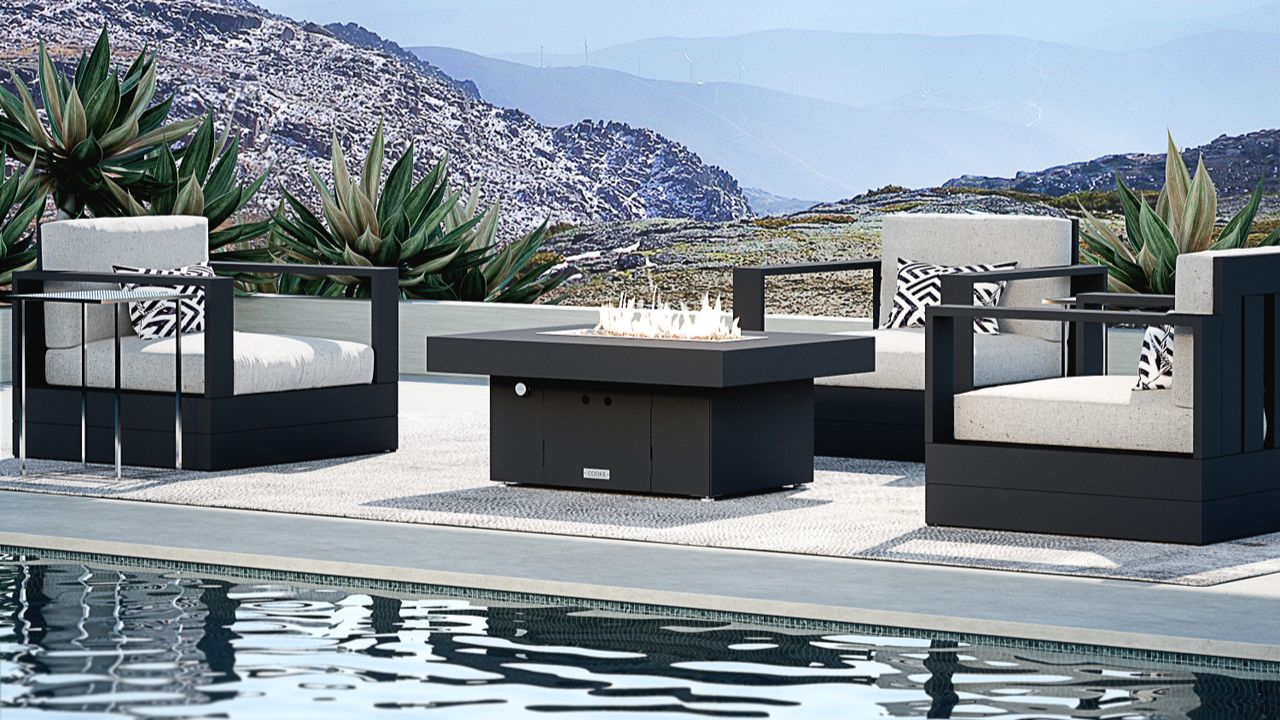
The fire pit industry stands at a technology inflection point. Premium buyers now demand smoke-free performance, instant ignition, and smart integration. These features are no longer upgrades but baseline expectations, particularly for products like the modern fire table where clean operation and app-controlled convenience define the category. Meanwhile, air quality regulations and safety standards reshape what products can be legally shipped and where they can operate. Leaders who understand the technical roadmap from combustion architecture to certification timelines will capture market share. Those who treat innovation as marketing theater will face costly redesigns and certification failures.
This industry leaders guide decodes the technical decisions driving next-generation fire pit development, from measurable KPIs and fuel economics to compliance realities and prototype validation protocols that separate future design trends from vaporware.
Key Takeaways
- Non-negotiable performance metrics premium buyers expect (smoke reduction, ignition speed, cleanup time)
- Combustion architecture tradeoffs across passive secondary burn, forced-air assist, and staged airflow systems
- Fuel strategy economics comparing wood, pellets, propane, and natural gas for different market segments
- Smart control capabilities that deliver real value versus features that drive returns
- Technical roadmap structure for 12-month, 24-month, and 36-month development horizons
What Is Driving The Next Wave Of Fire Pit Innovation Right Now?
Customer expectations have shifted from "nice outdoor feature" to non-negotiable performance standards. Premium buyers demand smoke-free experiences, reduced visibility, less eye irritation, and minimal lingering odor. Heat must be directional and felt within a usable radius, not wasted upward. Time-to-flame expectations have compressed: instant ignition, fast progression to quality flame, reliable relight. Ease of use now includes simple setup, clean fuel loading, and low-mess cleanup. Aesthetics extend beyond the unit itself; flame appearance, sound profile, and integration with outdoor lighting systems all matter. Ownership costs drive decisions: durability, minimal maintenance, and practical storage or portability.
External pressures compound these demands. Air quality regulations and nuisance complaints force manufacturers toward "responsible burning" solutions, especially in urban markets. Seasonal burn restrictions require regional product strategies. Safety standards continue tightening around surface temperatures, stability under wind load, and child-pet risks. Retailer compliance demands comprehensive documentation and liability warnings.
In-Market Patterns Signaling Innovation Direction
|
Pattern |
What it enables |
Cost/complexity impact |
Best-fit segment |
Risk/downsides |
|
Smokeless secondary burn |
Cleaner combustion, reduced visible smoke |
Medium - requires precise airflow engineering |
Premium residential, hospitality venues |
Performance varies with wind; user must understand fuel loading |
|
Double-wall airflow |
Passive smoke reduction through convection |
Low-medium - manufacturing precision required |
Mid-to-premium residential |
Adds weight; requires larger footprint |
|
Fan-assisted combustion |
Consistent burn, rapid ignition, smoke control |
High - adds electronics, power, service complexity |
Premium residential, commercial settings |
Noise, power dependency, additional failure points |
|
Quick-clean ash systems |
Reduced maintenance time, improved user experience |
Low - design and materials focus |
All segments value this |
May compromise structural integrity if poorly executed |
|
Premium finishes/coatings |
Aesthetic appeal, corrosion resistance |
Medium - coating quality and application critical |
Luxury residential, hospitality |
UV degradation, peel risk, maintenance requirements |
What Does "Next-Generation Fire Pit" Mean In Technical Terms?
Next-generation products meet measurable performance thresholds, not marketing claims. Smoke output drives primary complaints and health concerns, measured through visual opacity ratings and particulate sampling under controlled conditions.
- Target: minimize visible smoke under typical use. Ignition success rate impacts user frustration and warranty costs, tracked across 100+ attempts under varied conditions.
- Target: >95% success in normal dry conditions. Time-to-flame defines convenience, measured from ignition to sustained visible flame.
- Target: <3 minutes to quality flame. Heat output determines functional value, measured in BTU for gas units, thermal imaging for wood, and user-perceived warmth surveys.
- Goal: maximize radiant heat within a 6-8 foot radius. Surface temperature at touch points addresses safety, thermal sensors track handles, rims, and outer walls during operation.
- Target: touchable surfaces below 140°F. Wind resilience predicts real-world performance, field tested in 5-15 mph wind with gust simulation.
- Target: stable flame and low smoke in 10 mph sustained wind. Cleanup time drives repeat usage, timed ash removal and surface cleaning in field conditions.
- Target: <5 minutes for routine maintenance.
Smoke-Reduction Design Approaches And Tradeoffs
|
Approach |
Mechanism |
User-visible benefit |
Engineering tradeoff |
|
Secondary combustion ring |
Pre-heated air channels ignite smoke particles at high temps |
Dramatically cleaner flame, less visible smoke |
Requires precise air gap tolerances; sensitive to fuel loading |
|
Double-wall convection |
Insulated outer wall creates natural updraft, pulls air through burn zone |
Passive smoke reduction, no power needed |
Heavier unit, larger footprint, higher material cost |
|
Fan-assisted airflow |
Electric blower forces optimal air volume into burn zone |
Most controllable, rapid ignition, lowest smoke |
Power dependency, noise, electronics in harsh environment |
|
Optimized grate + ash separation |
Grate design promotes airflow while containing fuel; ash drops cleanly |
Easier cleanup, sustained airflow throughout burn |
Grate can warp or clog; ash pan sizing tradeoffs |
Understanding "Controlled Combustion" For Outdoor Fire Pits
Controlled combustion maintains stable, predictable burning despite variable inputs. Open-loop systems respond to fixed settings without feedback. Closed-loop systems use sensors to automatically adjust conditions. True closed-loop control remains rare in outdoor fire pits due to uncontrollable variables, wind, fuel moisture, and irregular wood geometry.
Innovation previews show next-generation designs target stability and repeatability, predictable response to user inputs, and consistent performance within reasonable conditions. This differs from indoor-appliance precision. The goal: minimize performance variation when users follow basic protocols, not eliminate all environmental effects.
Which Fuel Strategies Will Dominate Innovation, And How Should Leaders Compare Them?
Wood-burning held 47% market share in 2024, but propane demand grows at 8.8% CAGR from 2025-2030. The shift reflects convenience and cleaner-burning preferences gaining market share in the broader fire pit tables category.
Fuel Type Comparison For Product Strategy Decisions
|
Fuel |
Controllability |
Startup convenience |
Emissions/smoke perception |
Ideal use case |
|
Split wood |
Low - variable moisture, size, species affect burn |
Moderate - requires kindling, 10-15 min to established fire |
High smoke potential; highly variable based on wood quality |
Traditional experience seekers; users with wood access; low-density areas |
|
Pellets |
Medium - consistent size and moisture when quality-controlled |
Moderate-high - easier lighting than split wood, 5-10 min ignition |
Lower smoke than split wood when dry; more consistent combustion |
Users wanting wood aesthetics with less smoke; automated feed systems |
|
Propane |
High - precise BTU control via valve/regulator |
High - instant ignition, flame on demand |
Minimal visible smoke; clean combustion byproducts |
Convenience-focused users; regions with burn restrictions; hospitality/commercial |
|
Natural gas |
Highest - continuous supply, precise control |
Highest - instant on/off, no refueling |
Minimal visible smoke; cleanest combustion |
Permanent installations; luxury residential; commercial properties with gas infrastructure |
How Fan-Assisted Designs Change Fuel Economics And Experience
Fan-assisted combustion introduces forced air into the burn zone, fundamentally altering performance characteristics. Improvements: visible smoke decreases dramatically through more complete combustion. Ignition reliability increases by overcoming cold-start challenges. Burn stability improves in variable wind. Fuel efficiency can increase 20-30% through complete combustion.
Downsides: noise becomes a consideration (40-50 decibels). Power dependency creates a failure point. System complexity increases with electronics exposed to heat and weather. Service requirements escalate, fans accumulate ash, bearings wear, electronics fail.
Situations Where Gas Wins
Gas dominates in smoke-sensitive regions or areas with frequent burn alerts. Cities like Los Angeles and Denver regularly ban wood burning during poor air quality days. Hospitality and venue settings require repeatable, on-demand operation without 15-minute startup sequences. Convenience-focused customers choose gas for zero ash removal, no wood storage, and no lighting failures. "Always-ready" premium experiences benefit from instant-on capability and smart home integration potential for luxury tech fire pits.
What Are The Core Technology Pillars Leaders Should Track And Invest In?
Product architecture decisions determine market fit and profitability before tooling begins. Leaders must evaluate combustion systems, ignition reliability, and maintenance design against specific segment requirements and cost structures.
Combustion/Airflow Architectures And Application Fit
|
Architecture |
Best for |
Smoke outcome |
Cost/complexity |
Key risks |
|
Passive secondary burn |
Wood-burning premium residential |
60-80% smoke reduction vs traditional in calm conditions |
Medium - precise air channels, thermal engineering |
Performance degrades in wind; requires user education |
|
Forced-air assist |
Premium residential and commercial |
80-90% smoke reduction; most consistent across conditions |
High - electronics, fan integration, weatherproofing |
Noise, power dependency, component failures |
|
Staged airflow |
Mid-to-premium residential |
50-70% smoke reduction; depends on geometry and fuel quality |
Medium - multiple air intake zones, baffle design |
User adjustment required; suboptimal settings increase smoke |
|
Wind-compensation geometry |
Coastal, windy regions; open spaces |
Maintains stable burn in 10-15 mph winds |
Low-medium - shield design, airflow modeling |
Reduced heat projection; can feel "enclosed" |
Ignition/Re-Ignition Design Options That Reduce Returns
Dual igniters at different fuel bed locations provide backup if one fails or encounters wet spots. Pre-heat elements or extended spark duration overcome damp kindling and cold surfaces. Auto-retrigger ignition activates if flame sensors detect loss during session. Audible clicks, LED indicators, or app notifications confirm ignition sequence is active, eliminating user uncertainty about whether the system is working.
Ash/Soot Management Features Creating Durable Differentiation
Removable ash pan or cleanout door allows tool-free access for quick disposal without tipping the entire unit. Raised grates with proper spacing drop ash while retaining burning embers. Designs targeting sub-5-minute routine cleanup versus 15+ minutes for traditional fire pits create measurable user satisfaction advantages.
What Safety And Certification Realities Shape Product Architecture And Time-To-Market?
Product category definitions in safety standards determine permissible features, required testing, and sales channels. A "portable outdoor fire pit" faces different requirements than a "patio heater," even with similar combustion technology. These definitions influence design choices early; stability testing may dictate base diameter, weight distribution, and whether wheels are allowed.
Early compliance decisions reduce expensive redesign loops. Discovering near-complete designs require $80,000 modifications or 6-month testing delays destroys project economics. Standards shape scope and permissible features, not just labeling requirements.
"Design-Input" Hazard Scenarios That Must Be Engineered Out
Tip-over and stability requirements mandate resistance to 50 lb lateral force from child-pet contact. Handle and rim surfaces cannot exceed 140°F during normal operation. Fuel containment must prevent spreading if the unit tips. Wind-driven embers and ash cannot travel beyond 3-foot radius. Gas systems require double-shutoff valves and an automatic flame-out shutoff. Child-pet interaction risks demand elimination of pinch points, rounded edges, and lockable ignition controls.
What "Connected" And "Smart Control" Capabilities Are Real Value Versus Gimmicks?
Smart technology adoption grows from a 35% base, with upgrades costing $1,500-$2,500. However, outdoor reliability demands "no Wi-Fi" default design; connectivity failures cannot disable core functions in smart fire pits.
Outdoor-Reliable Control Modes
Manual-first controls operate all critical functions without phone or network dependency. App integration adds convenience but never becomes the sole interface. LED indicators show system status directly on the unit, clear state feedback without requiring a phone. Safe defaults activate when connectivity fails, continuing at last manual setting or safe default with no sudden shutdowns.
Proven Feature Demand vs "Nice-To-Have"
Proven (users request and regularly use): Fan speed control for smoke management. Simple heat-flame control via app or dial. Timers for automatic shutdown. Safety shutoffs for over-temp, tip-over, and inactivity, all available through quality parts and accessories.
Conditional (segment-dependent): Recipes and modes appeal to enthusiasts but see low mainstream adoption. Ambient lighting sync is valued in hospitality settings, rarely used elsewhere.
Usually weak (high cost, low engagement): Social features see initial trial but minimal repeat usage. Complex automations create more confusion than convenience.
How Should Industry Leaders Evaluate Fire Pit Innovations From Concept To Launch Readiness?
The global fire pit market is projected to reach $13.37 billion by 2033 at 5.9% CAGR, rewarding leaders who derisk faster than competitors in this fire pit technology landscape.
Fast Concept Risk Classification Matrix
|
Risk category |
What to assess |
Evidence needed |
Mitigation |
|
Safety |
Tip-over stability, surface temps, ember containment |
Pass/fail on industry-standard tests; thermal imaging |
Early test lab engagement; simulate worst-case scenarios |
|
Compliance |
Certification pathway, timeline, cost |
Pre-check with certifying body; similar product precedents |
Compliance review in concept phase; 15-20% timeline contingency |
|
Supply chain |
Component availability, lead times, dependencies |
Vendor quotes for critical parts; alternate source ID |
Dual-source critical components; design around common parts |
|
Manufacturability |
Tolerances at scale, assembly complexity, tooling cost |
Prototype with production methods; manufacturing partner input |
Design-for-manufacturing review before tooling |
Minimum Prototype Evidence Before Roadmap Approval
Lab smoke-combustion tests require 20+ burns with controlled fuel, demonstrating <20% variance to prove stable design. Ignition reliability testing spans 50+ attempts across dry-damp fuel, cold starts, and windy conditions, targeting >90% success. Thermal safety checks run 2+ hour burns confirming touchpoints stay below 140°F. Wind exposure trials field test in 10-15 mph natural winds, documenting flame stability and smoke increase. Cleanup validation times average users, targeting <5 minutes or triggering redesign.
"Red Flag" Signals Predicting Poor Outdoor Performance
Smoke rebound in mild wind, 5-7 mph, causing visible smoke to double, indicates a lack of real-world robustness. Thermal runaway with unexpected flame-heat increases signals unstable combustion. High noise complaints mean unprompted fan noise mentions predict commercial returns. Frequent relight failures, 1 in 5 ignition attempts needing retries, signal unreliability.
Warping or rattling after heat cycling, any permanent deformation after 10-15 burns, signals inadequate materials, particularly relevant for concrete fire pits where material integrity is critical.
What Technical Roadmap Makes Sense Over 12, 24, And 36 Months?
Product evolution timelines must balance immediate revenue improvements against platform investments that enable future differentiation. Leaders should structure roadmaps around shippable customer value at each horizon.
12-Month Shippable Improvements (Low Platform Risk)
|
Improvement |
Customer value |
Engineering effort |
Risk |
|
Cleaner burn tweaks |
Reduce visible smoke 10-20% via airflow refinement |
Low - baffle adjustments, vent repositioning |
Low - proven approaches |
|
Faster ignition |
Reduce time-to-flame from 5 min to 2-3 min |
Low - modify fuel bed geometry, upgrade igniter |
Low - mature technology |
|
Better cleanup |
Add removable ash pan, smooth surfaces for 30% faster cleaning |
Medium - tooling for pan, revised assembly |
Low - mechanical only |
|
Improved coatings |
Extend appearance life 2-3 years with UV-resistant powder coat |
Low - supplier change, application tuning |
Medium - coating adhesion validation |
24-Month Platform Investments (Medium Risk, Scalable Payoff)
|
Platform bet |
Enables |
Required capabilities |
Dependency risks |
|
Modular combustion core |
Swap wood/gas/hybrid modules in same chassis |
Standardized fuel interface, sealed connections |
Sealing integrity across fuel types |
|
Improved power system |
Supports fan-assist, smart controls, LED from unified battery/solar |
Weatherproof power management, charge monitoring |
Battery longevity in heat; solar durability |
|
Robust control board |
Single controller for ignition, fan, sensors, connectivity |
Embedded firmware, sensor integration, thermal protection |
Firmware bugs; connectivity failures; thermal failures |
36-Month Bets (Higher Uncertainty) With "Signals To Watch"
|
Bet |
Why it could win |
Trigger signals |
Kill criteria |
|
Adaptive control |
AI adjusts airflow for smokeless in variable conditions |
Smoke sensor tech drops below $30; proof shows 90%+ reduction |
Field reliability <80% after 2 years or sensor cost >$75 |
|
Advanced sensing |
Multi-sensor suite enables diagnostics, predictive maintenance |
IoT prices drop 40%; customer acceptance reaches 60%+ |
<20% connect app after 90 days; no service ROI |
|
Novel fuels/hybrids |
Hydrogen fuel cells or advanced bioethanol offering zero emissions |
Hydrogen infrastructure expands; bioethanol costs drop to propane parity |
Fuel cost >3x propane per BTU; certification adds >18 months |
What Are The Most Important Buyer And Stakeholder FAQs Leaders Should Be Ready To Answer?
"Smokeless In Real Wind" Expectations And Honest Claims
"Smokeless" operationally means 80-90% smoke reduction versus traditional fire pits in calm to moderate conditions (<10 mph). Advanced secondary combustion creates nearly invisible exhaust when optimal. However, smoke returns in stronger winds (15+ mph sustained) or gusts disrupting controlled airflow, particularly with wood fuel.
Honest messaging acknowledges limitations: "Our design minimizes smoke in typical outdoor conditions, but wind and fuel quality affect performance. Always use dry, seasoned wood and avoid burning during high wind advisories." Testing disclosures build trust: "Tested at 6-foot distance in 5-7 mph breeze with kiln-dried oak. Results may vary based on wood type, moisture, and weather." Emphasize "up to 90% smoke reduction vs traditional fire pits" with documented conditions rather than claiming "100% smokeless."
How Air-Quality Rules And Local Bans Change Positioning And Channels
Seasonal marketing shifts: position gas as year-round in regions with winter bans. Market gas October-November before restrictions activate, wood in spring as restrictions lift. Regional SKU strategy: urban-suburban markets with strict regulations receive 70% gas models. Rural areas reverse the mix. Some cities effectively prohibit wood year-round.
Retailer training materials should state: "Check local regulations before purchase, some areas restrict wood burning." Content marketing around responsible wood burning positions the brand as an environmental steward, not just a product vendor.
Principles For Safe Automation Reducing Liability Risk
User intent required: automated changes demand explicit user action, no autonomous "smart" decisions that surprise users. Conservative defaults: system powers up in safe state. Any failure returns to this state. Initial flame setting medium-low, never high. Hardware safeties operate independent of software: mechanical over-temp shutoff, tip-over kill switch, gas pressure relief function without software involvement. Clear failure states: system announces errors and enters safe shutdown. User must manually reset after clearing fault.
What Are The Key Takeaways And Next Actions For Decision-Makers?
Quarter-Level Decisions Leaders Should Make Now
Fuel strategy and segment focus: Choose primary fuel type based on target market regulations and customer expectations, drives 70% of design architecture. Compliance path and risk tolerance: Select certification approach. Budget timeline and cost. Delays cascade through entire launch. Platform scope: Decide connected feature level, determines electronics investment and ongoing support costs. Manufacturing readiness plan: Assess in-house vs outsourced. Identify tooling investments. Lock suppliers for long-lead components.
Partnerships To Initiate First
Test labs and certification advisors: Engage for pre-design consultation. Understand requirements before finalizing architecture. Component vendors: Qualify suppliers for safety-critical parts. Establish backup sources. Negotiate design support terms. Manufacturing partners: Identify fabricators experienced with high-temp welding and thermal stress management.
Internal Teams That Must Align Early
Product and industrial design: Joint ownership prevents "designed for looks, impossible to manufacture" failures. Safety and compliance: Embedded in concept development. Owns test planning and certification timeline. Operations and supply chain: Validates component availability during the design phase. Software and firmware: Begins architecture planning during industrial design, not after hardware is frozen.
Next Steps: Partner With California-Engineered Fire Pit Experts
The fire pit market rewards technical rigor over feature promises. Leaders who validate combustion performance in real wind, design compliance into early concepts, and structure roadmaps around measurable customer outcomes will capture the $13.37 billion market projected by 2033. Those who chase connectivity gimmicks or ignore certification timelines will burn capital on redesigns and returns.
Ready to discuss custom fire pit development for your luxury residential or commercial project? Contact SoCal Fire Pits to explore California-engineered solutions built for performance, compliance, and long-term client satisfaction.